
Marks and Spencer Stock Leads UK Consumer Picks After 0.7% GDP Growth
UK GDP just printed its fastest quarterly rise in around two and a half years at 0.7%, with services activity and AI-related investment doing much of the heavy lifting, while consumers keep spending despite higher borrowing costs and pricier energy. That mix creates both potential winners and pressure points. This article examines 3 stocks from the UK Services and Consumer-Focused Stocks screener that appear especially sensitive to this latest macro development.
The three stocks highlighted below are only a small sample from this theme. The full screen surfaces 16 more UK services and consumer-focused companies with equally interesting stories that are not covered here. To start sorting through that wider group yourself, analyze and compare candidates directly in the UK Services and Consumer-Focused Stocks screener.
Fevertree Drinks (AIM:FEVR)
Overview: Fevertree Drinks is a London based premium mixer and soft drinks producer whose Fever Tree brand serves consumers and hospitality venues globally.
Operations: Fevertree Drinks generates revenue mainly from the United Kingdom at £109.8 million, Europe at £102.3 million, the United States at £94.9 million and the Rest of the World at £38.8 million.
Market Cap: £1.1b
Fevertree Drinks sits neatly in this UK Services and Consumer-Focused theme because its premium mixers are tied directly to bar trade, restaurants and at-home entertaining, and the bearish analyst Narrative on Simply Wall St frames how much future earnings rely on that discretionary spending holding up.
"Although Fevertree Drinks is broadening its range beyond tonic and reports that the wider portfolio now represents nearly half of group sales, a further shift in consumer taste away from mixers could leave the company with high exposure to flavours that fail to scale."
What happens to margins and cash returns if one unseen cost pressure builds faster than the premium pricing can reasonably keep up?
That pricing pressure is exactly what the full narrative for Fevertree Drinks unpacks, highlighting where premium positioning could still drive accelerating value if consumer habits keep shifting.

Inchcape (LSE:INCH)
Overview: Inchcape is a London headquartered automotive distributor that sells and markets new and used vehicles, parts and aftersales services worldwide. This gives it direct exposure to consumer car buying and servicing trends in the UK and other key markets.
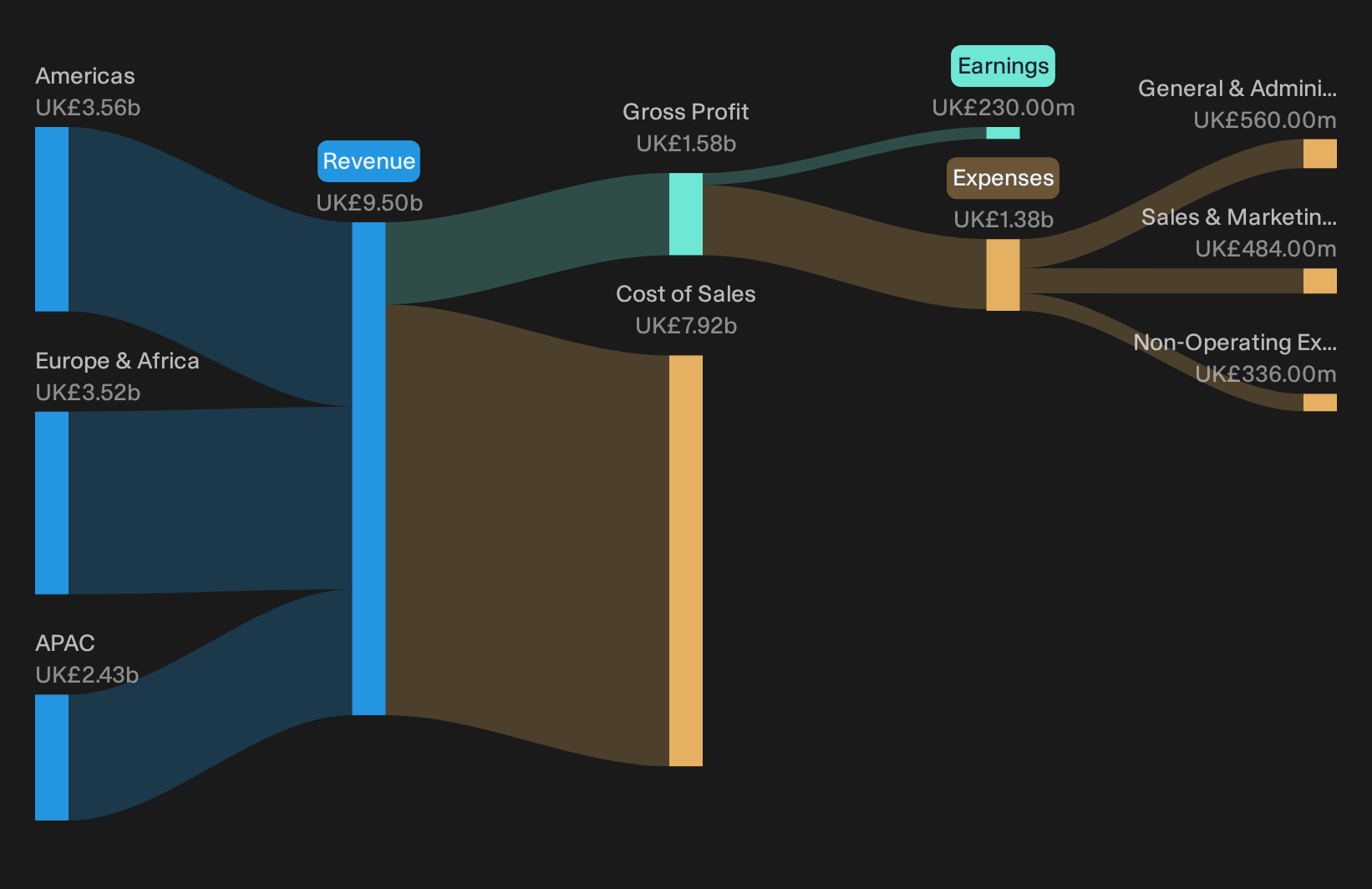
Operations: Inchcape earns about £2.4b from APAC, £3.6b from the Americas and £3.5b from Europe & Africa, with additional revenue concentrated in Chile.
Market Cap: £2.1b
Inchcape taps directly into big ticket consumer spending through vehicle purchases and ongoing servicing, and the analyst consensus Narrative on Simply Wall St highlights how its contract mix and exposure to car demand relate to the current phase of stronger UK GDP and resilient household outlays.
"Inchcape continues to reshape its contract portfolio by exiting 15 financially immaterial but margin dilutive APAC distribution agreements in 2026 and signalling further exits into 2027, which could lift group operating margins as lower quality revenue rolls off."
The real test comes if one unresolved shift in where earnings are generated ends up changing how much of that margin uplift actually reaches shareholders.
If that shift in earnings mix is what really matters for Inchcape, the full narrative for Inchcape shows how margin reshaping, capital returns and contract risk could be quietly decoupling.
Marks and Spencer Group (LSE:MKS)
Overview: Marks and Spencer Group is a major UK retailer selling food, clothing, home and beauty products through stores, online and international partnerships.
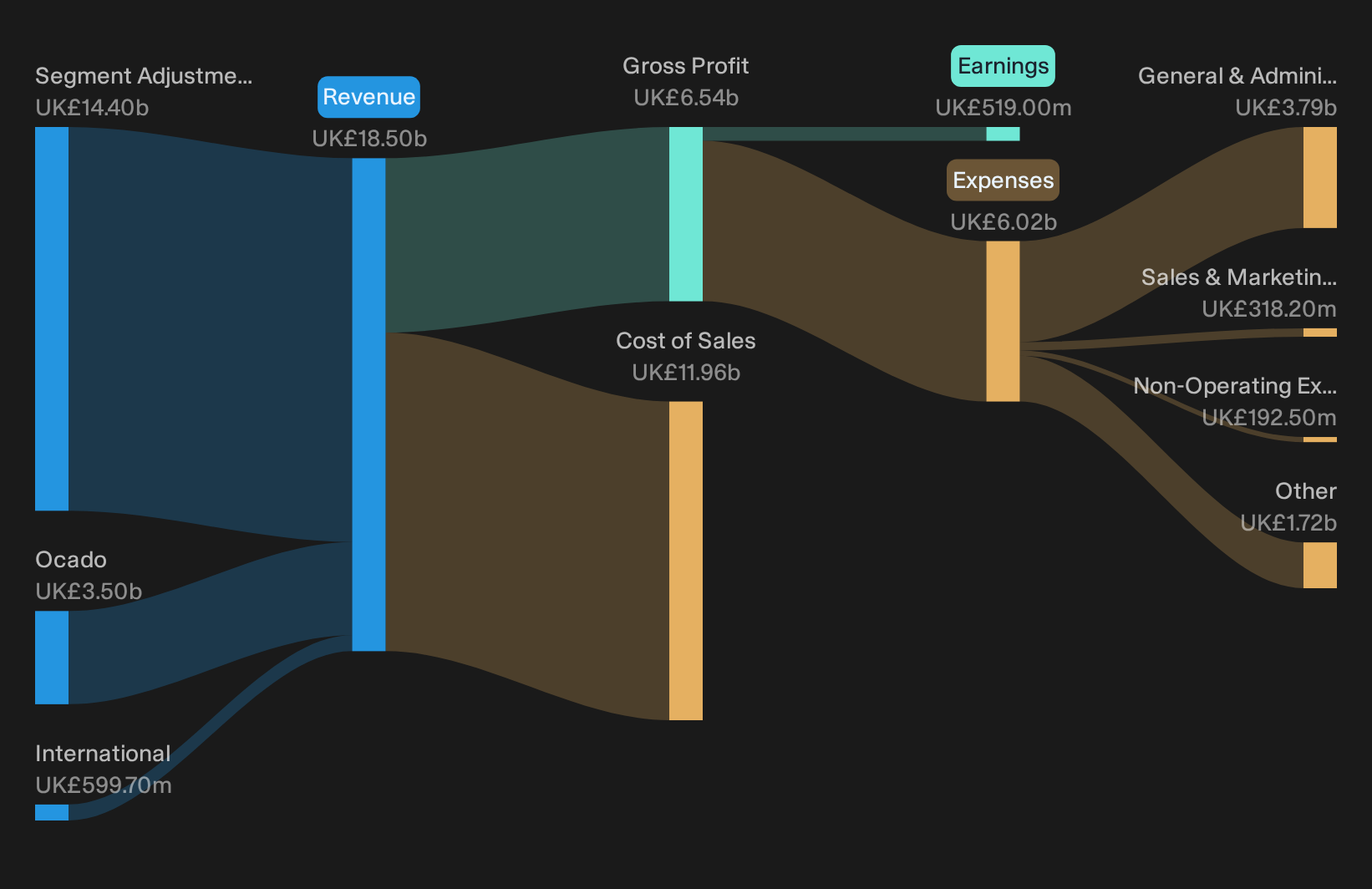
Operations: Marks and Spencer Group generates about £3.5b from Ocado, £600 million from International and a £14.4b segment adjustment line.
Market Cap: £9.4b
Marks and Spencer Group plugs directly into the UK Services and Consumer-Focused theme because its food halls, clothing ranges and homewares all lean on everyday household spending, and the analyst consensus Narrative on Simply Wall St flags how that exposure ties into the recent beat in UK GDP and sturdier consumer demand.
"Marks and Spencer Group is pushing ahead with store rotation and larger food halls in higher traffic locations, with more than 50 new food stores planned over the next three years and non like for like space expected to add 2 to 3 percentage points to annual Food sales growth, which could support higher group revenue and operating profit if customer numbers and basket sizes keep building."
What really shapes the outcome for Marks and Spencer Group is how one unresolved cost and funding pressure interacts with that push for higher sales.
That funding question sits at the center of the full narrative for Marks and Spencer Group, which maps how sales momentum, capital demands and any overlooked risk could reshape Marks and Spencer Group's trajectory.
Seeking Fresh Alternatives Before They Fly
Some of the next breakout stories are still under the radar for now. Momentum can get away fast once the crowd catches on, so consider acting before it builds.
- Spot under-the-radar quality before momentum really builds by scanning the 5 high quality undiscovered gems curated from businesses with strong fundamentals and room for the story to develop.
- Target reliable income candidates while yields still look appealing by checking the 4 dividend fortresses focused on businesses built to keep paying shareholders.
- Position ahead of the next big infrastructure cycle by reviewing the 42 power grid technology and infrastructure stocks featuring companies tied directly to grid upgrades and electrification projects.
Have feedback on this article? Concerned about the content? Get in touch with us directly. Alternatively, email editorial-team@simplywallst.com