
3 Defensive Dividend Stocks For Rising Rates and Steady Cash Flow
With Fed officials hinting at faster rate hikes after another firm inflation reading, investors are suddenly being reminded that cash flows and balance sheet strength matter again. Defensive dividend stocks linked to this backdrop can look like a rare source of calm when volatility flares and discount rates reset. This article walks through three high quality dividend payers exposed to this macro story and explains how each might fit, or not fit, in a cautious portfolio.
The stocks in the list below are just a starter pack. The full screen surfaced 11 more large, defensive dividend payers with equally detailed stories that are not covered here. To identify and analyze the highest conviction ideas for your own watchlist, head straight into the High-Quality Dividend Stocks (Defensive, Cash-Generating Companies) screener.
Snap-on (SNA)
Snap-on looks like a textbook fit for a defensive dividend screen, with a long-running tools and diagnostics franchise that converts steady demand from professional users into cash returns, and the analyst consensus Narrative on Simply Wall St frames why that matters when rates reset.
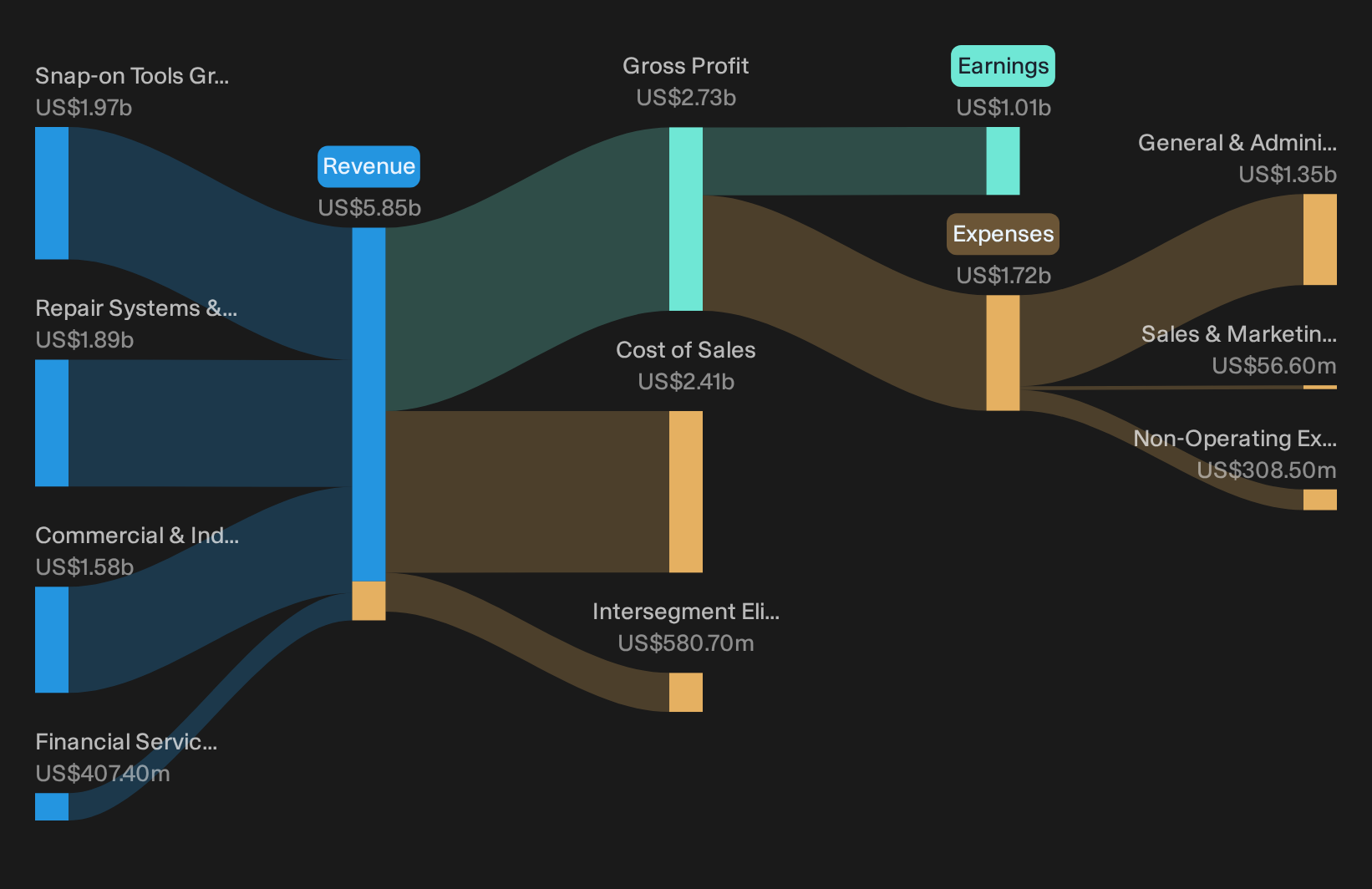
Snap-on manufactures professional-grade tools, diagnostics and repair systems, with revenue anchored in the Snap-on Tools Group at about US$2.0b, the Repair Systems & Information segment at roughly US$1.9b, and the Commercial & Industrial Group near US$1.6b, and the stock sits around a US$19.3b market cap.
Snap-on's focus on advanced diagnostic tools and software solutions, now supported by data driven platforms such as APOLLO that use very large repair and vehicle event databases, continues to lean into growing software and subscription revenue, which can support RS&I revenue mix and operating margins over time.
What could tilt the story for income-focused holders is how one less visible pressure ultimately shapes the durability of those rich margins.
That margin question is exactly what the full narrative for Snap-on unpacks, showing how Snap-on’s cash engine could react if pricing power or technician demand starts to decouple.
PACCAR (PCAR)
PACCAR brings industrial heft to this defensive dividend screen, with a truck, parts, and financing ecosystem that can turn global freight cycles into recurring cash flow. The analyst consensus Narrative on Simply Wall St highlights how that engine is built.
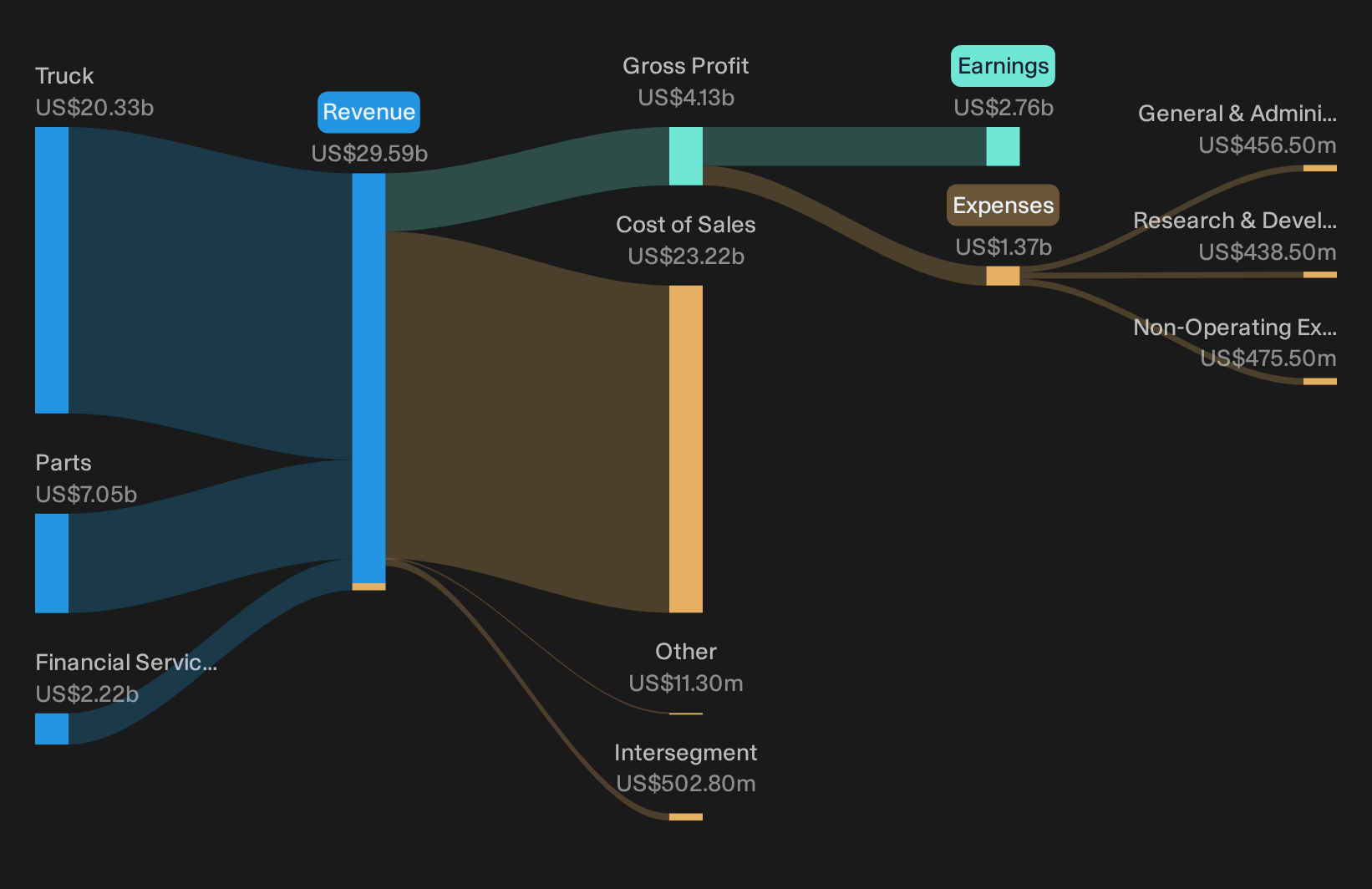
PACCAR runs a global truck platform with US$20.3b from Truck, US$7.0b from Parts, and US$2.2b from Financial Services, plus minor segment adjustments. Together, these support a roughly US$55.6b market cap.
Expansion of the PACCAR Parts business, supported by record quarterly revenues of US$1.75b in Q2 2026, 29.8% gross margins and management guidance for 3% to 5% sales growth in 2026, points to a growing share of higher margin, recurring revenue that can support net margin and earnings resilience through truck cycles.
What really decides how PACCAR fits a defensive income sleeve is whether one subtle shift in truck-cycle demand leaves that cash engine idling or still running hard.
If that engine keeps running, the full narrative for PACCAR shows where PACCAR’s recurring parts and financing story could still surprise income investors.
Archer-Daniels-Midland (ADM)
Archer-Daniels-Midland sits firmly in the defensive staple bucket that this dividend screen targets, with a large-scale food and feed network that can appeal when rates rise and investors value durable cash generation, according to the analyst consensus Narrative on Simply Wall St.
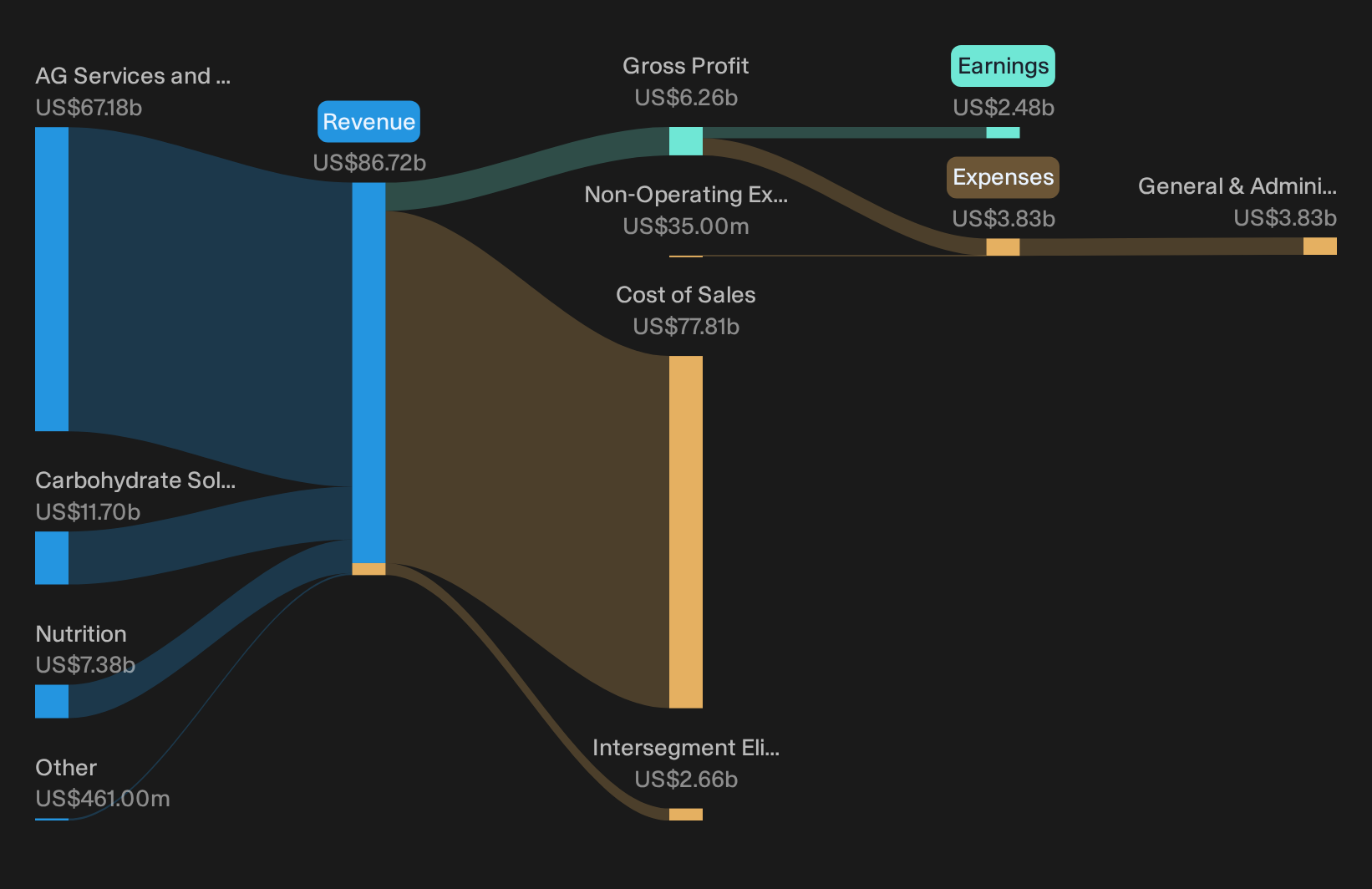
ADM is a US$33.0b agribusiness that earns most of its revenue from Ag Services and Oilseeds at about US$67.2b, with Carbohydrate Solutions at roughly US$11.7b and Nutrition at around US$7.4b, giving the stock a broad, income-oriented footprint across the food supply chain.
The analyst consensus Narrative on Simply Wall St points to Archer-Daniels-Midland as a classic “steady cash” candidate in a rate-hike scare, where essential food flows, a long dividend record, and capital discipline can matter more than rapid expansion.
Policy clarity and government support for biofuels, including the 45Z production tax credit that Archer-Daniels-Midland now expects to contribute about US$250 million in 2026, together with favorable blending mandates and domestic feedstock incentives, are expected to support crush economics and feed into revenue and earnings.
What really shapes how Archer-Daniels-Midland fits a defensive income sleeve is whether one less obvious pressure quietly reshapes the balance between higher crush profits and long term margin stability.
That quiet pressure is exactly what the full narrative for Archer-Daniels-Midland unpacks, highlighting where ADM’s crush economics could be masking longer term risks or fresh upside.
Seeking Fresh Alternatives Before They Fly
Some of the most interesting ideas often move from quiet to crowded fast. Fresh themes can pick up momentum before the crowd notices. If a screen fits your playbook, consider acting while it still appears early in the cycle.
- Target resilient movers that can hold up when sentiment cools by running the 30 resilient stocks with low risk scores while it is still flying under the radar for now.
- Hunt for early breakout stories in automation by checking the curated 87 robotics and automation stocks before the strongest trends get fully caught in the headlines.
- Evaluate potential opportunities in digital assets infrastructure by scanning the hand-picked 23 cryptocurrency and blockchain stocks while it may still be useful for identifying entry levels.
Have feedback on this article? Concerned about the content? Get in touch with us directly. Alternatively, email editorial-team@simplywallst.com