
SPCX Stock: SpaceX Will Try to Catch the Entire Starship for the First Time. Elon Musk Says It’s the Key to Mars.
On Nov. 13, SpaceX (SPCX) is set to launch its Starship Flight 15. The big goal the company is trying to achieve is a “double catch.” SpaceX will try to catch both parts of the rocket with the launch tower's giant mechanical arms when they return. These include the Super Heavy booster about six minutes after its liftoff and then the Starship upper stage about 22 hours later, after it has made roughly 14 trips around Earth. SpaceX has caught boosters before, but catching the ship itself has not happened yet. If it works, it would be the first time any company has fully recovered an orbital rocket, bringing both stages back for potential reuse. Elon Musk said, “This is the critical breakthrough needed to make life multiplanetary,” meaning cheap, reusable rockets are what could eventually make it possible to send people to Mars.
About SpaceX Stock
SpaceX started out as just a rocket company, but it now earns money from three very different businesses: launching rockets, selling Starlink internet, and renting out AI computing power. Starship is the giant rocket meant to support all three, and the flight on Nov. 13 is the first time SpaceX will try to catch the whole thing. Elon Musk founded the company in 2002, and it's headquartered in Starbase, Texas.
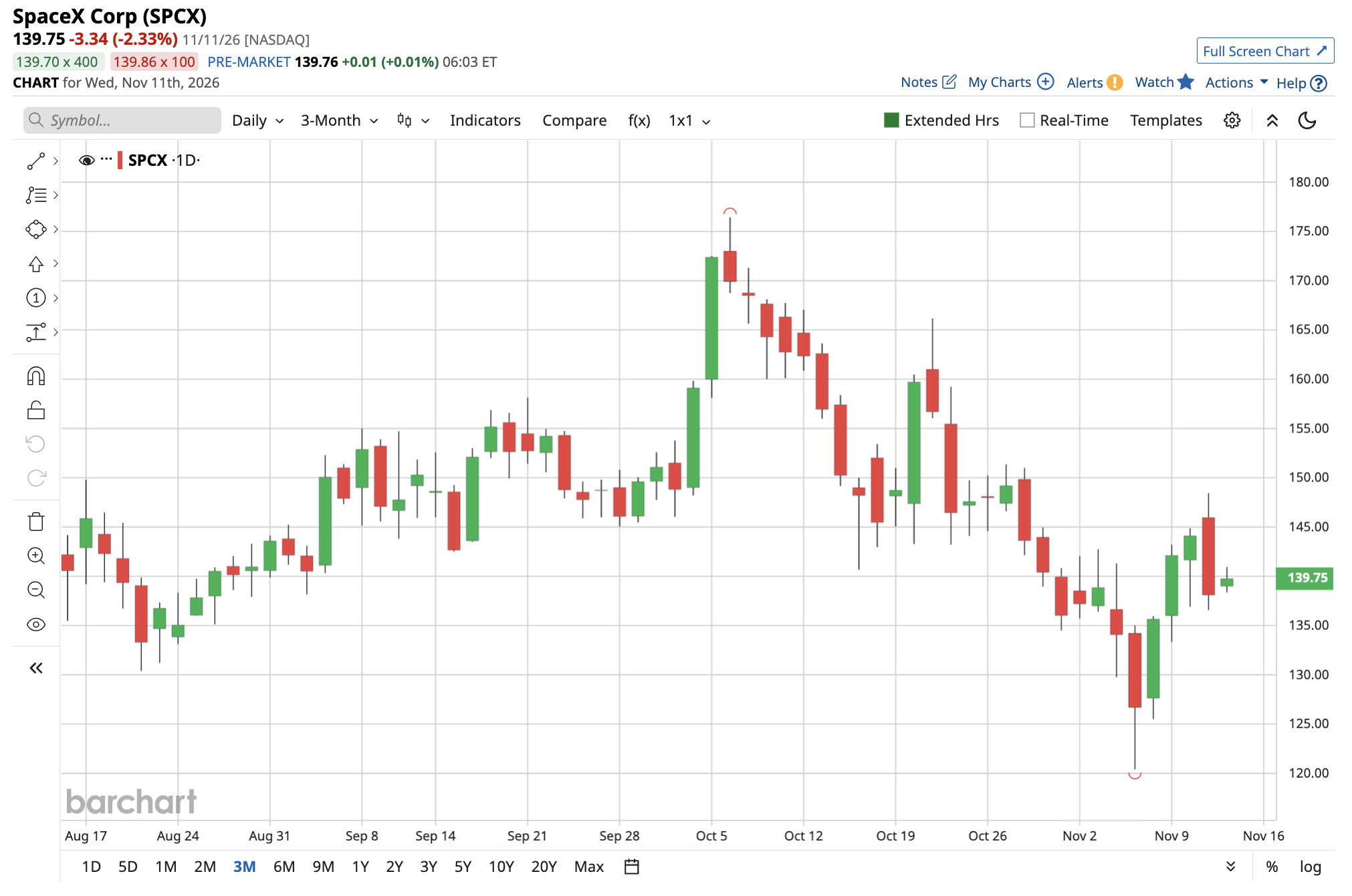
SpaceX went public in June with an IPO price of $135 and then closed the first day at around $161. Since then, the stock is down roughly 13%, underperforming the Invesco QQQ Trust ETF’s (QQQ) 4% drop during the same period. It reached a 52-week high of $225.64 shortly after its IPO but has since fallen way below as waves of insider share unlocks added selling pressure, its heavy AI spending raised concerns, and the recent AI selloff hit tech stocks.
Why This Can Be Big for SPCX Stock
A fully reusable rocket means SpaceX doesn't need to throw away hardware each launch, so the cost per launch will likely drop sharply. Starship can also carry far more Starlink satellites per flight, which helps Starlink keep growing. SpaceX plans to start launching AI data center satellites late next year, and it's building a $100 billion launch site in Louisiana. As I covered before, both of these depend on Starship proving it can fly reliably and be reused at scale. Nov. 13 is a big step toward that.
SPCX stock currently trades near its IPO price. Jim Cramer recently said he's waiting for a better entry point, with one of his main concerns being SpaceX's “astronomical” AI spending. A cheaper launch won't fix that directly, but it would lower the cost of SpaceX's plan to put AI data centers in orbit, since every one of those satellites needs a ride to space.
The other side to keep in mind is that test flights can go wrong, and catching the ship has never been done before. And I think a miss could weigh on the stock in the short term. But a successful double catch would be one of the strongest signals so far that SpaceX's biggest plans are realistic. The launch could still slip, since it's pending regulatory approval.
Starship Is Already Starting to Pay
SpaceX reported its third-quarter results on Oct. 20, and it comfortably beat the analysts' estimates on both key metrics. Revenue of $14.58 billion came in well above the $12.72 billion analysts expected, up 161% year-over-year (YoY). EPS of $0.35 more than doubled the $0.15 estimate. Most of the attention went to AI, but the space side had a strong quarter too. Space revenue of $1.77 billion rose 84% from just the previous quarter, and SpaceX completed 35 launches. Starlink kept growing as well, with connectivity revenue of $5.25 billion, up 69%.
Starship Flight 14 was a big success. It was the rocket's first revenue-generating mission, carrying 26 next-generation Starlink satellites into orbit. SpaceX said that one flight added about 10 times the internet capacity of a regular Falcon 9 Starlink launch. Looking ahead, the company plans to keep spending aggressively, which has weighed on the stock since. Management estimates $35 billion to $40 billion in capital spending in Q4 alone.
What Do Analysts Expect for SPCX Stock?
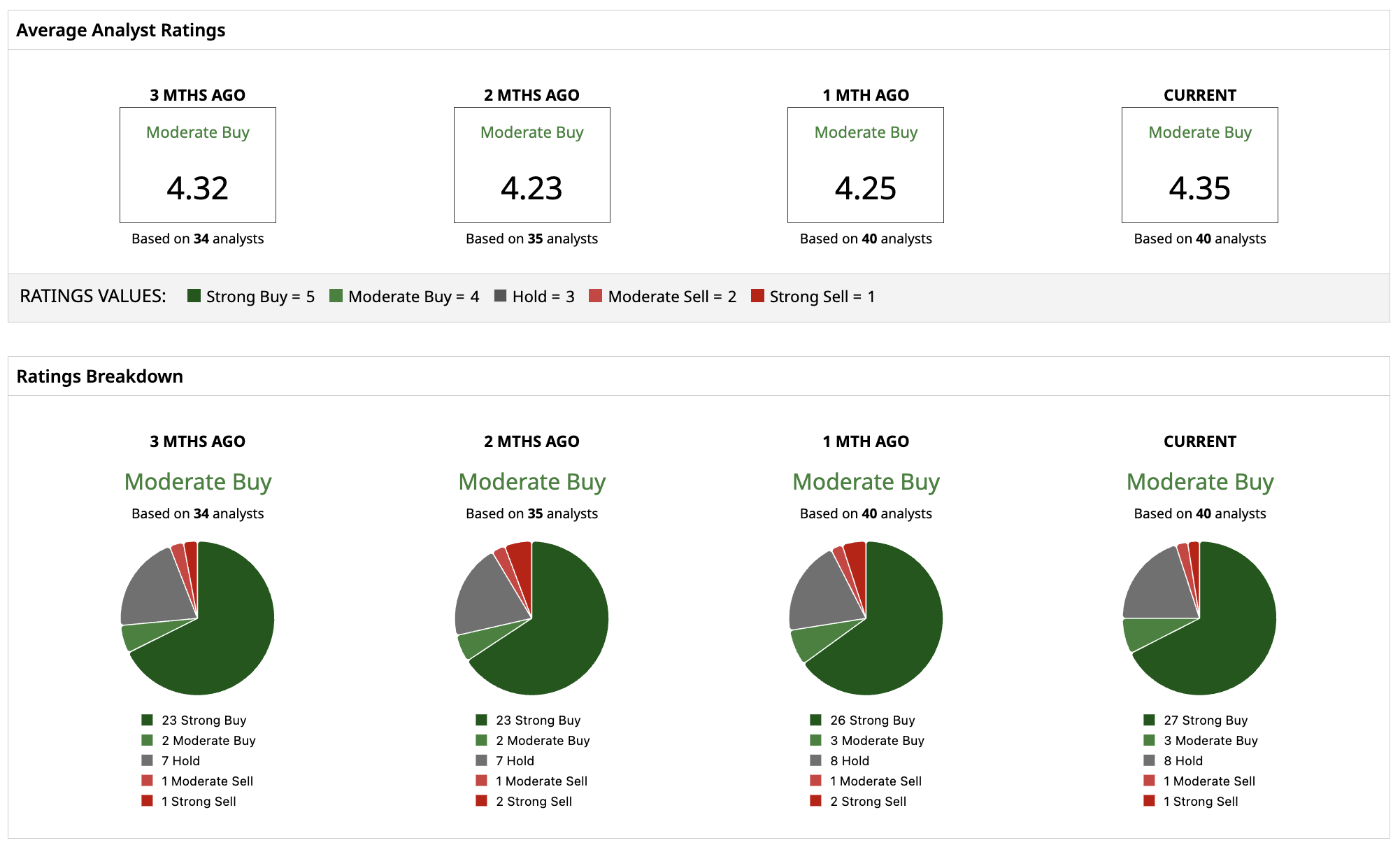
Based on 40 Wall Street analysts, SPCX stock holds a “Moderate Buy” rating with a mean price target of $252.73, indicating a huge 81% upside. So while Jim Cramer is waiting for a better entry point, analysts largely believe the stock could already run significantly from here.
On the date of publication, Jabran Kundi did not directly have a position in any of the securities mentioned in this article. All information and data in this article is solely for informational purposes. For more information please view the Barchart Disclosure Policy here.