
Will Weak Housing Data Change Lennar (LEN) Narrative
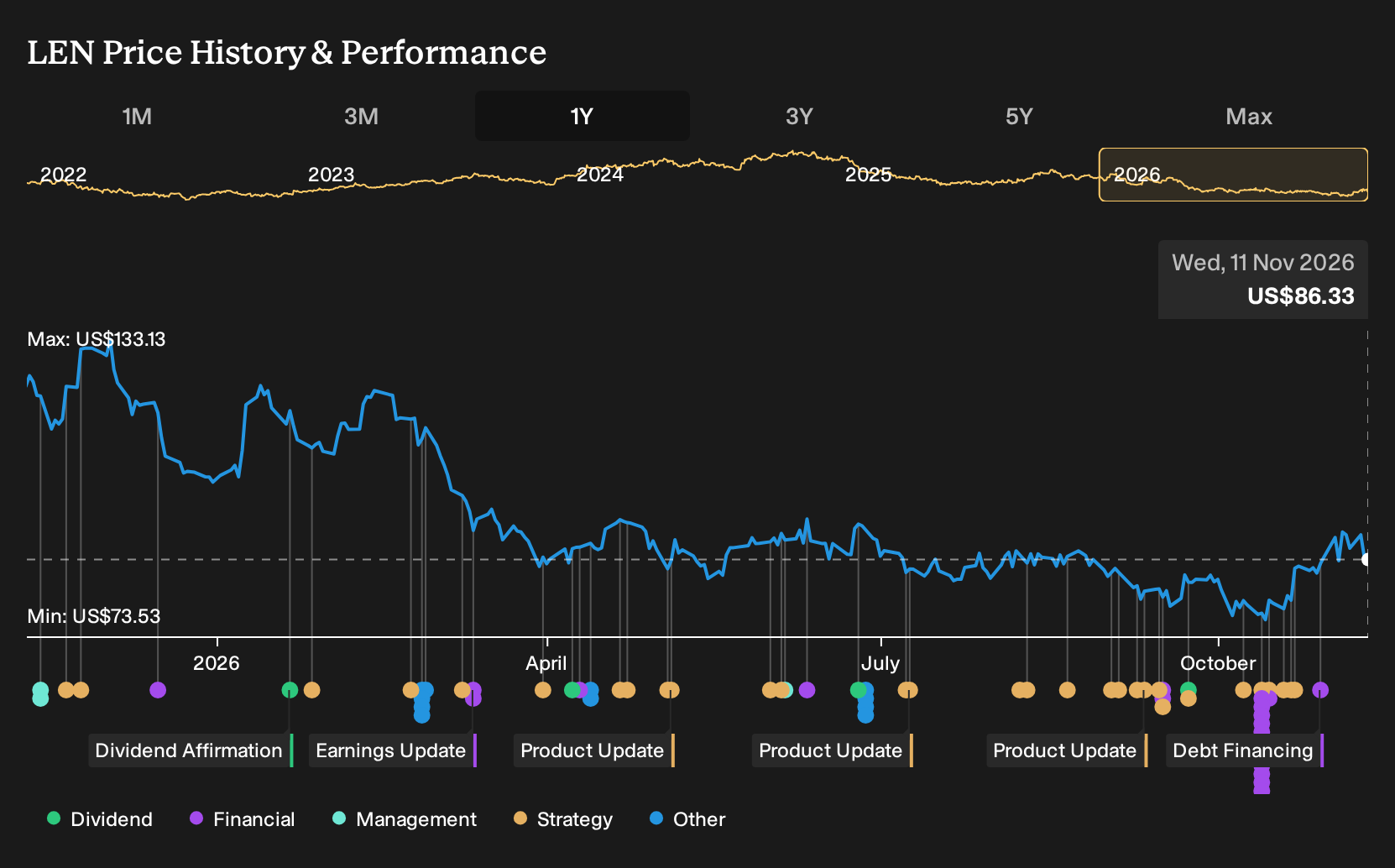
- Lennar amended its revolving credit and term loan facilities, lifting total potential borrowing capacity to US$4.545b and adjusting SOFR-based pricing, while extending key maturities and keeping proceeds available for working capital, acquisitions, and general corporate uses.
- The revised agreements tie small margin and fee reductions to Lennar’s credit ratings, which directly links its funding costs to how lenders view its balance sheet strength and risk profile.
- We will now explore how Lennar's credit facility expansion and rating-linked pricing could alter the longer-term investment narrative.
Scan how Lennar’s balance sheet move compares with peers by reviewing our curated list of list of solid balance sheet and fundamentals (23 results).
Lennar Investment Narrative Recap
Lennar appeals to shareholders who believe its asset light, land light approach and fast build times can keep homes affordable enough to support steady volumes even when mortgage rates bite. The big swing factor in the near term is demand sensitivity to the 10 year Treasury yield and buyer confidence, which directly feeds into orders and pricing power.
The analyst consensus Narrative on Simply Wall St highlights affordability, land costs and legal scrutiny as key risks. The new credit and term loan amendments look more like plumbing than a catalyst, so the near term story still leans on how Lennar balances incentives, margins and community growth against weaker housing data.
The recent expansion in Loudoun County, Virginia, with three communities now selling and a fourth expected to open this fall, ties directly back to those catalysts. Lennar is leaning into a broad mix of home types and price points from the US$500,000s to about US$1.2m, which gives it more levers to appeal to different budgets if mortgage costs stay elevated.
These projects also test whether the land light model and shorter construction cycles can offset pressure on profit margins, which have already slipped to 4.1% from 7.6%. Execution in new markets, combined with how quickly homes in places like Loudoun County are absorbed, is likely to influence how investors weigh near term housing data against the longer term efficiency story.
Lennar’s narrative projects US$40.6b revenue and US$2.7b earnings by 2029. This assumes 8.3% yearly revenue growth and an earnings increase of about US$1.4b from US$1.3b today.
Uncover why Lennar's fair value indicates a 10% potential downside to its current price, which leaves little room for error.
Exploring Other Perspectives
Some bearish analysts focus on affordability risk rather than balance sheet flexibility. They see Lennar’s expanded credit lines in a context where their pre news forecasts already pointed to flat revenue and earnings of about US$1.0b by 2029. That is far below the consensus US$2.7b path and signals a much more cautious story you can explore further.
Explore 4 other Lennar fair value estimates, including one that suggests there could be as much as 35% downside from the current price.
The Verdict Is Yours
Don't just follow the ticker. Dig into the data and build a conviction that's truly your own.
- A great starting point for your Lennar research is our analysis highlighting 3 key rewards and 1 important warning sign that could impact your investment decision.
- See our latest analysis for Lennar. The report includes a comprehensive fundamental analysis summarized in a single visual, the Snowflake, making it easy to evaluate Lennar's overall financial health at a glance.
Looking For More Ideas Beyond Lennar?
If Lennar has sharpened your thinking about housing and balance sheet quality, use that momentum to size up a wider set of opportunities with the Simply Wall St Screener. You can filter by strength, resilience, or income focus so you are not just reacting to headlines but steadily building a watchlist that fits your own approach.
- For investors hunting sturdier finances and cleaner leverage profiles, start with a list of solid balance sheet and fundamentals (23 results) that already meet strict balance sheet and fundamentals criteria.
- If value is your priority and you want quality at a discount, sort through a 32 high quality undervalued stocks that combine healthy cash flows with what our models flag as appealing pricing.
- Income focused readers who prefer cash returns today can zero in on a 6 dividend fortresses that aim to pair higher yields with resilience.
Have feedback on this article? Concerned about the content? Get in touch with us directly. Alternatively, email editorial-team@simplywallst.com