
A $2 Billion Reason Keurig Dr Pepper Stock Is Plunging Today
Keurig Dr Pepper (KDP) shares tumbled on Thursday morning after the beverage giant announced plans of raising $2 billion through an equity offering.
Investors bailed on KDP even though management said the transaction was designed to strengthen the balance sheet ahead of the company’s planned split into two standalone businesses in early 2027.
Despite today’s decline, Keurig Dr Pepper stock is up some 30% versus the start of this year.
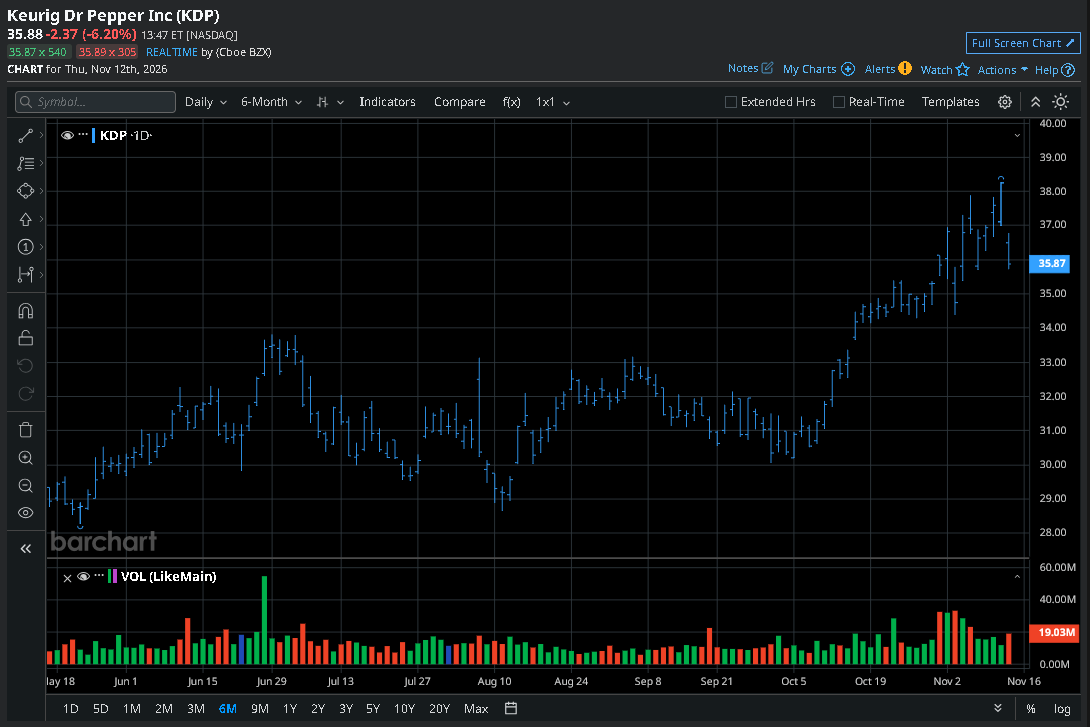
Significance of the Equity Offering for KDP Shares
KDP will use proceeds from the public offering to reduce debt and boost financial flexibility ahead of its planned separation into Beverage Co. and Global Coffee Co.
But investors are focused on the near-term consequences of issuing new shares.
Equity offerings typically weigh on stock prices because they expand the company’s share count, reducing the ownership percentage of existing shareholders.
The deleveraging strategy may ultimately strengthen both future businesses, but the prospect of near-term dilution is what’s hurting Keurig Dr Pepper shares on Nov. 12.
Note that the Nasdaq-listed firm also granted underwriters an option to purchase up to an additional $300 million worth of shares.
Is It Worth Buying the Dip in Keurig Dr Pepper Stock?
Long-term investors should note that the company is not raising resh capital to fund losses or shore up a distressed balance sheet.
A lower debt burden could actually improve financial flexibility and support credit profiles of both future companies.
Keurig Dr Pepper’s latest earnings report, featuring a whopping 71% year-over-year revenue growth and better-than-expected $0.66 per share of earnings (EPS), offers another significant reason to buy it on the dip today.
What’s also worth mentioning is that KDP stock has a history of gaining roughly 2.5% on average in November, followed by another 1.28% surge in December – a seasonal trend that makes it more attractive for the near term as well.
How Wall Street Recommends Playing Keurig Dr Pepper
Crucially, Wall Street analysts also remain bullish on Keurig Dr Pepper heading into 2027.
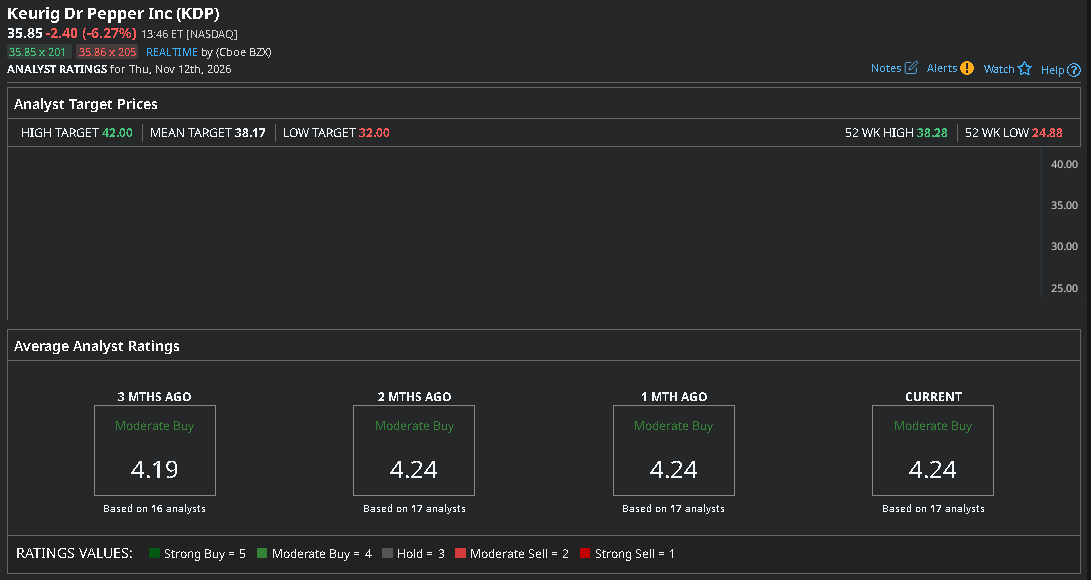
According to Barchart, the consensus rating on KDP shares sits at “Moderate Buy” – with the mean price target of about $38 indicating potential upside of nearly 7% from here.
On the date of publication, Wajeeh Khan did not directly have a position in any of the securities mentioned in this article. All information and data in this article is solely for informational purposes. For more information please view the Barchart Disclosure Policy here.