
Exelon (EXC) Study Says Severe Rainfall In Northern Illinois Could Nearly Double
- Exelon (NasdaqGS:EXC) utility ComEd and Argonne National Laboratory released a study warning about intensifying rainfall risk in northern Illinois.
- The research finds severe rainfall events in the region could nearly double by mid century, increasing exposure for electric infrastructure.
- ComEd and Argonne say the findings will require substantial grid resilience investments to protect substations, lines and related assets.
- The new ComEd and Argonne rainfall study is only one piece of the longer term story around Exelon and its grid plans. Our analysis turns up 2 warning signs (1 major) for Exelon as well.
Use this update on Exelon as a prompt to compare it with other grid-focused utilities through 43 power grid technology and infrastructure stocks.
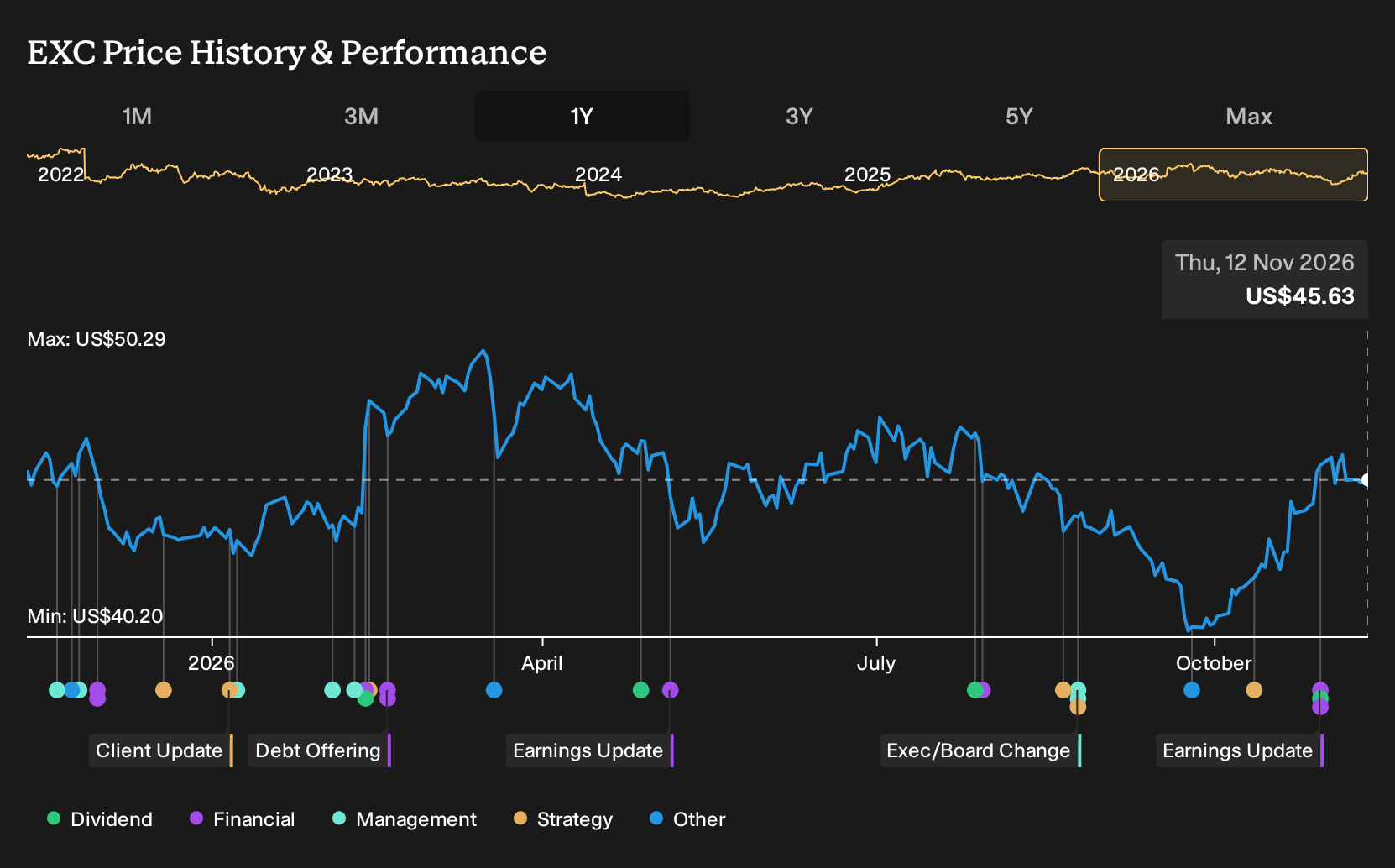
Exelon runs a large US utility platform focused on energy distribution and transmission. Any shift in rainfall patterns directly affects how it protects poles, wires and substations that keep power flowing for customers in northern Illinois and other service territories.
See how Exelon's balance sheet measures up.
Why this rainfall study matters for the Exelon grid story, not just for weather risk
The Exelon Narrative rests on a long regulated build-out of wires and substations that earns returns over decades, and this rainfall study tests whether resilience spending strengthens or strains that plan. It links climate-driven stress on ComEd’s network directly to the timing and priority of that US$41.7b capital blueprint.
The rebalanced US$41.7b capital plan that shifts US$1.5b into higher earning transmission while deferring US$1.1b of lower priority distribution projects positions Exelon to pursue its targeted 7.9% rate base growth...
See how the full story points towards a $47.59 fair value for Exelon.
This rainfall work effectively adds another queue of “must do” projects on top of data center and reliability upgrades that Exelon already highlights. If more flood hardening is required around ComEd, that could tilt spending toward resilience-heavy substations and underground assets, while still needing to keep adjusted O&M growth capped near 2% and protect credit metrics.
Regulators in Illinois now hold a bigger lever over how resilience costs are sequenced, which goes straight to the regulatory risk flagged in the Narrative. Compared with other grid-heavy utilities like Duke Energy or American Electric Power, Exelon’s exposure in northern Illinois means the balance between customer affordability, storm-proofing and earnings growth could be tested earlier and more visibly.
For investors, tying news like this study back to a clear Exelon Narrative is what turns a weather headline into a concrete judgment about long-term regulated earnings quality.
One piece of the Exelon puzzle this article has not touched
Grid plans, regulation and weather risks only tell part of the story. There is also an estimate of what the stream of future cash flows suggests Exelon might be worth compared with where the shares trade today. Find out exactly what Exelon is worth today based on its cash flows.
Have feedback on this article? Concerned about the content? Get in touch with us directly. Alternatively, email editorial-team@simplywallst.com