
The decline in AI trading and corporate profit growth have made European stocks a reality! It stopped rising for 4 days but is still expected to hit the biggest weekly increase since July
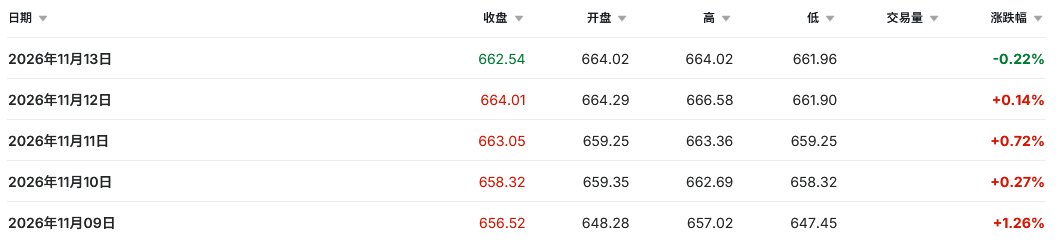
The Zhitong Finance App learned that the European stock market had previously risen for four consecutive trading days and reached a record high, but this rise did not continue. As of press release, the Stoxx Europe 600 Index fell 0.22%, with industrial stocks and consumer goods stocks leading the decline, while oil stocks bucked the trend due to a slight increase in crude oil prices. However, the Stoxx Europe 600 Index has accumulated a 2.2% rise this week, which is expected to record the biggest weekly gain since July, outperforming the US stock market impacted by the Nvidia (NVDA.US) corporate governance crisis.
Swiss luxury goods group Richemont (Richemont) announced that jewelry sales for the first half of the year fell short of market expectations, and the stock price plummeted 7.3% as a result. Milan-listed Stellantis NV (Stellantis NV) shares fell 0.5%. Earlier, the Canadian Minister of Industry said that the car manufacturer owes “hundreds of millions” of dollars due to its factory near Toronto, and that the Canadian government is ready to file a lawsuit.
Driven by the withdrawal of capital from artificial intelligence (AI) trading and a strong earnings season, the European stock market has recently been able to continue its strong momentum. Europe's diversified stock market is becoming an attractive trading target. The market's structure of stable industrial stocks, bank stocks, and defensive leaders has helped Europe avoid the worst impact of the recent AI turmoil.
Wall Street financial giant Citi recently raised its European stock rating because the European stock market is less exposed to AI turmoil. In another report, Goldman Sachs strategists emphasized that Europe is getting less of the cake in the AI upward market, and this is now becoming an advantage. According to the Goldman Sachs team composed of Guillaume Jaisson and others, AI infrastructure stocks account for about 15% of the Stoke Europe 600 Index and contribute less than a quarter of the index's expected 9% profit growth in 2027; in contrast, such stocks account for about 40% of the S&P 500 index and contribute more than two-thirds of the expected profit growth next year. The Goldman Sachs team said, “This low level of concentration provides decentralized protection when AI transactions are reversed. Looking back at the eight largest AI-led sell-offs since 2023, Europe has outperformed the US every time.”
Furthermore, Europe is narrowing the gap with the US this earnings season, and profit growth is expected to be close to flat for the first time in more than three years. According to the data, analysts expect the profit of MSCI European Index constituent stocks to increase 23% year-on-year in the third quarter, which is only slightly lower than the 24% expected by S&P 500 constituent stocks. The last time European profits outperformed the US was in the first quarter of 2023.
Guillermo Hernandez Sampere, head of MPPM trading, said: “Most European markets are still at historic highs. The current earnings season confirms the trends shown by various industries since this year, and most investors have taken further actions that central banks may take into account market expectations.”
The Citigroup Index shows that in the past six months, the number of analysts who raised European companies' profit forecasts was higher than the number of analysts who lowered their expectations. This is the longest continuous upward and downward trend since 2022. On the other hand, profit expectations for US companies have been lowered in recent weeks after continuing to rise since mid-April.
Alpesh Patel, managing partner at RootBridge Capital, said, “Investors will look for companies with consistent profitability, not just rapid profit growth.” “As long as the three factors of return on capital continue to rise, cash flow is stronger, and profit expectations rise, investors will continue to invest in Europe.”
Looking ahead, Goldman Sachs strategists led by Sharon Bell expect European corporate profit growth to slow from 18% in 2026 to 7% in 2027. They expect the Stoxx Europe 600 Index to reach 700 points in the next 12 months, which means that the index's return on price is about 6%, and the total return is about 9%. Strategists expect that even if earnings growth slows, the European stock market's bull market will continue until 2027. This is because stock valuations have declined while bond yields, oil prices, and inflation have all cooled down.