
Why You Might Be Interested In BOK Financial Corporation (NASDAQ:BOKF) For Its Upcoming Dividend
Readers hoping to buy BOK Financial Corporation (NASDAQ:BOKF) for its dividend will need to make their move shortly, as the stock is about to trade ex-dividend. Typically, the ex-dividend date is one business day before the record date, which is the date on which a company determines the shareholders eligible to receive a dividend. It is important to be aware of the ex-dividend date because any trade on the stock needs to have been settled on or before the record date. Thus, you can purchase BOK Financial's shares before the 18th of November in order to receive the dividend, which the company will pay on the 3rd of December.
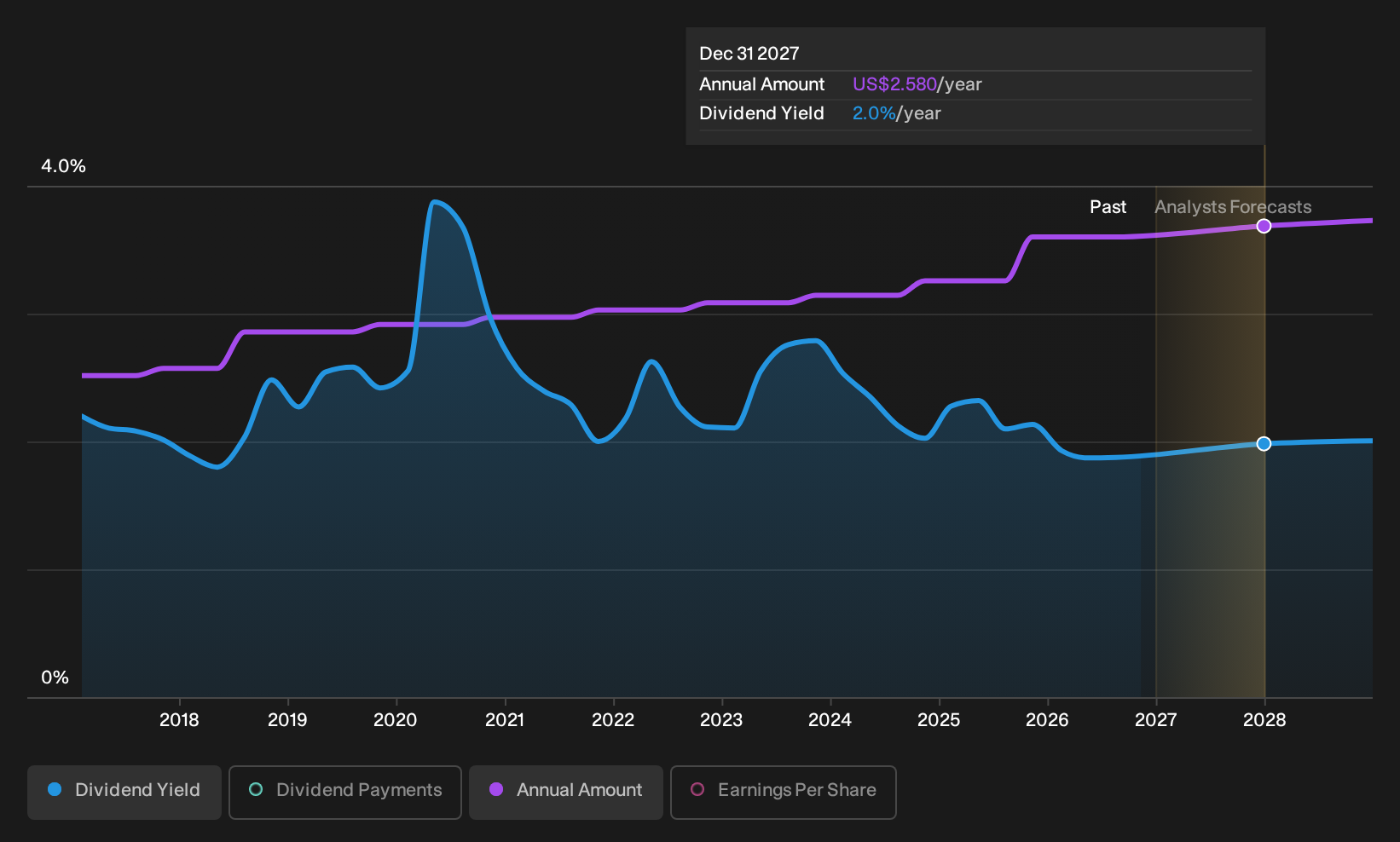
The company's next dividend payment will be US$0.78 per share. Last year, in total, the company distributed US$3.12 to shareholders. Calculating the last year's worth of payments shows that BOK Financial has a trailing yield of 2.4% on the current share price of US$130.15. If you buy this business for its dividend, you should have an idea of whether BOK Financial's dividend is reliable and sustainable. We need to see whether the dividend is covered by earnings and if it's growing.
Dividends are typically paid out of company income, so if a company pays out more than it earned, its dividend is usually at a higher risk of being cut. BOK Financial has a low and conservative payout ratio of just 24% of its income after tax.
Companies that pay out less in dividends than they earn in profits generally have more sustainable dividends. The lower the payout ratio, the more wiggle room the business has before it could be forced to cut the dividend.
See our latest analysis for BOK Financial
Click here to see the company's payout ratio, plus analyst estimates of its future dividends.
Have Earnings And Dividends Been Growing?
Companies with consistently growing earnings per share generally make the best dividend stocks, as they usually find it easier to grow dividends per share. If business enters a downturn and the dividend is cut, the company could see its value fall precipitously. Fortunately for readers, BOK Financial's earnings per share have been growing at 12% a year for the past five years.
Another key way to measure a company's dividend prospects is by measuring its historical rate of dividend growth. In the past 10 years, BOK Financial has increased its dividend at approximately 6.1% a year on average. It's encouraging to see the company lifting dividends while earnings are growing, suggesting at least some corporate interest in rewarding shareholders.
Final Takeaway
From a dividend perspective, should investors buy or avoid BOK Financial? Typically, companies that are growing rapidly and paying out a low fraction of earnings are keeping the profits for reinvestment in the business. This strategy can add significant value to shareholders over the long term - as long as it's done without issuing too many new shares. BOK Financial ticks a lot of boxes for us from a dividend perspective, and we think these characteristics should mark the company as deserving of further attention.
Ever wonder what the future holds for BOK Financial? See what the 10 analysts we track are forecasting, with this visualisation of its historical and future estimated earnings and cash flow
Generally, we wouldn't recommend just buying the first dividend stock you see. Here's a curated list of interesting stocks that are strong dividend payers.
Have feedback on this article? Concerned about the content? Get in touch with us directly. Alternatively, email editorial-team (at) simplywallst.com.