
What Brunswick Doubters Overlooked
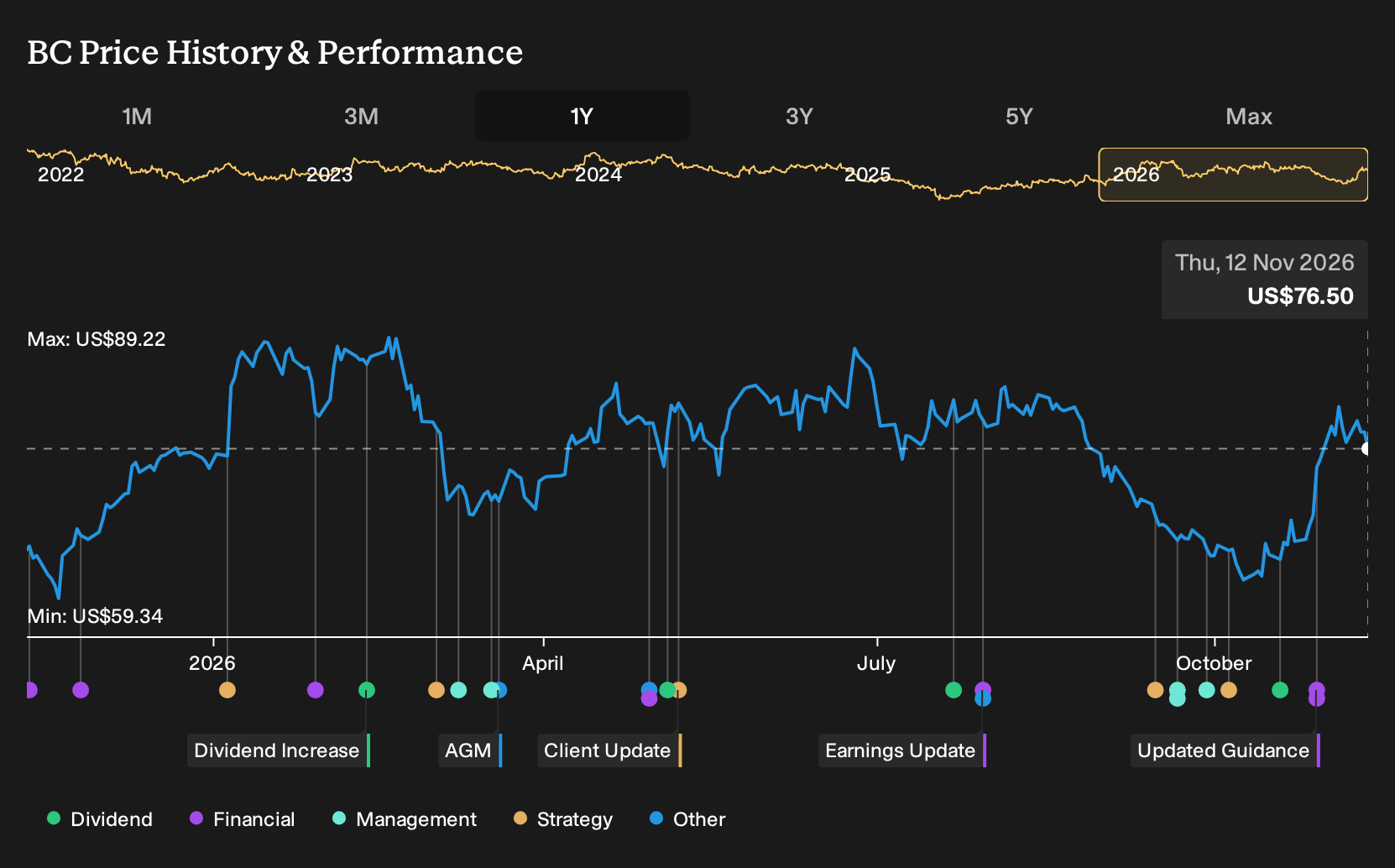
If you only skimmed headlines about Brunswick winning defense contracts, picking up product awards, and lifting guidance, you might expect a runaway share price or a flat one if you focused on softer guidance comments and insider sales. Investors who held Brunswick over the past year are up 21.8%, including dividends. If you were weighing those bullish and bearish narratives back in November 2025, which signals would have mattered most to you?
If the move has made Brunswick harder to judge, start where the gap is still open and scan 32 high quality undervalued stocks.
The Two Brunswick Stories Investors Had To Hold In Their Head
The shares cost US$65.33 at the start of the period, which left you choosing between a bullish Brunswick script and a far more cautious one.
On the optimistic side, the upbeat narrative pointed to a Fair Value of US$88, a price level implied by expectations that global expansion, acquisitions, and tech investments would support faster revenue growth and higher margins.
The bearish view anchored on a Fair Value of US$51, built around worries that aging customers, tighter environmental rules, and boat sharing could shrink the boating audience and pressure Brunswick's long-term profitability.
What The Results Changed For The Brunswick Thesis
Brunswick’s Q3 2026 figures, with revenue at US$1,453.9 million and net income at US$65.6 million compared with a loss a year earlier, leaned toward the optimistic script that assumed better profitability. Guidance upgrades through 2026 and rising net margin to 4.5% supported that side. Softer near term guidance and insider selling pulled the other way, so the evidence cut both ways.
The useful habit here is simple. When a bullish or bearish story relies on margins, track net margin quarter by quarter and see whether higher earnings quality actually shows up in the numbers.
What Today's Brunswick Price Already Assumes
Brunswick trades at US$76.5, above where the bearish analyst Narrative on Simply Wall St places its Fair Value. That view argues the recent 21.8% gain over the past year leaves less room if tariffs and value-tier softness weigh harder than expected.
Anyone paying today’s price is effectively betting recurring and premium earnings offset those pressures. The question is how much tariff drag that assumption could tolerate if cost savings and pricing power fall short.
"Although Brunswick leans more on recurring and participation-linked earnings that can support steadier contribution to profit, rising incremental tariff costs of about US$40 million in 2026 versus 2025 risk absorbing that benefit and could restrain any uplift in operating margins and earnings."
That disagreement has a full argument behind it. → Uncover the lower Fair Value this Narrative argues for
Before The Next Story Makes Headlines
You may be late to this rally, but that does not have to mean arriving late to every opportunity. Start with companies whose prices leave room for a different view of their future. Here are three trading below our estimates.
- Company 1 - 38% below our estimate - helps clients solve technical, safety and regulatory challenges as AI complexity increases.
- Company 2 - 40% below our estimate - converts fast subsea tieback work into higher margin equipment and durable services revenue.
- Company 3 - 35% below our estimate - runs higher cost gold mines trading resource depth against geopolitical and cash flow risk.
That is three of the list. See every one of the 23 solid balance sheet companies →
Have feedback on this article? Concerned about the content? Get in touch with us directly. Alternatively, email editorial-team@simplywallst.com