
Higher Earnings Might Change The Case For Investing In Black Hills Stock (BKH)
- Black Hills Corporation reported past third quarter 2026 sales of US$466.1 million and net income of US$41 million, with basic EPS from continuing operations of US$0.54.
- The nine month figures showed US$1.7b in sales and US$210.2 million in net income, which gives investors more detail on how current operations are translating into earnings power.
- We will now look at how Black Hills’ current earnings per share profile could influence the broader investment narrative around the utility.
Compare Black Hills' latest earnings to its peers by reviewing it alongside selected utilities in the 29 resilient stocks with low risk scores.
Black Hills Investment Narrative Recap
To own Black Hills, you need to be comfortable with a regulated utility that is leaning into large capital projects and data center driven load growth, while still depending heavily on constructive state level rate decisions. The latest quarter shows earnings per share of US$0.54 and nine month EPS of about US$2.77, which supports that current operations are converting into profits.
The most important short term swing factor remains how regulators handle cost recovery for projects like Ready Wyoming and other grid investments. Weather risk, especially warm winters that reduce gas demand, still hangs over the story. The new earnings figures help, but they do not remove those operational risks.
The analyst consensus Narrative on Simply Wall St highlights the pending all stock merger with NorthWestern Energy as a key catalyst. Management already has shareholder, federal and most state approvals, with only a Montana decision flagged as outstanding around October to November 2026. As a result, integration timing sits squarely in focus for investors tracking Black Hills.
In the context of the latest earnings, that potential combination matters for scale, customer mix and funding capacity rather than short term EPS alone. Execution risk is real, particularly if regulatory decisions on the merger or on separate rate cases do not align with past outcomes, which would affect how comfortably Black Hills can pursue its US$4.7b capital plan and data center pipeline.
What the Black Hills forecasts imply
Black Hills' current analyst narrative points to revenue of US$5.0b and earnings of US$857.2 million by 2029. That profile assumes revenue growth of 29.0% per year and an earnings increase of about US$542 million from current earnings of US$315.2 million.
Discover how Black Hills' fair value indicates a 4% potential upside to its current price that may not last much longer.
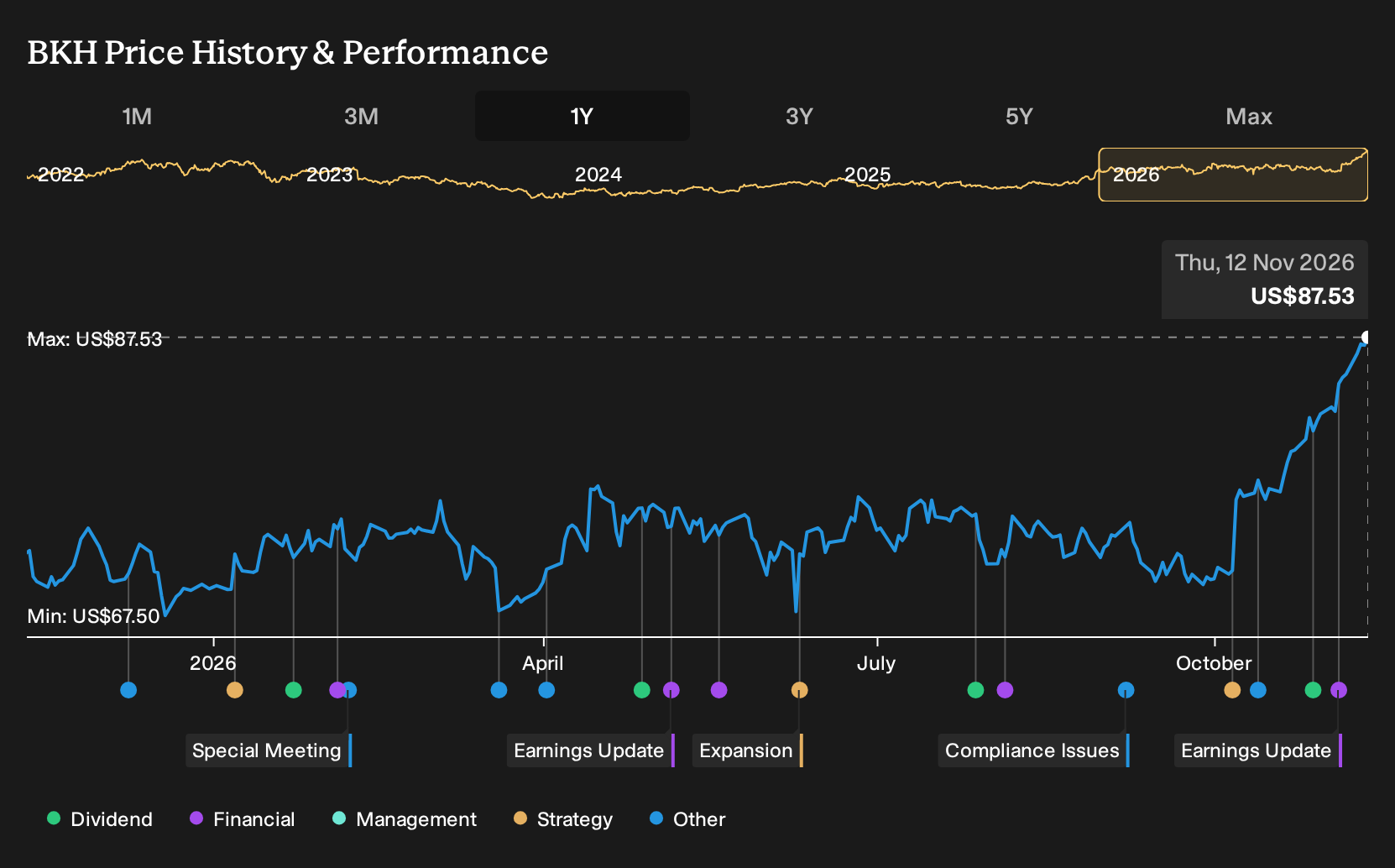
Exploring Other Perspectives
You are getting only two fair value views from the Simply Wall St Community, spread across a fairly tight US$66.74 to US$90.64 range, so each opinion carries weight. Set that against regulatory and weather risks, plus data center and merger catalysts, and Black Hills starts to look like a story worth cross checking against more than one viewpoint.
Explore another Black Hills fair value estimate, including one that suggests it could be valued at up to $90.64.
Form Your Own Verdict
Disagree with existing narratives? Extraordinary investment returns rarely come from following the herd, so go with your instincts.
- A great starting point for your Black Hills research is our analysis highlighting 2 key rewards and 2 important warning signs that could impact your investment decision.
- See our latest analysis for Black Hills. The report includes a comprehensive fundamental analysis summarized in a single visual, the Snowflake, making it easy to evaluate Black Hills' overall financial health at a glance.
Looking for more investment ideas beyond Black Hills?
If the Black Hills story has sharpened your thinking about regulated utilities, you can use that same lens across the market by scanning for other businesses that match the risk, income, or quality profile you care about most.
- If you want potential mispricing combined with solid fundamentals, start with a focused list of 20 high quality undiscovered gems that may not yet be crowded with attention.
- For investors who care most about balance sheet resilience and financial strength, work through the list of solid balance sheet and fundamentals (23 results) to see which companies line up with that priority.
- If income is your anchor, compare Black Hills to a curated set of 6 dividend fortresses and see how its payout profile stacks up against other high yield options.
Have feedback on this article? Concerned about the content? Get in touch with us directly. Alternatively, email editorial-team@simplywallst.com