
3 Stocks That Could Benefit As Lower Oil Prices Cut Energy Costs
Oil has quietly flipped from shortage to surplus, and cheaper crude can ripple through everything from air travel to packaging costs. That shift can squeeze some energy producers, yet it may widen profit cushions for companies that burn a lot of fuel or rely on petrochemicals. This article walks through three stocks that screen as potential beneficiaries of lower energy prices and explains how each might be exposed to this new setup.
The stocks covered below are just a sample set. The full screen surfaced 28 more publicly listed businesses with similarly strong energy-exposure stories that are not discussed here. To go beyond this shortlist, head straight into the Global Oil-Intensive Industries Benefiting from Lower Energy Costs screener to identify, filter and analyze the highest-conviction global oil intensive plays tied to lower fuel costs.
Saudi Basic Industries (SASE:2010)
Saudi Basic Industries is one of the heavies in this screener because its vast petrochemicals network lives and dies by hydrocarbon feedstocks and energy costs. The analyst consensus Narrative on Simply Wall St frames how that exposure could reshape its earnings profile over time.
Saudi Basic Industries generates about SAR95.3b from Petrochemicals and SAR11.3b from Agri-nutrients, showing how tied the group is to hydrocarbon feedstocks, and it carries a market value of roughly SAR145.7b.
"SABIC's ramp-up of new high-growth projects, notably the Fujian Petrochemical Complex in China which was around 98% complete in early 2026 and the MTBE plant in Saudi Arabia that has reached commercial production at full nameplate capacity using proprietary technology, is set to build on earlier expectations for volume and revenue growth as these assets contribute over a longer period to group sales and earnings."
What happens to those future margins and cash flows still hinges on how one unseen pressure in the energy and chemicals cycle ultimately resolves.
That pressure point is exactly what the full narrative for Saudi Basic Industries unpacks, showing where accelerating projects, feedstock swings and capital decisions could reshape the story from here.

Vietnam Airlines JSC (HOSE:HVN)
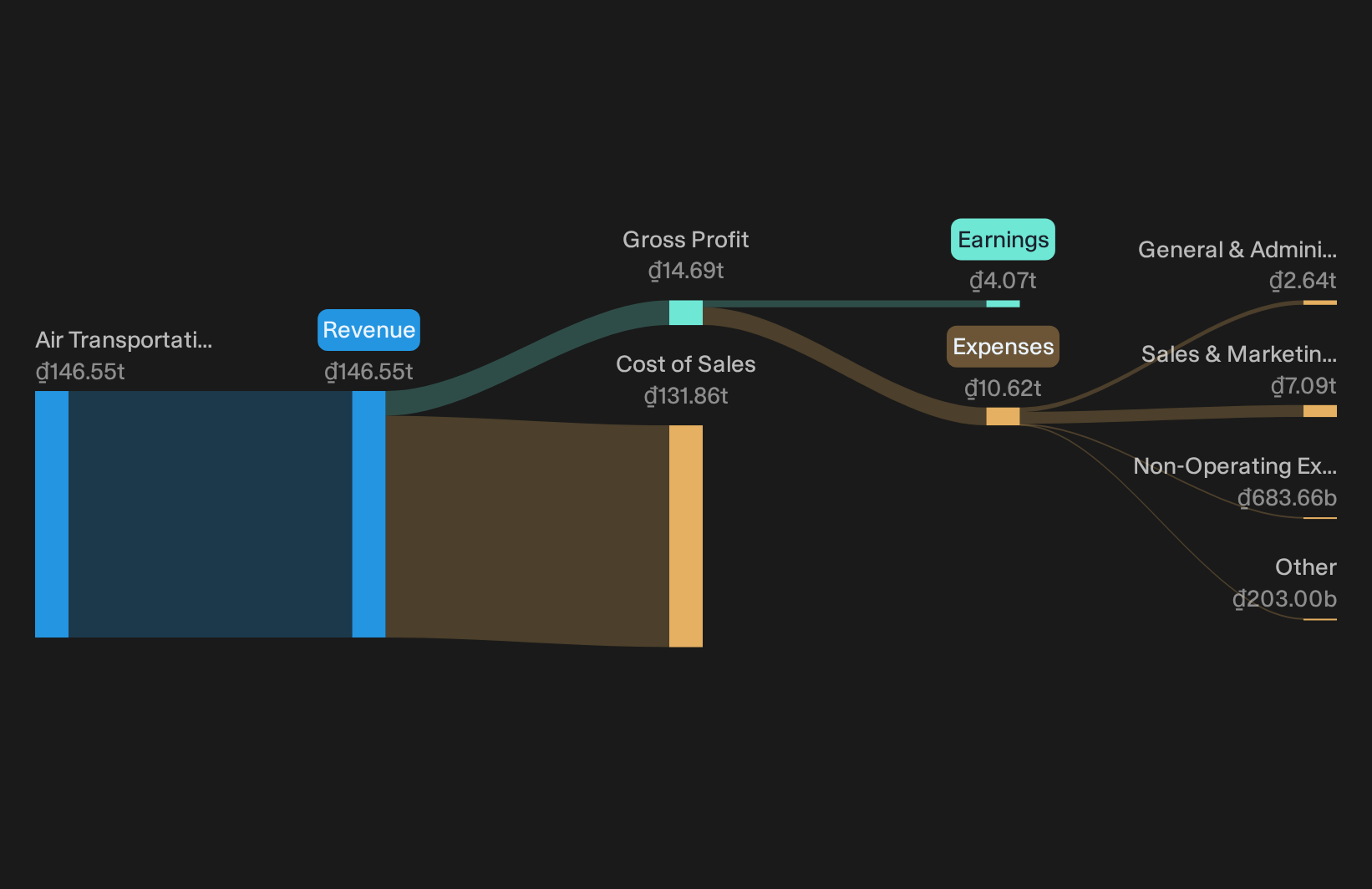
Vietnam Airlines JSC is Vietnam’s flag carrier, running passenger and cargo flights where jet fuel is a major input cost. The business earns about ₫146.5t from air transportation of passengers, goods and parcels and has a market value of roughly ₫68.6t.
Vietnam Airlines JSC sits right in the middle of this screener’s theme because flying widebody jets is one of the most fuel hungry activities in commerce. Lower oil prices can increase an airline’s profit pool when costs ease faster than ticket pricing adjusts, particularly if one key lever moves in investors’ favour.
If that lever matters to you, jump into the 2 key rewards and 1 important warning sign to see whether lower fuel costs are masking deeper swings in Vietnam Airlines JSC.
Sinopec Shanghai Petrochemical (SEHK:338)
Sinopec Shanghai Petrochemical is one of the purest fits for this energy intensive screener, with refining and petrochemicals that are heavily geared to crude and fuel input costs, and according to kapirey, an investor in the Simply Wall St Community, that cost pressure defines how the story plays out.
"The industry is producing more than the market currently requires, and doing so efficiently enough to keep prices under constant pressure."
What happens if that pressure on product pricing meets a sustained stretch of softer crude costs will be crucial for future margins.
If that collision of weak product pricing and softer crude is the real inflection point, the full narrative for Sinopec Shanghai Petrochemical shows whether Sinopec Shanghai Petrochemical is quietly setting up for an earnings rebound.

Seeking Alternatives Before Momentum Flies
Fresh opportunities often move from quiet to crowded fast. Some ideas are breaking out, others are dropping into bargain territory. Scan them while they stay under the radar for now and consider them early.
- Spot steady cash generators and stress test your watchlist against a curated list of solid balance sheet and fundamentals (199 results) before the crowd catches on and pushes valuations away from your comfort zone.
- Ride structural shifts in computing by lining up 25 quantum computing stocks that could build long term momentum while the story is still forming and conviction is thin.
- Evaluate potential income streams by weighing 217 dividend fortresses that might keep paying out even when sentiment cools and yield tourists move on.
Have feedback on this article? Concerned about the content? Get in touch with us directly. Alternatively, email editorial-team@simplywallst.com