
3 Stocks That Could Benefit If US Tariffs Ease
Tariffs have shifted from background noise to front-page politics, and that tug of war in Washington is quietly reshaping the risk and reward profile for globally exposed consumer giants. If Congress clips the White House’s trade powers or rolls back some duties, input costs and pricing power could look very different for some multinationals. This piece unpacks that story and walks through 3 stocks tied to this tariff debate that deserve a closer look right now.
The three stocks below are just a starting sample from this tariff-sensitive theme, and the full screen surfaced 10 more large consumer and retail companies with equally compelling stories that are not covered here. To go deeper on this idea, head straight into the U.S. Tariff-Sensitive Multinational Consumer and Retail Leaders screener to identify, analyze, and focus on your highest conviction tariff plays.
Genuine Parts (GPC)
Genuine Parts taps the same global supply lines that keep tariff policy front and center for this screener, and the analyst consensus Narrative on Simply Wall St sees the business at an important transition point as it reshapes how those automotive and industrial operations are structured.
"The planned separation of Genuine Parts into Global Automotive and Global Industrial in Q1 2027, with stand alone audits completed, leadership teams named and cost allocations quantified, sets up two focused public companies that could each pursue more tailored capital allocation and earnings growth paths."
What happens when one quiet pressure on Genuine Parts’ cost base finally breaks in either direction will matter far more than the headlines.
Genuine Parts runs a global distribution network for automotive and industrial replacement parts, earning about US$9.8b from North America Automotive, US$6.2b from International Automotive and US$9.3b from Industrial operations, and carries a roughly US$17.1b market cap that anchors it firmly in this tariff focused screen.
That quiet pressure point is exactly where the story gets interesting, and the full narrative for Genuine Parts shows how Genuine Parts could see value accelerate as the split reshapes its future.

Global-E Online (GLBE)
Global-E Online is the pure tariff play in this list, a cross-border e-commerce platform that lives right where trade rules, duties, and consumer brands intersect, and the analyst consensus Narrative on Simply Wall St frames the opportunity and the risks through exactly that lens.
"Heightened global regulatory risks and tariff unpredictability remain live concerns, because any new trade restrictions, changes to de minimis rules or tariff regimes could disrupt Global E Online's cross-border flows and force higher compliance and handling costs, which would pressure revenue growth and net margins."
What happens if one key trade rule moves decisively in Global-E Online’s favour could matter far more than any single quarterly update.
Global-E Online runs a direct-to-consumer cross-border e-commerce platform, generating about US$1.1b from its Internet Information Providers segment, and with a roughly US$6.9b market cap it gives this tariff-focused screen exposure to digital trade flows rather than physical store networks.
That inflection point is exactly what the full narrative for Global-E Online unpacks, setting out how tariff shifts, brand demand and cross-border volumes could be quietly reshaping Global-E Online’s trajectory.

AutoZone (AZO)
AutoZone plugs directly into this tariff-sensitive theme because so many of the hard parts on its shelves trace back to global supply chains, and according to LunaRodas, a Simply Wall St Community investor who wrote about the stock, that import exposure is already showing up in the numbers.
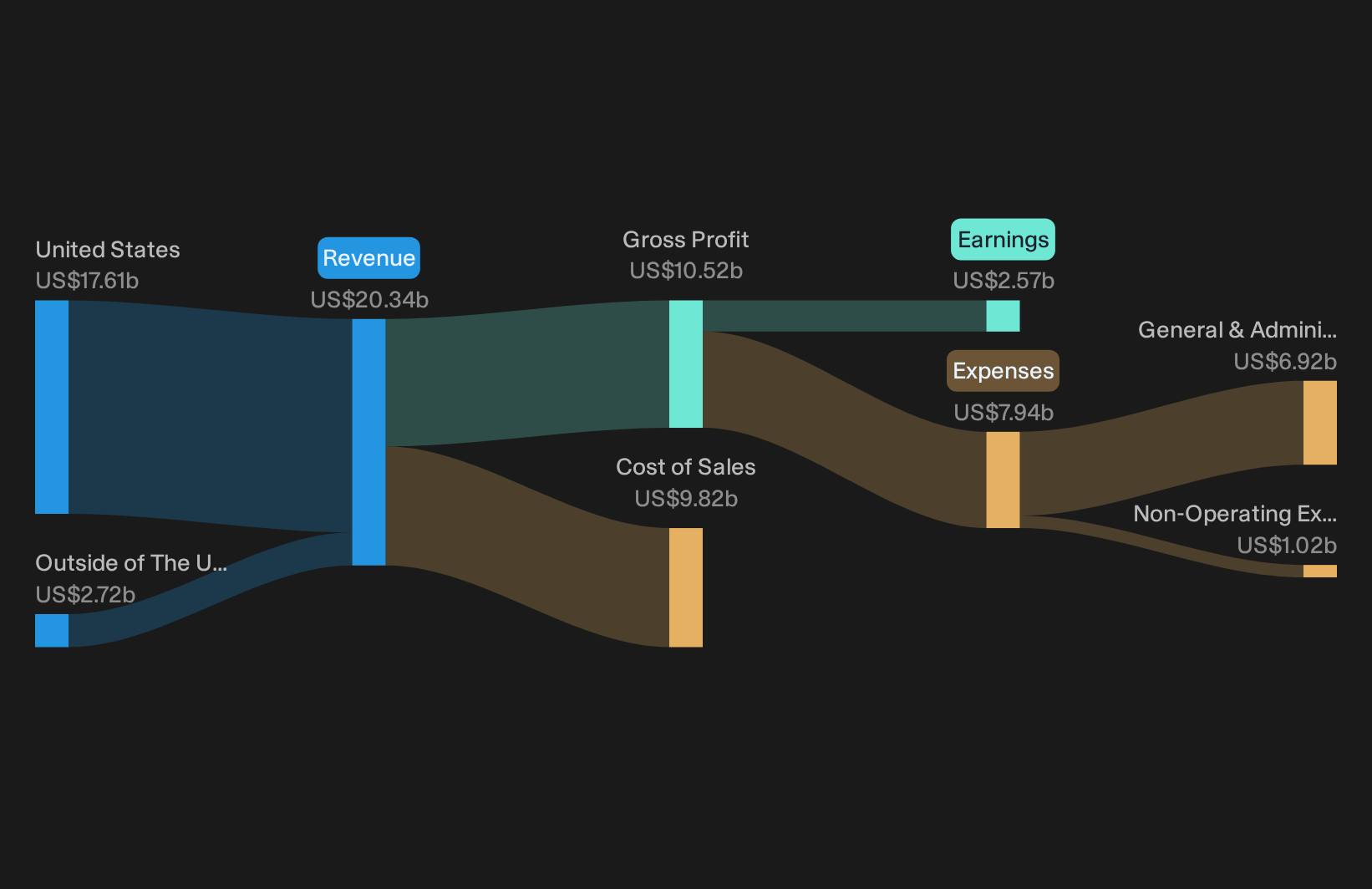
AutoZone is a major retailer and distributor of replacement auto parts and accessories across the Americas. The company generated about US$20.3b from auto parts and carries a market value near US$52.5b, which places the group firmly in the large cap bracket for this screener.
"A $96 million tariff refund tied to tariff reimbursements added $4.43 to EPS this quarter, with management indicating additional amounts will trickle through FY2027."
What happens if one quiet cost pressure on AutoZone’s imported components keeps easing could matter a lot more than any single quarter’s sales line.
That quiet shift in import costs is exactly what the full narrative for AutoZone digs into, revealing how tariff refunds, capital returns and execution risks are all pulling on AutoZone’s story.
Seeking Alternatives Before The Crowd Moves
Fresh themes are breaking out while attention lags and the strongest momentum often flies under the radar for now. Scan these ideas before the information edge starts dropping, and consider them before more investors focus on them.
- Spot potential breakouts early by scanning 32 high quality undervalued stocks curated for quality balance sheets and cash flows before the crowd catches on.
- Follow the AI infrastructure theme while it still looks under owned by tracking 53 AI infrastructure stocks built around the businesses involved in data center and chip demand.
- Review 86 robotics and automation stocks focused on automation companies within the robotics space as industrial spending evolves.
Have feedback on this article? Concerned about the content? Get in touch with us directly. Alternatively, email editorial-team@simplywallst.com