
What China Literature Bears Spotted Before The Slide
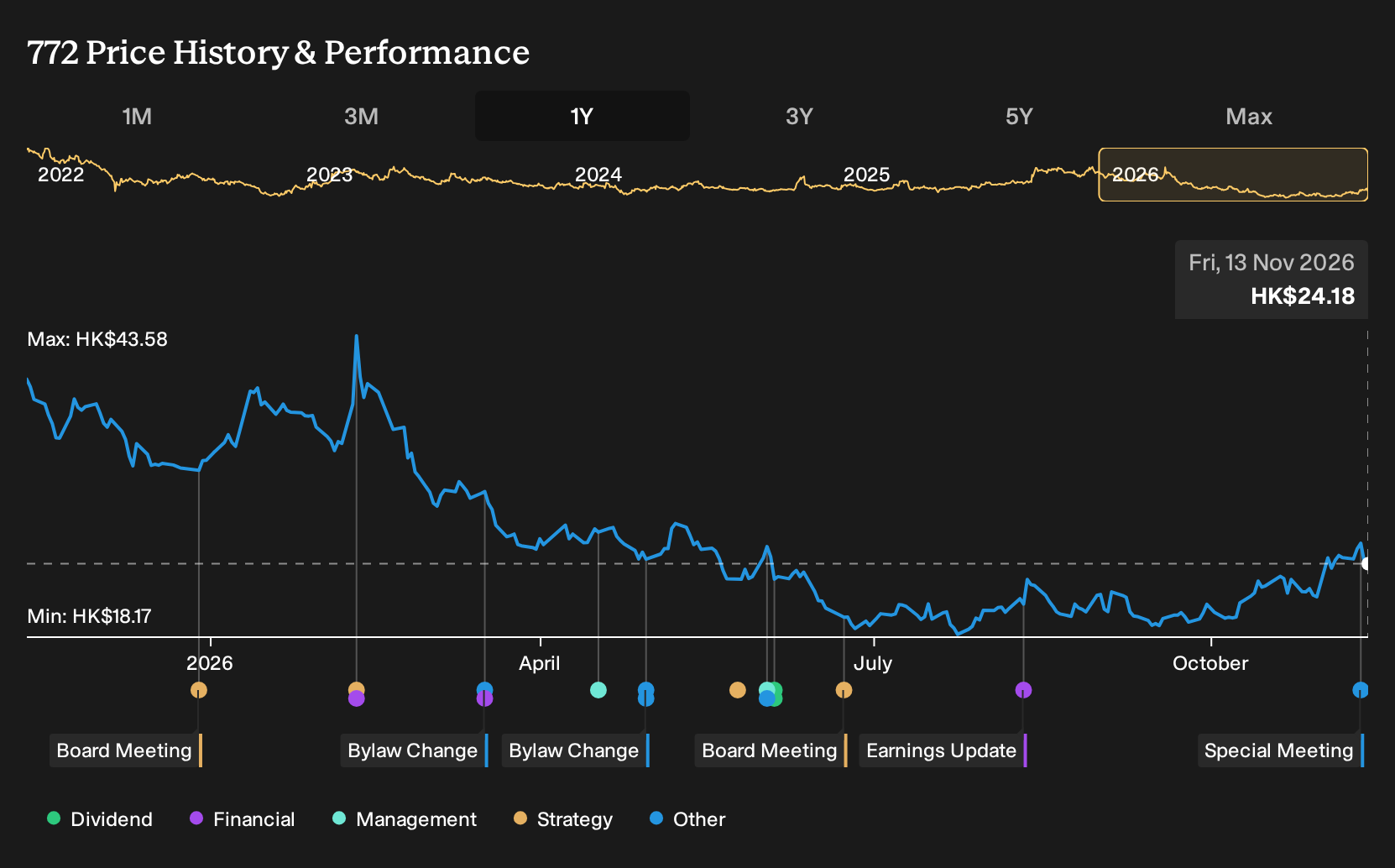
If you backed China Literature on the promise of AI-fuelled IP monetisation and Tencent ties, the ride since has been rough. For China Literature shareholders, the loss over the past year was 36.6%, including dividends. If that decision date in November 2025 was yours, the real puzzle now is clear: which part of the bullish case on 11.7% annual revenue growth, a 21.1% profit margin and a 25.8x future P/E did not line up with how the business actually evolved?
China Literature has already moved. See which of 195 high quality undervalued stocks still trade below our estimates.
The Two China Literature Stories Investors Were Weighing
The shares cost HK$39.24 at the start of the period, and anyone looking at China Literature then had to choose between two very different stories about where the business could reasonably go.
On the bullish side, one narrative pointed to a Fair Value of HK$48.35, essentially the price implied if 11.7% annual revenue growth and a 21.1% profit margin assumption played out as expected.
The bearish view saw a Fair Value of HK$26.08, based on the idea that revenue might rise only 4.5% a year and that heavy reliance on blockbuster IP could keep earnings more fragile than bulls hoped.
What The Results Changed For The China Literature Thesis
The clearest new data point was the 10.7% revenue rise to C¥3,531.388m in H1 2026, supported by 40.3% growth in the IP operations and others segment. That result supported the optimistic argument that China Literature could scale its content library and AI-fuelled adaptations. Profit told a different story, with net income dropping to C¥135.376m and net margin falling to 3.8%, which challenged both forecast margin paths. Overall, the evidence cut both ways.
The key assumption this period tested was margin expansion alongside IP growth. For any similar stock, you would want to track whether segment growth and new formats eventually show up in net margin, not just in top-line momentum.
What You Are Paying For In China Literature Today
China Literature now trades at HK$24.18, well below where it started a year ago. The bullish analyst Narrative on Simply Wall St sees Fair Value above that level and leans heavily on IP operations rather than the softer online reading side.
The core assumption to weigh is that newer visual, gaming and overseas translation formats eventually carry enough weight to reshape earnings quality.
"AI-animated adaptation of online literature into nearly 1,000 dramas since 2H25, with dozens reaching over 100 million views and a hit rate far above the industry average, points to a still underappreciated route for China Literature to expand high-margin IP licensing and advertising revenue."
That disagreement has a full argument behind it. → Uncover the higher Fair Value this Narrative argues for
Where China Literature’s Theme Echoes
China Literature thrives on stories and attention. That creative focus is its core asset.
Another big tech player taps the same raw material in a different way.
It turns search results, video clips and documents into continuous advertising inventory.
It also rents computing power and AI tools so corporate clients can handle demanding workloads and automate routine tasks.
If China Literature is one bet on monetising IP, this other business shows how distribution, data and AI infrastructure might reshape that entire equation.
The case is on the record, with the assumptions it rests on. → See the Narrative that values this company 46% above its price
Have feedback on this article? Concerned about the content? Get in touch with us directly. Alternatively, email editorial-team@simplywallst.com