
What Whirlpool Of India Bears Saw Before The Fall
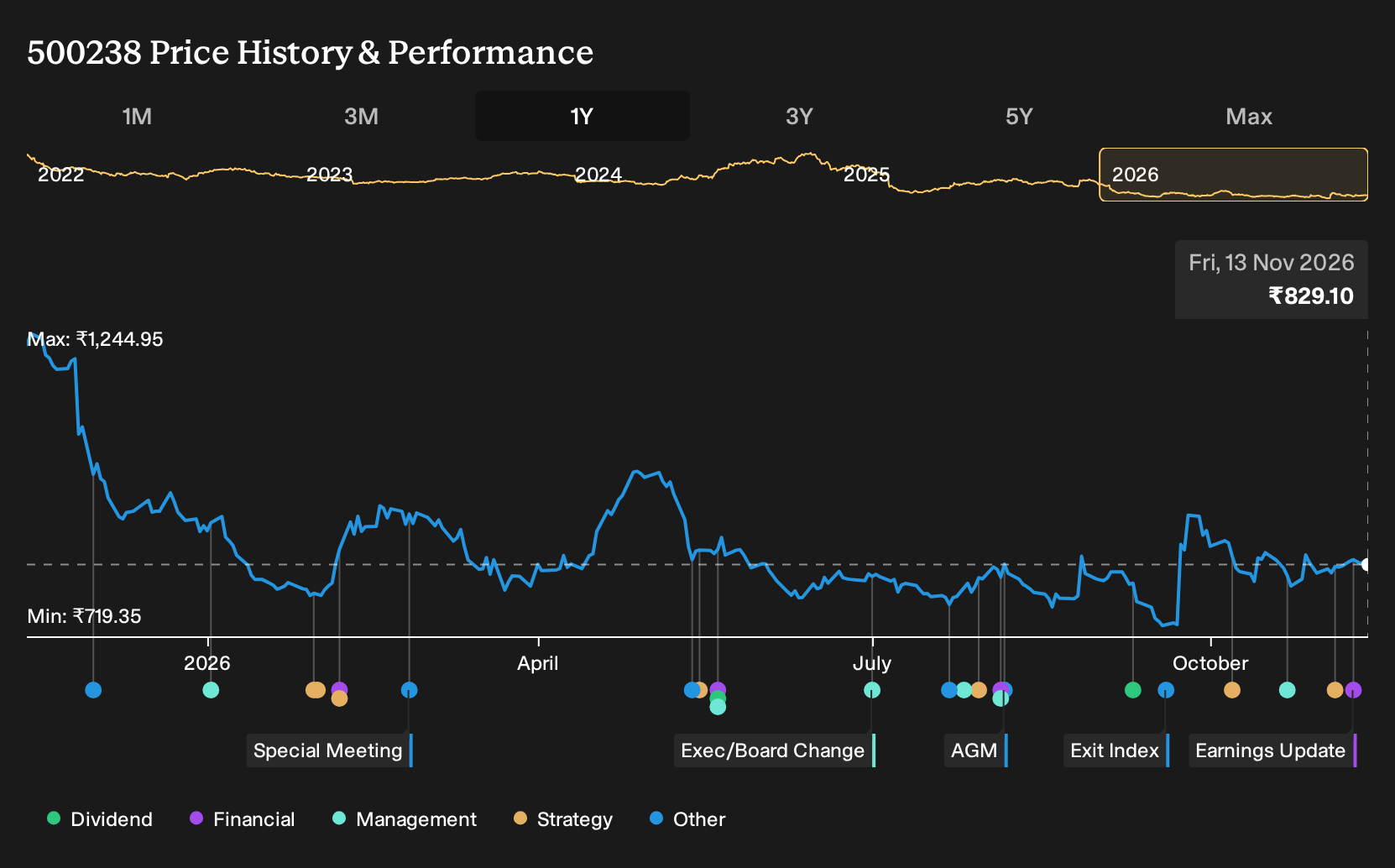
If you had decided to back Whirlpool of India a year ago, the outcome would have been painful. Holding Whirlpool of India over the past year would have meant a 33.0% loss, including dividends. That result now sits alongside fresh figures that show revenue of ₹19,309.6m in Q2 2027, but a weaker net margin of 1.3%. If the original call rested on urban migration, smart homes and margin expansion, which part of that thesis misjudged the risks on record in November 2025?
On Simply Wall St, a Narrative is an investor's thesis written down: the reasoning, plus the numbers it rests on. Run those numbers and you get an estimated Fair Value.
If the move has made Whirlpool of India harder to judge, start where the gap is still open and scan 197 high quality undervalued stocks.
The Argument You Would Have Been Weighing On Whirlpool of India
The shares cost ₹1,225 at the start of the period, which left Whirlpool of India sitting between two very different stories about what came next.
On the optimistic side, the bullish narrative pointed to a fair value of ₹2,100 and leaned on the idea that smart, energy efficient, IoT enabled appliances would ride urban migration and premium demand to higher margins.
The bearish view set fair value at ₹1,100 and focused on global e commerce pressure, where price led competition and tighter environmental rules were expected to squeeze profitability and strand older product lines.
What The Results Changed For Whirlpool of India
The clearest data point for Whirlpool of India is the Q2 2027 print. Revenue reached ₹19,309.6m compared with ₹16,472.7m a year earlier, which lined up with the demand part of the optimistic story. Net income slipped to ₹250.8m from ₹413.3m and margin moved from 2.5% to 1.3%, which challenged the margin expansion claim. Overall, the evidence cut both ways.
The real hinge in this episode was profitability. If an investment case leans on better margins, you need to check net income and net margin in each set of results and see whether they move in the same direction as the story.
What Whirlpool of India’s Drop Leaves You Weighing Today
Whirlpool of India now trades at ₹829 after falling 33.0% over the past year, while the bullish analyst narrative on Simply Wall St describes its fair value as being above that level.
The argument focuses on premium refrigeration, early-stage share in front-load washers and air conditioners, and the Elica subsidiary. A buyer today must judge whether potential share gains and product mix shifts can offset input and regulatory cost pressures.
"The main thing that has to go right is that Whirlpool of India converts its record quarterly revenue, growing premium adjacencies, and negative net working capital position into sustained EBITDA margin recovery despite higher input, regulatory, and e-waste costs."
One Narrative has put a figure on that disagreement. → See the Narrative with its higher Fair Value, assumptions and all
Go Straight To The Source
The next headline does not have to be where your research begins. Go straight to the companies and see whether a contrarian opportunity could be taking shape.
- Company 1 - 28% below our estimate - uses clinically backed probiotics to shift toward higher-margin adult oral care.
- Company 2 - 40% below our estimate - extends its nutrition portfolio into new export channels via retail partners.
- Company 3 - 33% below our estimate - expands a maintenance-focused sales team to accelerate contracts and deepen coverage.
That is three of the list. See all 198 companies with the balance sheet to back it up →
Have feedback on this article? Concerned about the content? Get in touch with us directly. Alternatively, email editorial-team@simplywallst.com