
Missed Vesuvius' Run? What Holders Had To Believe
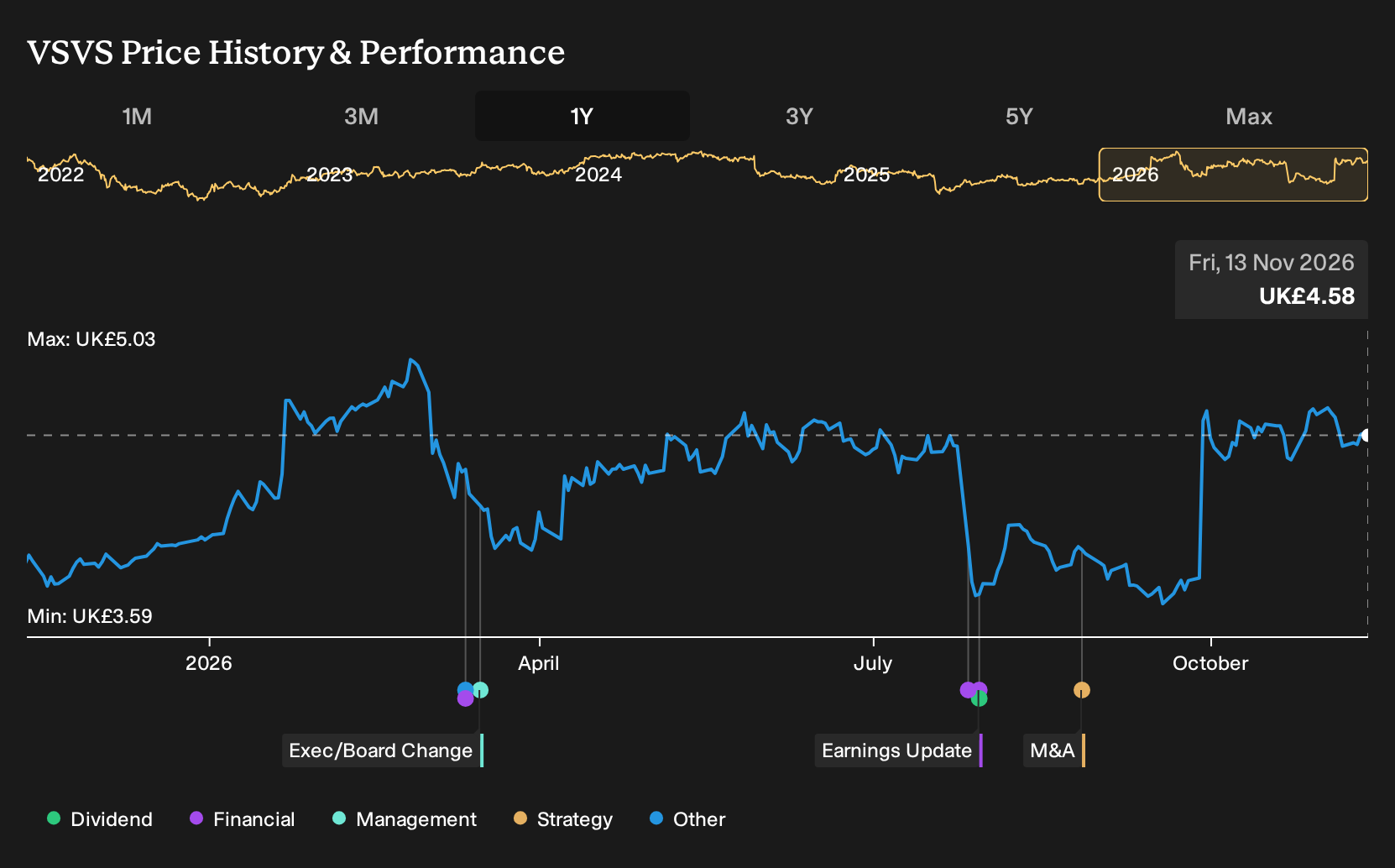
If you only glanced at headlines about a possible bid for Vesuvius and hedge funds building positions, you might expect drama rather than steady gains. For Vesuvius shareholders, the return over the past year was 25.9%, including dividends. That outcome landed even as recent results showed revenue at £922.9m and net income at £16.9m in H1 2026, with margins lower than a year earlier. If you were weighing Vesuvius on 13 November 2025, what exactly made that risk look worth taking?
Vesuvius has already moved. See which of 15 high quality undervalued stocks still trade below our estimates.
The Two Stories Investors Had To Weigh On Vesuvius
The shares cost £3.88 at the start of the period, and anyone looking at Vesuvius then had to choose which storyline felt more convincing.
The bullish view put fair value at £4.38, a notional price implied by assumptions about India and product development. That camp focused on rapid revenue and profitability growth in India and a rising share of higher value, technology driven products.
The bearish side saw fair value closer to £3.3, again an implied level based on more cautious expectations. This camp was concerned that faster adoption of electric arc furnaces and tighter emissions rules could steadily shrink the market for Vesuvius’ traditional steel products.
What The Results And Bid Interest Put To The Test For Vesuvius
The key hard fact was in the H1 2026 report. Revenue was £922.9m compared with £907.5m in H1 2025, while net income fell to £16.9m from £30.9m and net margin moved from 3.4% to 1.8%. That combination supported the cautious case on profitability, even as later bid interest and fund disclosures kept the longer term quality debate open.
The lesson is simple. When a story hinges on margin resilience, as it did for Vesuvius, track net income and net margin side by side rather than just watching revenue or headlines about potential bidders.
What Vesuvius Buyers Are Paying For Today
Vesuvius now trades at £4.58, after a 25.9% gain over the past year from £3.88. The bullish analyst Narrative on Simply Wall St sees Fair Value above that level and frames the gap around execution rather than a sweeping change in the steel cycle.
The Narrative argues that a buyer today is effectively judging whether cost savings, order recovery and a richer product mix in Foundry can all come through together. In other words, you are testing whether the recent operational reset really clears the way for better profitability.
"On top of the existing cost programme narrative, the identified route to at least £55m of recurring structural savings by 2028, with £7.4m already embedded and management indicating potential to slightly exceed the target, opens further room for operating margin and earnings per share to surprise if fixed cost reductions and footprint changes flow through more quickly than analysts model."
Not everyone reads the same price the same way. → See the higher figure this Narrative lands on, and how it gets there
Looking One Step Beyond Vesuvius
Vesuvius operates in heavy industry, where factories matter more than headlines. That grounding in physical assets highlights a related space.
Steel producers need reliable inputs over long periods. Defense and security buyers look for something similar, but in a very different package.
Another manufacturer is targeting that demand with ammunition and expendable drones. Both are designed to be used up, then reordered quickly.
Instead of selling ideas, this business already runs a sizable facility. The open question is how well it converts that footprint into steady shipments.
That argument has a Narrative and a number behind it. → See the company one Narrative values 183% above its price
Have feedback on this article? Concerned about the content? Get in touch with us directly. Alternatively, email editorial-team@simplywallst.com