
Two Recovering Stocks, Two Different Setups: NVO and NRG on the Stock and Dual Option Selling Watchlist
Introduction
A stock does not need to return to its old highs to offer an interesting stock-and-option opportunity. Sometimes the more useful question is whether selling pressure is easing, support is becoming identifiable, and the available option strikes fit a disciplined ownership plan. This week’s Bull Strangle watchlist highlights two examples: Novo Nordisk (NVO) and NRG Energy (NRG). Both have recovered from recent lows, but their charts tell different stories. Novo Nordisk is building a more gradual recovery, while NRG has rebounded sharply after an extended decline. Their presence on the watchlist starts the evaluation. Final selection still depends on entry-day prices, available option premiums, liquidity, earnings dates, and portfolio fit. The prices and technical levels discussed here come from the supplied watchlist charts.
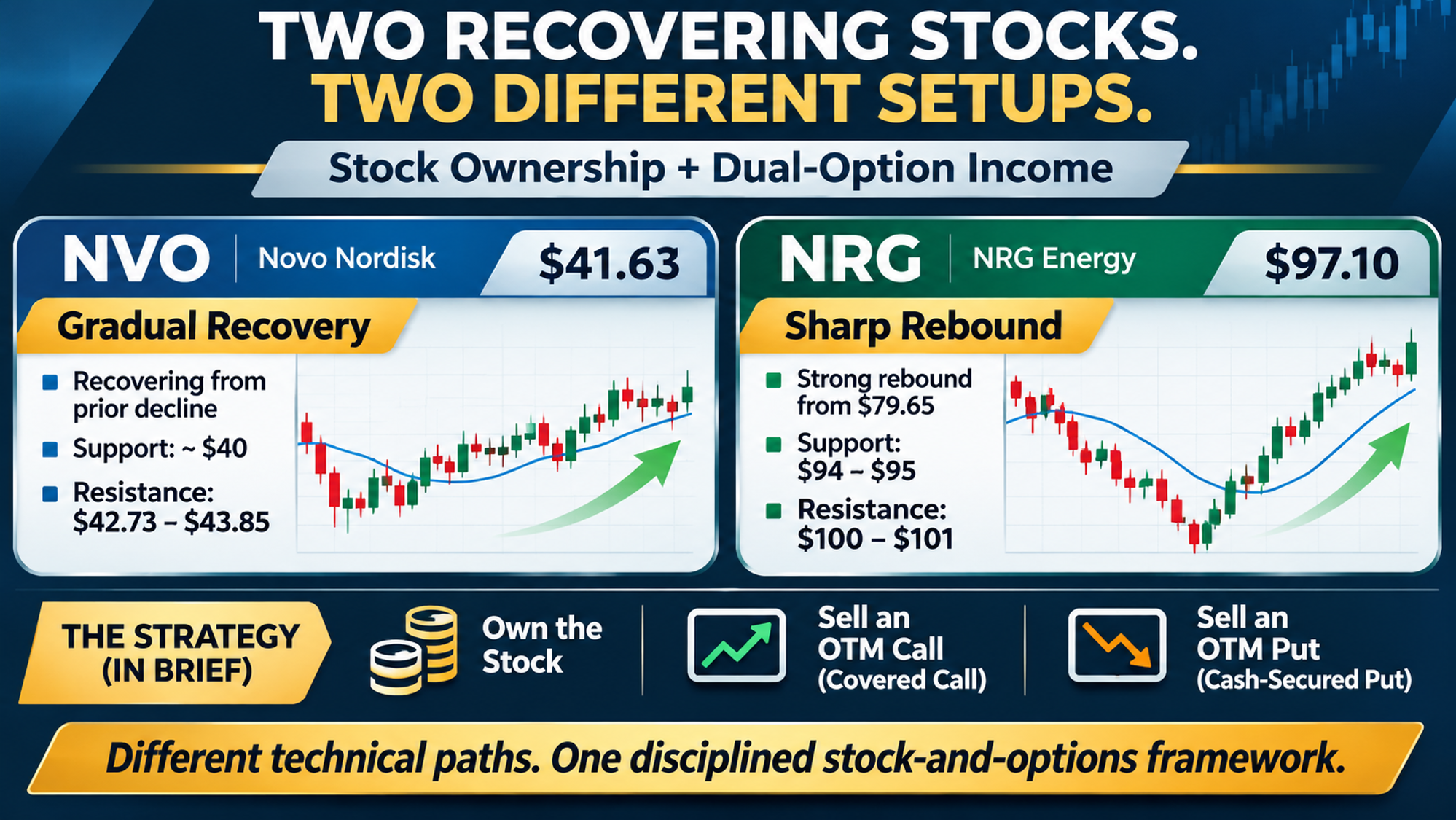
How the Bull Strangle Works
The Bull Strangle combines stock ownership with two option sales: an out-of-the-money covered call and an out-of-the-money cash-secured put. For a standard one-unit position, that means owning 100 shares, selling one call against those shares, and reserving enough cash to purchase another 100 shares if the put is assigned. The call generates premium while establishing a potential sale price above the stock’s entry price. The put generates additional premium in exchange for accepting an obligation to purchase more shares at its strike. Together, the premiums provide a limited cushion against a decline, while the call caps the upside on the original shares. This makes stock selection central to the strategy. A sharp decline can produce losses on the shares already owned and lead to additional ownership through put assignment. The premium received does not eliminate that exposure.
Novo Nordisk: A Gradual Recovery Taking Shape
Novo Nordisk’s chart shows a recovery from its September lows near $37 to approximately $41.63.
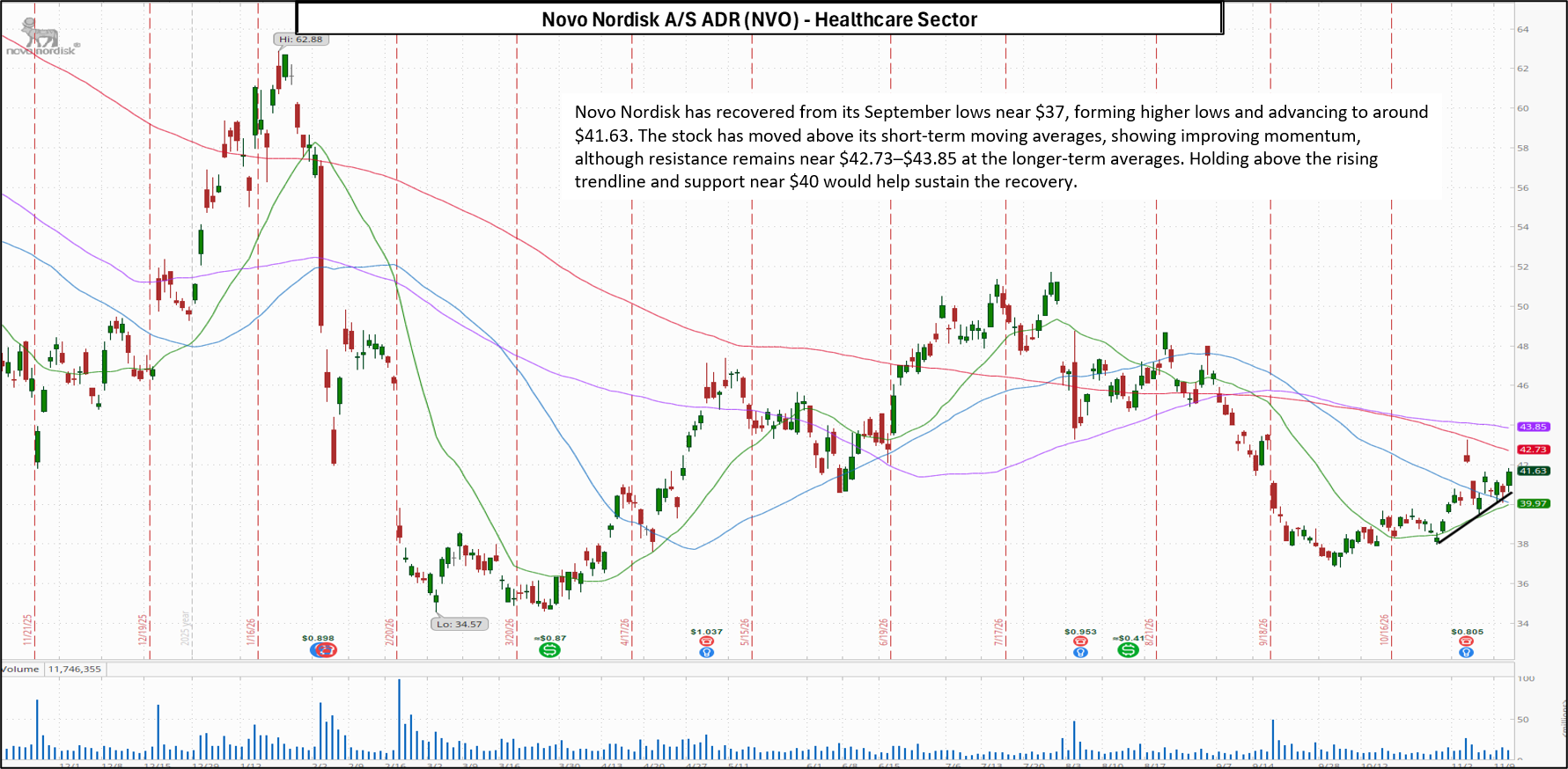
The recent sequence of higher lows suggests buyers are more willing to step in before the stock returns to its previous trough. The shares have moved above their short-term moving averages, with a rising trendline supporting the latest advance. The area around $40 is an important reference point for evaluating whether that improvement continues. There is still overhead resistance. Longer-term moving averages near $42.73 and $43.85 sit above the current price, and the stock remains well below its earlier highs. The chart therefore supports a developing recovery rather than a confirmed return to a sustained long-term advance. For the Bull Strangle, that distinction matters. A gradual recovery can offer a setting in which the position benefits from some stock appreciation while collecting option premium. The stock does not have to recover its entire decline during a single holding period for the position to produce a positive result. However, strike selection must account for nearby resistance and support. A call strike should provide an acceptable exit price if the rebound continues. The put strike needs to represent a price at which additional ownership remains acceptable. A break below the developing support area would weaken the original setup and require reassessment.
NRG Energy: A Sharp Rebound Within a Weaker Broader Trend
NRG presents a more abrupt recovery. The stock rebounded from a recent low of $79.65 to around $97.10, moving above its short-term moving average near $94.43 and the descending trendline shown on the chart.
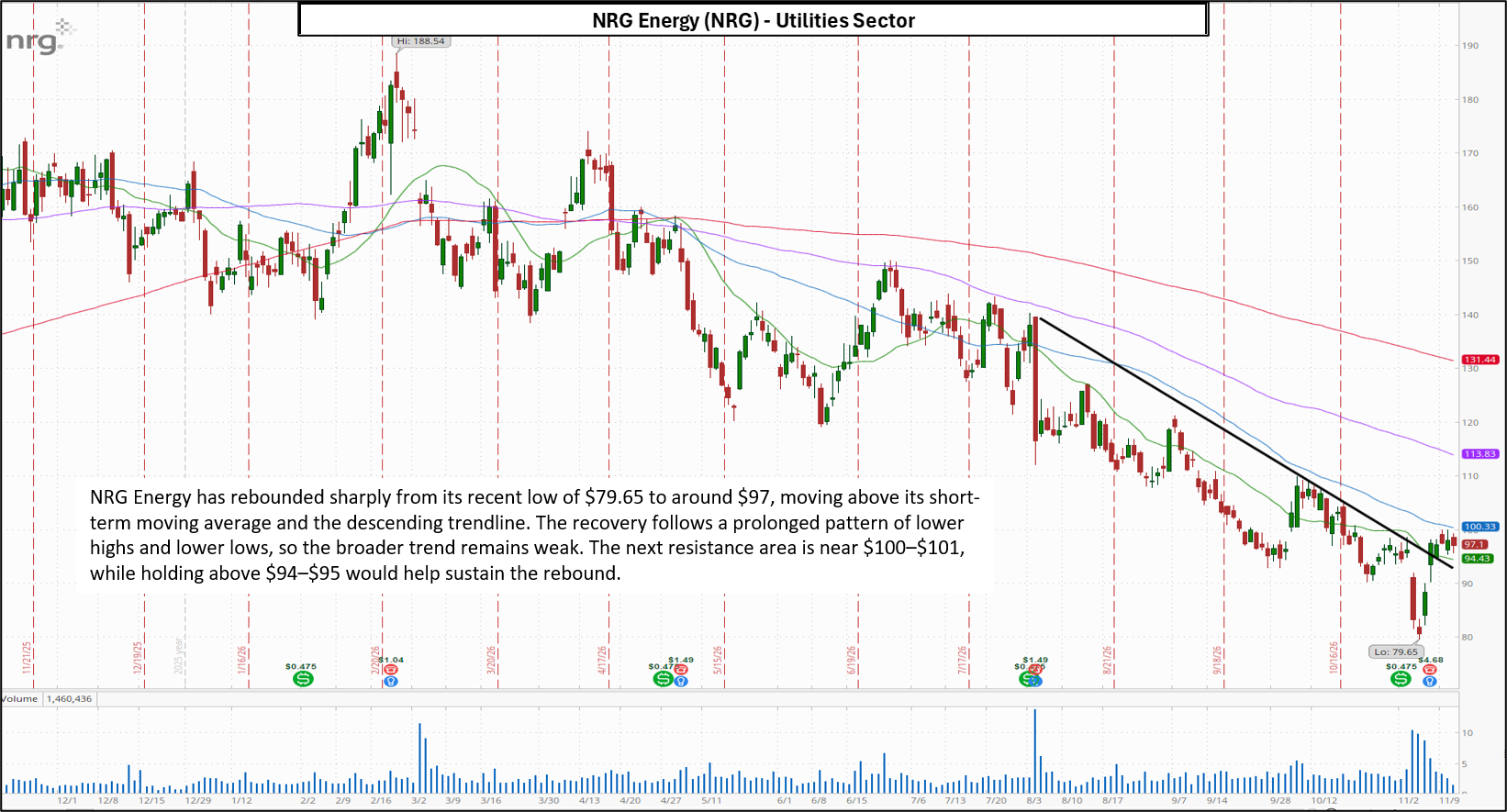
Those are constructive developments, but they follow a prolonged sequence of lower highs and lower lows. The broader trend remains under pressure, with the next resistance area near $100–$101 and additional moving-average resistance farther above. For a potential Bull Strangle entry, the immediate question is whether the rebound can establish a more durable base. Holding around $94–$95 would help support that interpretation. Renewed selling below that area would raise the possibility that the advance was a temporary bounce within the larger decline. NRG also illustrates why a lower share price relative to past highs is insufficient on its own. The decision depends on the current chart, the proposed ownership prices, and the amount of capital exposed if the put is assigned. After such a rapid rebound, the entry-day price deserves particular attention. A trade that looked attractive during watchlist preparation may offer a different balance of premium and downside exposure after another large move.
Turning the Watchlist Into a Trade
NVO and NRG offer different recovery patterns, allowing the same strategy to be evaluated against different price behavior. NVO’s higher lows provide a developing support framework. NRG’s trendline break offers an early sign of improvement that still needs follow-through. Before either becomes a position, I review both option legs together, confirm that earnings fall outside the strategy’s avoidance window, and evaluate the full capital commitment. That includes the initial stock purchase and the cash reserved for potential put assignment. The weekly ladder also matters. Each new position must fit alongside existing holdings, sector exposure, and available cash reserves. Healthcare and utilities provide different sector exposures, but both positions would still carry equity-market risk. The goal is to identify stocks whose ownership levels, option income, and technical structure work together. This week, NVO and NRG provide two useful candidates for that process, with final selection dependent on whether their entry-day terms meet the strategy’s requirements.
About the Bull Strangle
The Bull Strangle Newsletter combines screened stock ownership with call-and-put selling in a four-week ladder. Learn more at www.BullStrangle.com.
Want to build a more complete trading toolkit?
The Bull Strangle Newsletter focuses on stocks and options, combining stock ownership with disciplined option-selling techniques designed to generate consistent income while managing risk.
The Smart Spreads Newsletter focuses on seasonal commodity spreads, a historically proven approach that seeks opportunities across agricultural, energy, metal, and financial futures markets.
Each strategy is designed to stand on its own, but together they provide a diversified approach that can perform across a wide range of market environments. For traders looking to deepen their education, The Bull Strangle Strategy and Trading Commodity Spreads are both available on Amazon.
Visit BullStrangle.com to subscribe for just $1 for the first month.
For a video overview of the Bull Strangle Newsletter
For a video overview of the Smart Spreads Newsletter
Darren Carlat
Dual Edge Research
(214) 636-3133
DualEdgeResearch@gmail.com
Disclaimer
This information is for informational purposes only and should not be considered investment advice. Past performance is not indicative of future results, and all investments carry inherent risk. Consult with a financial advisor before making any investment decisions.