
What Avnet Doubters Got Wrong Before An 85% Rally
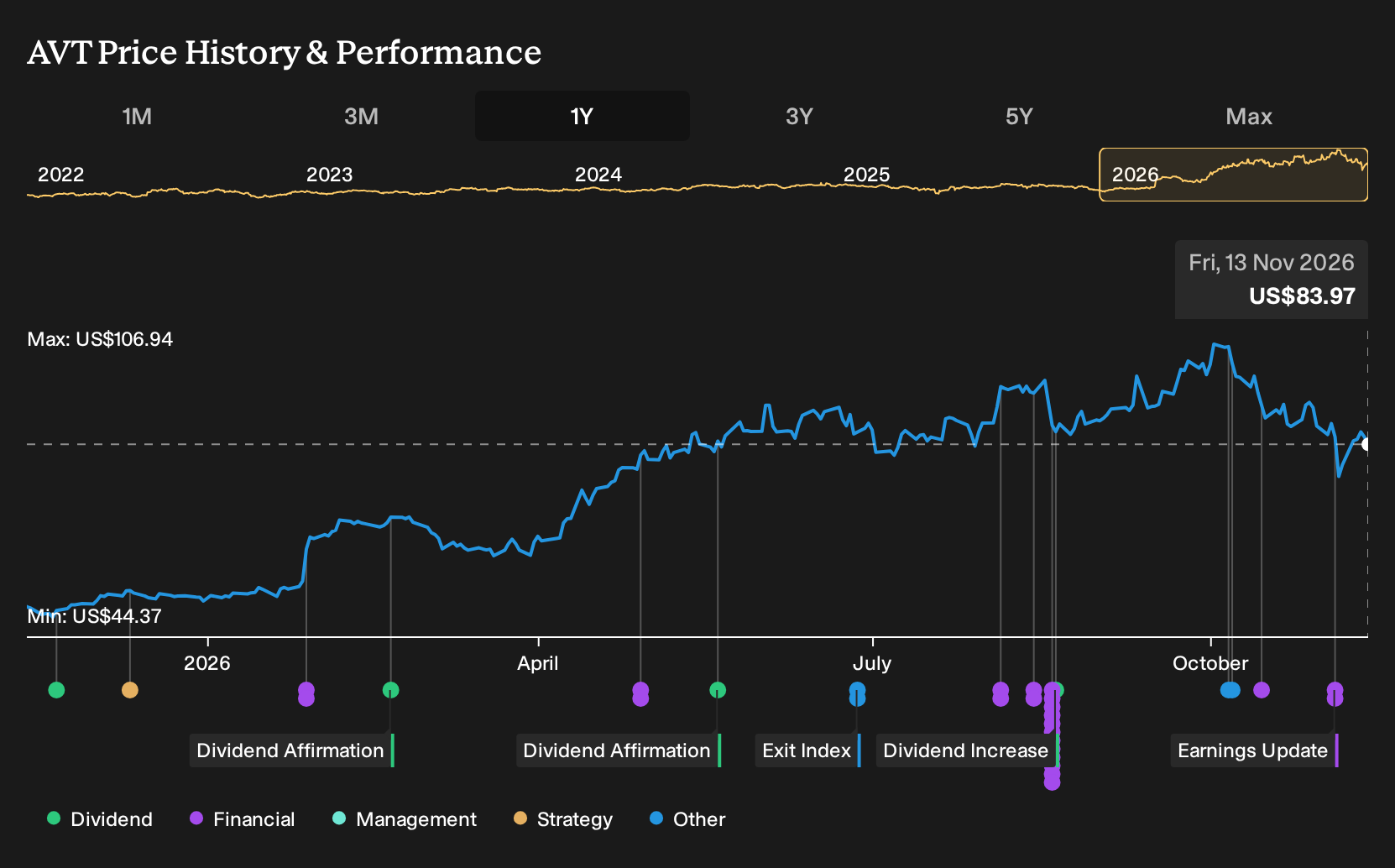
If you only glanced at Avnet’s quarterly headlines, the sharp swings in demand, margin worries in EMEA, and debate over fair value targets might have looked like a coin toss for new capital. Investors who held Avnet over the past year are up 84.5%, including dividends. If you had been weighing an entry back on 13 November 2025, how would you have judged that combination of Asia-led momentum and margin risk?
Avnet has already moved. Pinpoint other ways to investigate the theme among 53 AI infrastructure stocks.
The Two Stories Investors Had To Choose Between On Avnet
The shares cost US$46.75 at the start of the period, so any fresh money into Avnet had to pick a side in a live debate rather than a settled verdict.
On the upbeat side, one Narrative pointed to a Fair Value of US$51.87. This was a rough guide to what that view thought the stock was worth if Asia kept posting 18% year-on-year growth and digital platforms at Farnell pulled in stickier, higher-margin business.
The more cautious script anchored to a Fair Value of US$43. It argued that direct supply chain adoption by large manufacturers and digital-native competitors could pressure Avnet’s distributor model and squeeze already tight gross margins.
What The Results Changed For The Avnet Debate
Record AI and data center demand gave Avnet a powerful backdrop, with total revenue reported at US$5,898.6m in Q1 2026 and US$10,718.0m in Q1 2027. Net income excluding extra items moved from US$51.7m to US$282.2m, and net margin shifted from 0.9% to 2.6%. That pattern broadly supported the optimistic case, although the distributor model concerns were not disproven.
The key lesson is simple. When a thesis hinges on margin resilience, track both absolute profit and the net margin line over several reports. Then test whether the business is earning more per dollar of sales, not just booking higher revenue.
What Avnet's Recent Run Already Prices In
Avnet now trades at US$83.97, after a one year gain of 84.5%. The analyst consensus Narrative on Simply Wall St sees its Fair Value above that level, anchored to a view that current demand conditions and operating progress can support more earnings power.
The Narrative stresses how AI linked orders, operating leverage and tighter working capital all feed into that view. A buyer today would need to judge whether Avnet can keep expanding operating margins while managing mix driven pressure on gross margin.
"Improving operating leverage and capital efficiency are now more visible, with adjusted operating income reported to be growing about 2.6x faster than sales, SG&A as a percentage of gross profit trending toward a sub 60% target and return on working capital reaching 19%, which together create room for further operating margin expansion and support for adjusted EPS growth."
One Narrative has put a figure on that disagreement. → See the Narrative with its higher Fair Value, assumptions and all
Another Way To Power Avnet’s Theme
Avnet rides demand for AI hardware. You could also look at who quietly powers those systems.
High performance data centers and factories need chips that manage power efficiently. They also depend on sensors that help machines see, measure and react.
One specialist focuses on that mix, building power devices and sensing platforms for electric vehicles, automation and AI computing.
Those components influence how much energy AI equipment uses and how reliably it runs.
If that need keeps widening, this power and sensing supplier could see its role evolve too.
The case is written up, with the assumptions it depends on. → Discover the robotics company one Narrative values 35% above its price
Have feedback on this article? Concerned about the content? Get in touch with us directly. Alternatively, email editorial-team@simplywallst.com