
Missed Thyssenkrupp's Rally? Here's What Early Buyers Saw
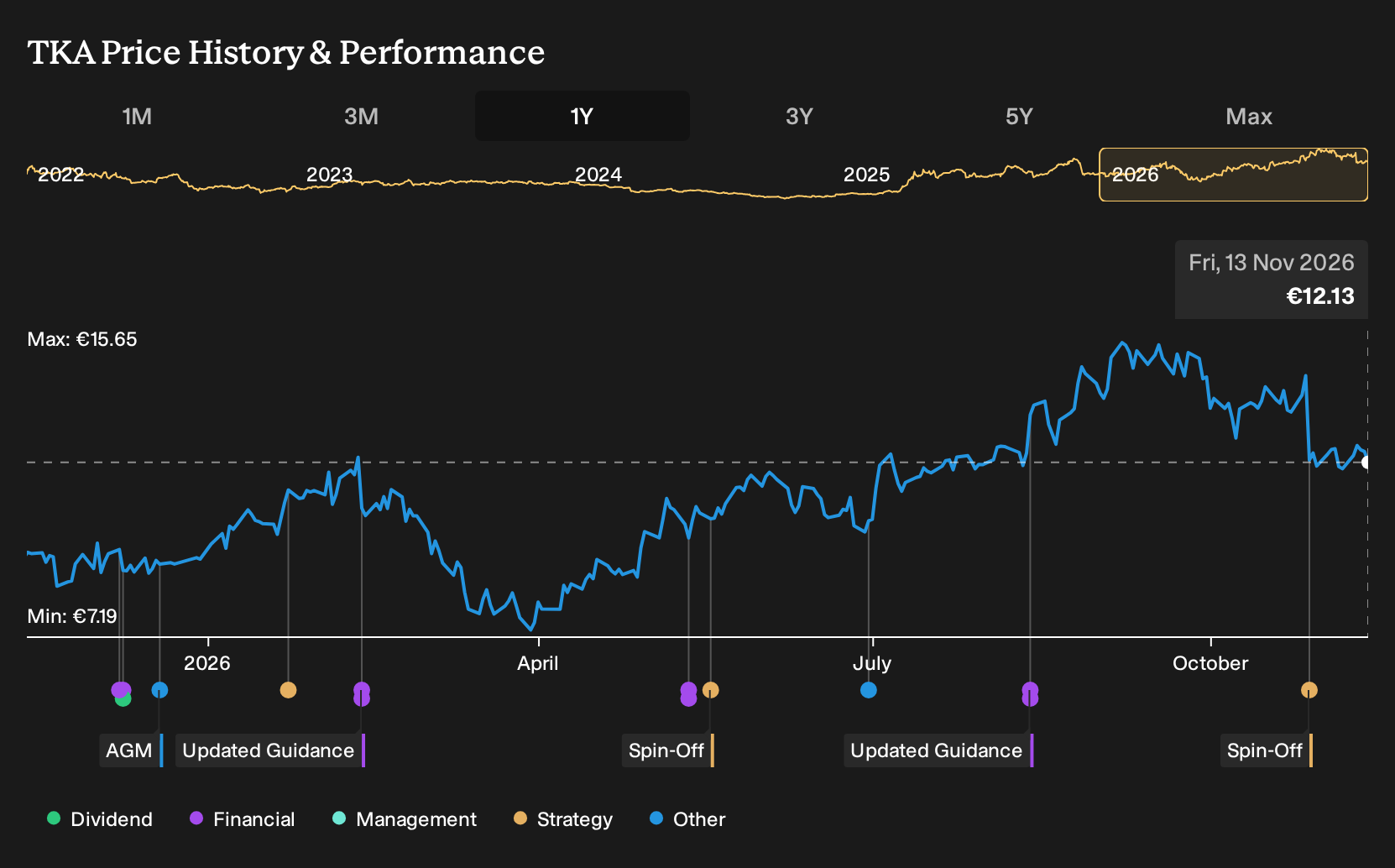
If you only read one headline on thyssenkrupp this year, it was probably Canada tapping its Marine Systems arm as preferred builder for a Patrol Submarine Project worth over US$100b across its lifetime. Investors who held thyssenkrupp over the past year are up 43.8%, including dividends. If you were weighing a purchase back on 13 November 2025, what did you need to believe about future defense orders, green steel and restructuring to justify that risk?
The easy part of this move is behind thyssenkrupp. Zero in on 200 high quality undervalued stocks for companies trading below our estimates.
The Argument Thyssenkrupp Investors Were Weighing Up
The shares cost €9.47 at the start of the period, and the debate around thyssenkrupp was already split between green steel optimism and restructuring fatigue.
The bullish view saw a Fair Value of €13, a price implied by its assumptions, built on revenue growth of 4.2% a year and profit margins rising to 4.3%, with green hydrogen and Marine Systems expected to reshape the group.
The bearish side put Fair Value at €6.3 on its implied pricing, assuming revenue would decline 0.6% annually and warning that high pension and legacy obligations could keep cash returns under pressure.
What The Facts Did To The Thyssenkrupp Argument
Canada naming thyssenkrupp Marine Systems as preferred builder for a Patrol Submarine Project worth over US$100b over its life supported the bullish case that defense could become a heavier earnings anchor. The latest results added some backing, with revenue at €8,786m and net income moving from a €278m loss to break-even, although a 0.0% net margin kept the profitability promise unproven.
The lesson is simple. When a thesis leans on a segment pivot, such as thyssenkrupp’s defense and green steel story, it is important to track segment order books, reported margins and project timing rather than only watching group revenue.
What Today's Thyssenkrupp Price Already Assumes
Thyssenkrupp now trades at €12.12, after a 43.8% gain over the past year, while the bearish analyst Narrative on Simply Wall St places its Fair Value below that level based on its own assumptions.
The Narrative leans on muted sales guidance and heavy decarbonization and restructuring spend, so a buyer today effectively tests whether cost programs and capital projects can sustain EBIT and free cash flow while group revenue remains under pressure.
"Although thyssenkrupp is progressing the shift to a lean holding structure with spin offs and greater segment autonomy, the company now guides group sales in FY25/26 to decline 1% to 3% while confirming earnings targets. This suggests future value creation may rely heavily on financial engineering and cost measures rather than durable revenue growth and could cap longer term upside for group sales and net margins."
Not everyone reads the same price the same way. → See the lower figure this Narrative lands on, and how it gets there
Where Thyssenkrupp’s Story Connects
Thyssenkrupp pushes deeper into steel, ships and heavy industry projects. Your attention naturally goes there first.
Shift the angle slightly and a different need appears. Those projects still rely on dense, reliable electrical gear and cooling.
Another industrial group focuses almost entirely on that physical backbone. It builds hardware that moves power, controls it and prevents overheating.
Data centers, grids and aircraft all lean on similar voltage and thermal problems. As those problems keep getting tougher, this specialist’s role could quietly expand.
One Narrative has already put a figure on it. → Uncover the company trading 32% below one Narrative's Fair Value
Have feedback on this article? Concerned about the content? Get in touch with us directly. Alternatively, email editorial-team@simplywallst.com