
3 Australian Dividend Stocks To Own In November 2026
Rising interest rates are creating a new global credit squeeze, which is making life harder for heavily indebted companies and governments that need to roll over their borrowings. Strong Australian dividend stocks with solid balance sheets and dependable cash flows can look more appealing when weaker borrowers feel the strain. This article walks through three higher yielding options from our quality income screen that may warrant a closer look.
The three stocks highlighted here offer a compelling starting point if you want exposure to higher yielding dividend payers with well covered, stable and growing payouts. However, if you want the pick of this theme, these 4 dividend aristocrats stocks are the best of the best.
BHP Group (ASX:BHP)
BHP Group is a global resources giant whose iron ore and copper operations generate substantial free cash flow, aligning it closely with a 3%+ dividend powerhouse profile. The business earns about US$29b from copper, US$23.9b from iron ore and US$5.6b from coal, and is valued at roughly A$299.2b.
BHP Group appeals to this dividend screen because its large iron ore and copper operations throw off the cash that supports a high, covered payout. According to ChinCheng, an investor in the Simply Wall St Community, the real story is how those future facing metals link to long-term income potential.
"Copper demand: electrification and AI-driven power infrastructure. The market often frames copper as an “energy transition” commodity, but I see incremental demand coming from AI/data-center power density and grid capex (transmission, distribution, redundancy)."
What happens to that income profile if a single unseen pressure on future copper pricing quietly shifts the balance between robust margins and squeezed cash flow?
If that pressure point interests you, read the full narrative for BHP Group to see how BHP Group’s copper exposure could shift from a squeezed cash generator to an accelerating dividend engine.

QBE Insurance Group (ASX:QBE)
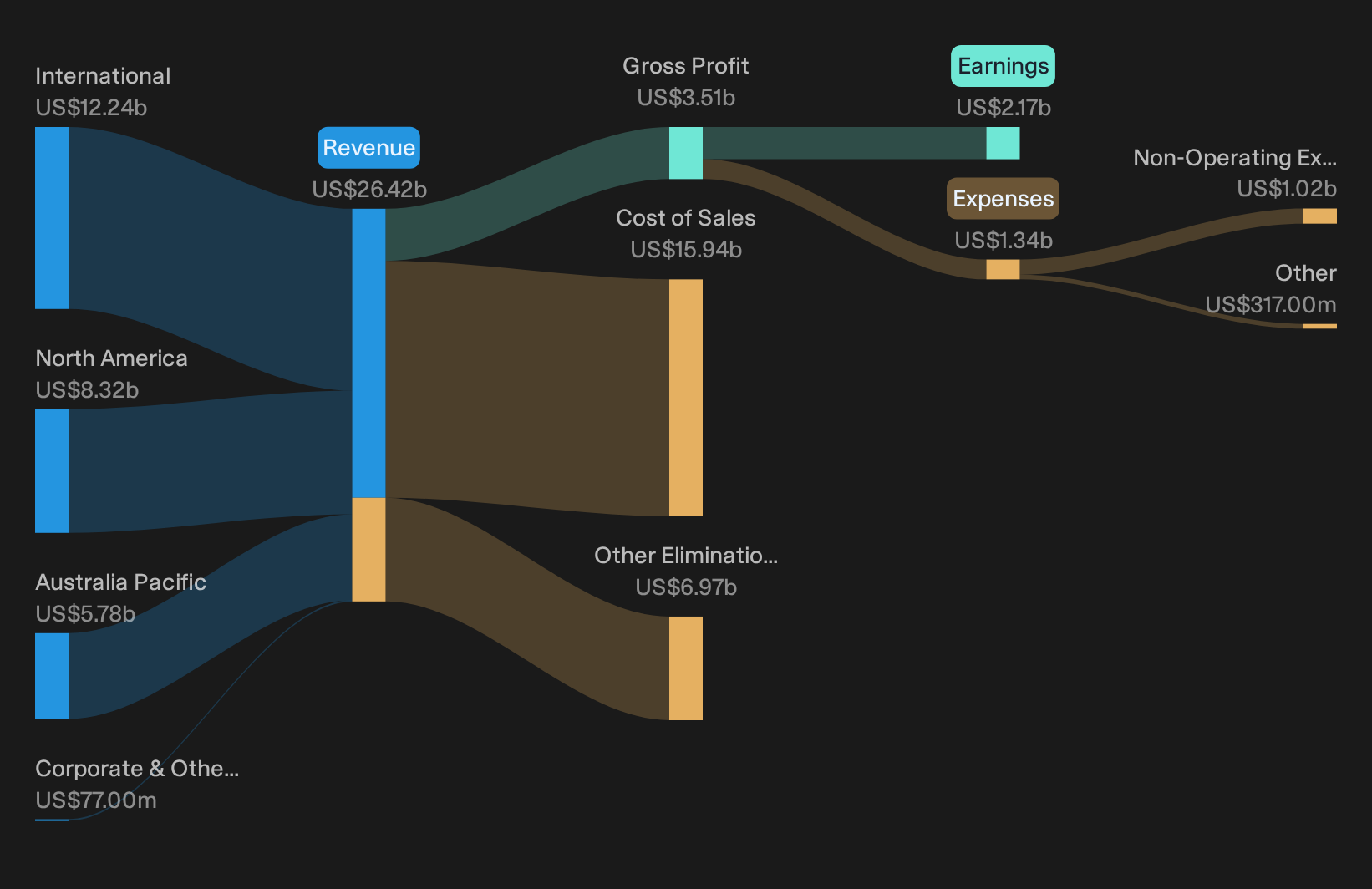
QBE Insurance Group is a global insurer and reinsurer that earns recurring premium income across commercial, personal and specialty lines, which helps fund its 3%+ dividend profile. Revenue is anchored in International at US$12.2b, North America at US$8.3b and Australia Pacific at US$5.8b, with a market value around A$39.9b.
The analyst consensus Narrative on Simply Wall St frames QBE Insurance Group as a dividend-focused insurer using underwriting discipline, reinsurance tools and technology to turn recurring premiums into cash flows that can support regular income for shareholders.
"Ongoing transformation through cloud, AI and automation, including a plan to at least double production AI agents after early gains such as faster marine and motor claims handling, is aimed at structurally lowering the expense ratio and supporting a more stable combined ratio and earnings base over time."
What happens to that earnings base if one less visible pressure on underwriting discipline quietly shifts the balance between steady margins and choppy income?
That quiet shift starts with how underwriting quality and capital strength really interact. This relationship is laid bare in the full narrative for QBE Insurance Group so you can spot where earnings resilience might be accelerating.
nib holdings (ASX:NHF)
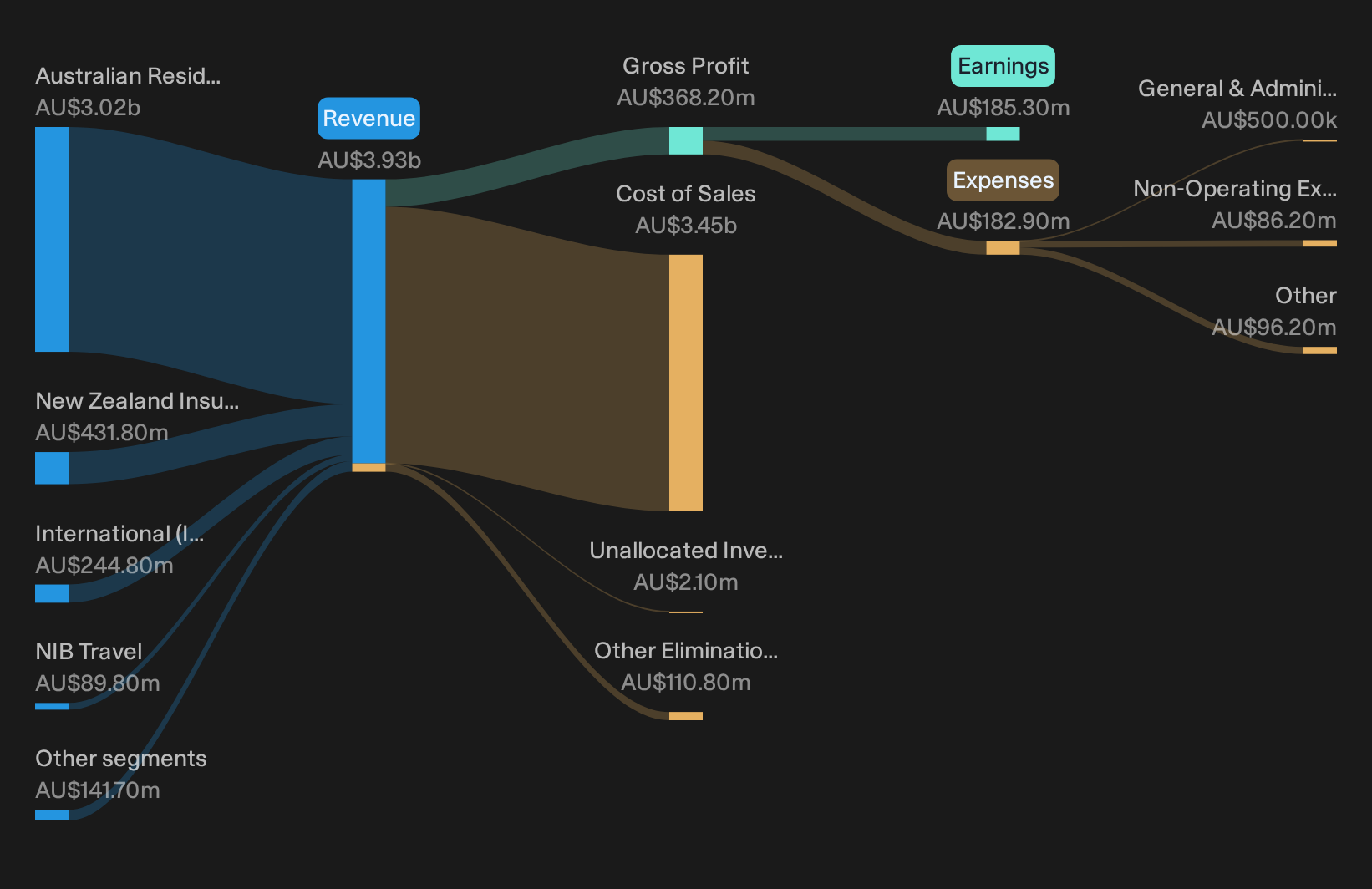
nib holdings runs health, life and travel cover plus NDIS and health services. However, its Australian Residents Health Insurance arm is the real dividend powerhouse, generating about A$3b of A$3.9b group revenue and supporting payouts for a business valued near A$3.4b.
For income seekers, nib holdings matters because its Australian residents health insurance engine feeds recurring premiums into dividend capacity. The analyst consensus Narrative on Simply Wall St argues that the company is working hard to keep more of every dollar earned.
"Accelerated digital transformation through AI and machine learning initiatives is now visible in cumulative productivity savings of A$79 million since FY24, an operating expense ratio of 16.6% in FY26 and more than 86% of Australian residents claims processed automatically, which supports further improvement in net margins and earnings as these tools scale across nib holdings."
What happens to that margin story if a single unseen pressure on Australian residents claims costs quietly soaks up the efficiency gains investors are counting on?
Those hidden pressures are exactly what the full narrative for nib holdings unpacks, showing where nib holdings’ efficiency gains could be masking an accelerating earnings engine.
Seeking Alternatives Before The Crowd?
Fresh opportunities move fast. Some are building quiet breakout momentum, others are dropping back to attractive levels. Consider these under the radar ideas while it matters and decide how they fit your strategy.
- Target sturdy balance sheets and cash-rich operators by scanning the curated list of solid balance sheet and fundamentals (12 results) before the market fully prices in their resilience.
- Explore the early momentum in power infrastructure by reviewing the hand picked 44 power grid technology and infrastructure stocks positioned to benefit if energy systems spending continues.
- Look for early stage potential in carefully filtered 17 elite penny stocks with strong financials before fresh interest changes trading dynamics.
Have feedback on this article? Concerned about the content? Get in touch with us directly. Alternatively, email editorial-team@simplywallst.com