
Top 3 AI Infrastructure Stocks To Watch In November 2026
The Fed’s preferred inflation gauge, the PCE index, lands on Nov. 25 and could sway the next interest rate move. Big investors are already hunting for businesses that sell the picks and shovels of AI, from data center switches to full server racks, rather than chasing the latest chatbot headline. This article walks through three stocks powering AI infrastructure that sit in that sweet spot.
The three stocks covered below are just a sample of the hardware suppliers plugged into this build out, while the full screen surfaced 138 more companies with equally compelling narratives that are not covered here. To identify and analyze the highest conviction ways to play this AI plumbing theme, go straight to the AI - Networking and Servers screener.
Cisco Systems (CSCO)
Cisco Systems is one of the clearest ways this screener taps into the plumbing of AI, with its data center switches, optical interconnects, and security stack forming much of the traffic control layer for large AI clusters, according to CoksiBoy, an investor in the Simply Wall St Community who wrote a detailed narrative on the business.
Cisco Systems, Inc. builds the networking, security, and collaboration gear and software that keep modern internet and enterprise traffic flowing, with its Nexus data center switches and optical modules directly tied to AI data center build outs, and the group carries a market value of roughly US$376.5b.
"Cisco is using its workforce as a test bed to dogfood products like AgenticOps, Cisco AI Defense, and Cisco Cloud Control; success will serve as a live blueprint to sell enterprise AI architectures, Webex, and AI-enabled hardware/software to external enterprise clients"
What happens to Cisco’s AI economics will hinge on how one largely unseen cost and efficiency trade off plays out inside those deployments.
That trade off is exactly where Cisco’s AI story gets interesting, and the full narrative for Cisco Systems unpacks how those deployment decisions could accelerate or cap the payoff.

Hamamatsu Photonics K.K (TSE:6965)
Hamamatsu Photonics K.K supplies the opto semiconductors that help AI servers talk to each other, through optical transceivers, photodetectors and high speed image sensors used in data center networking and rack level sensing. The opto semiconductor segment generates about ¥93.1 billion of revenue, ahead of electron tubes at roughly ¥82.2 billion, with a market value around ¥628.9 billion.
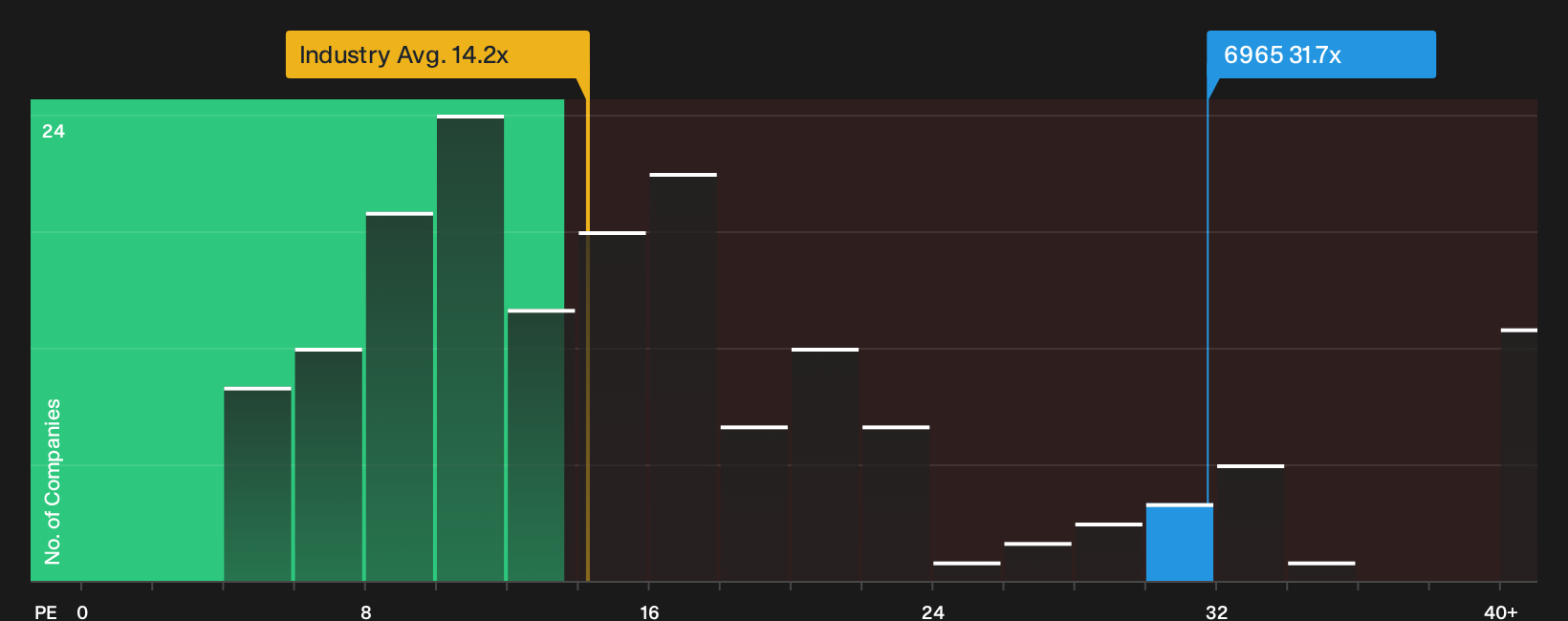
For the AI networking theme, Hamamatsu Photonics K.K offers pure hardware leverage to optical links and sensing inside data centers. However, it carries a P/E above sector averages, modest 8.1% net margins and 6.2% ROE. Strong recent earnings support further investment in photonics, although a single pressure on data center optics demand could quickly test how much investors are willing to pay for that exposure.
That premium and those margins only tell part of the story, so go straight to the 2 key rewards and 1 important warning sign to see what may be masking the real setup
Super Micro Computer (SMCI)
Super Micro Computer builds the kind of GPU heavy, rack scale servers that sit right in the AI networking and servers theme, and the analyst consensus Narrative on Simply Wall St frames its role in that build out as directly tied to large scale AI data center demand.
"The accelerating global adoption of AI and analytics continues to drive demand for high-performance, scalable server and data center solutions."
What happens if one key assumption about how much profitable AI rack demand hyperscalers can sustain starts to shift?
If that rack demand thesis is what you are weighing, jump into the full narrative for Super Micro Computer to see how Super Micro Computer’s AI exposure could compound or stall.

Curious About What You Might Be Missing?
Fresh themes can move from quiet to breakout fast. Some ideas are already building momentum while others stay under the radar for now. Do not get caught dropping behind, act now.
- Scan for potential early leaders in smaller names before they start flying and check out the 13 elite penny stocks with strong financials curated for balance sheet strength and quality.
- Track where real earnings power meets AI momentum by reviewing the 43 profitable AI stocks that aren't just burning cash that screens for cash generating businesses, not just hype and headlines.
- Anchor part of your portfolio in potential compounding machines and work through the 29 resilient stocks with low risk scores built around resilience, steady finances, and measured risk profiles.
Have feedback on this article? Concerned about the content? Get in touch with us directly. Alternatively, email editorial-team@simplywallst.com