
What Digi International Bulls Got Right
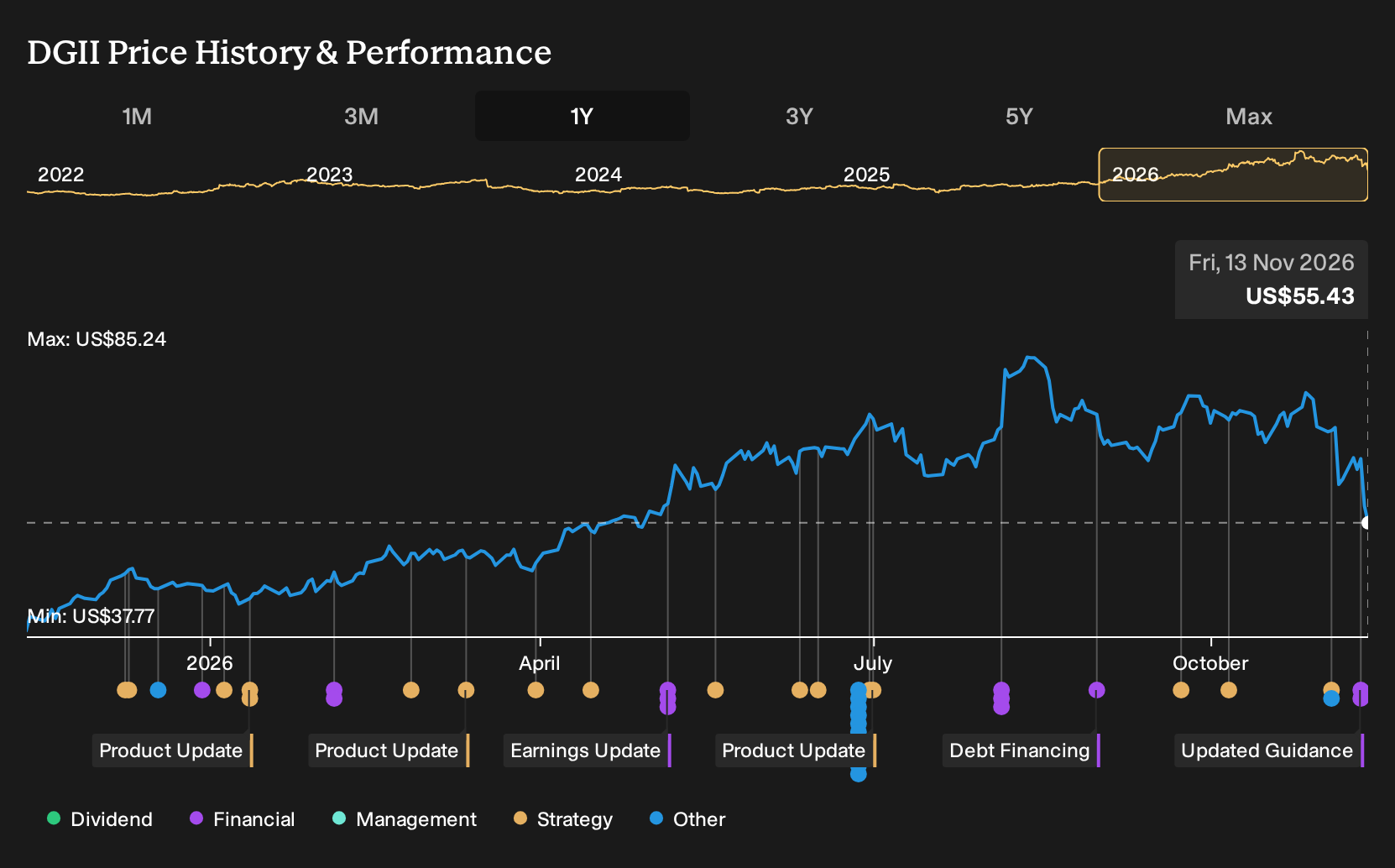
If Digi International sat on your watchlist instead of in your portfolio, the move over the past year may feel costly. Investors who held Digi International over the past year are up 44.4%, including dividends. That result invites a simple question. Back on 13 November 2025, when analysts were debating how durable subscription and cloud demand might be, what evidence could have helped you judge whether recurring revenue really would justify a richer valuation?
Narratives are how investors here put a case on the record, with explicit assumptions about revenue, margins and the multiple. Those assumptions imply an estimated Fair Value.
This theme extends beyond Digi International. See which of 53 AI infrastructure stocks may still merit a closer look.
The Argument You Would Have Been Weighing Up On Digi International
The shares cost US$38.53 at the start of the period, so any view on Digi International needed a clear story about recurring revenue, margins and what multiple might later look reasonable.
The bullish case saw Fair Value at US$40.5, based on subscription and cloud demand supporting 5.7% revenue growth and profit margins reaching 14.6%, with a future P/E of 26.8x over a three-year horizon.
The pessimistic view put Fair Value at US$30, with analysts assuming 5.1% revenue growth, similar margin targets and a lower future P/E of 20.3x to reflect supply chain and geopolitical risks.
What The Results Changed For Digi International
Digi International reported record Q4 2026 revenue of US$143.3 million versus US$114.3 million a year earlier, with net income rising from US$10.0 million to US$14.9 million and net margin moving from 8.7% to 10.4%. That outcome broadly supported the view that recurring and IoT driven demand could support higher profitability, although later 2027 guidance and a slower outlook gave the cautious case fresh weight.
The useful takeaway is how much hinged on recurring revenue doing the heavy lifting. For the next stock on your list, track ARR levels, their share of total sales, and how those figures line up with any margin targets that were set a few years earlier.
What Today's Digi International Price Already Assumes
Digi International now trades at US$55.43, after a 44.4% gain over the past year from US$38.53. The analyst consensus Narrative on Simply Wall St places its Fair Value above that level, based on a specific view of recurring ARR, industrial IoT demand and acquisition execution.
The Narrative leans on ARR growing faster than overall sales and on Digi’s acquisition model continuing to add recurring revenue without denting margins. The key question is whether ARR focused deals and product rollouts can keep translating into high margin, subscription heavy cash flows over the next few years.
"Key Takeaways For Digi International, analysts expect the continued shift toward higher margin recurring ARR in industrial IoT solutions to be a key driver of future cash generation and business quality. The main thing that has to go right is that Digi successfully executes its debt-funded acquire, integrate, generate, compound playbook while embedding AI and security into products without eroding its high gross margins."
One Narrative has put a figure on that disagreement. → See the Narrative with its higher Fair Value, assumptions and all
Find Your Own Contrarian Opportunity
The story behind this run has already been told. The next one could be taking shape somewhere else. Where could you start looking before it becomes the headline?
- Company 1 - 25% below our estimate - turns a legacy copper connectivity franchise into integrated silicon photonics solutions for data links.
- Company 2 - 48% below our estimate - sells tightly integrated compute, networking and orchestration platforms tailored for large AI data centers.
- Company 3 - 42% below our estimate - processes merchant transactions while expanding support for diverse digital and alternative payment options.
That is three of the list. See the full list of 34 companies trading below our fair value estimates →
Have feedback on this article? Concerned about the content? Get in touch with us directly. Alternatively, email editorial-team@simplywallst.com