
‘I’m Not a SanDisk Fan. I’m a Micron Fan’: Jim Cramer Picks Sides. Why MU Stock Looks Safer Than SNDK Stock.
For a long time, CoreWeave (CRWV) investors were worried about the level of debt under which the company was buried. Then, on Nov. 10, the company delivered a strong third-quarter earnings report. CRWV stock jumped nearly 25% on Nov. 11, its best day since April 2025. Management said it was done piling on expensive debt, beat revenue estimates, and raised its 2026 revenue guidance.
CoreWeave's strong results showed that artificial intelligence (AI) companies are still spending heavily on servers, and every one of those servers needs memory. As a result, memory stocks also rallied after the report. Micron (MU) rose about 12% on Nov. 11, while SanDisk (SNDK) climbed 14%.
Jim Cramer used the rebound to make it clear which memory stock he'd rather own. “This group is not going away,” he said. "I'm not a SanDisk fan. I'm a Micron fan." Cramer has been a Micron bull for a while now. In July, he said, "I've liked Micron for ages," while in August he named it as one of his top memory picks.
Why Micron Is the Safer Memory Bet
These two stocks are normally treated the same way, but I've discussed before why that may be unfair to Micron. The company is much more diversified, selling DRAM, NAND, and high-bandwidth memory (HBM), while SanDisk makes only NAND flash storage. HBM is the tightest, most profitable part of the memory market, and Micron is co-designing a custom HBM4E chip with Nvidia (NVDA).
Micron's business is booming. Last quarter, the company reported record revenue of $54.2 billion, up 379% year-over-year (YOY). Its data-center unit grew more than 11 times to $18 billion. Management expects to comfortably beat its record again next quarter, with revenue guidance of about $61.5 billion.
SanDisk is booming as well, with revenue climbing 378% YOY in Q1 fiscal 2027. But at $11 billion, revenue was still about one-fifth of Micron's latest quarterly revenue. Data-center revenue of $4.8 billion grew even more significantly YOY. Still, being heavily reliant on just NAND chips makes SNDK stock riskier. Micron also runs its own factories, while SanDisk relies on its joint venture with Kioxia (KXIAY) for all its flash wafers, so Micron has much more control over its own supply.
All told, I do agree with Cramer's call, although there are some risk factors that are bigger for Micron than SanDisk, too. For example, China's ChangXin Memory Technologies (CXMT) is pushing into HBM, which threatens Micron but not SanDisk.
The Market Is Already Pricing In the Memory Peak
On paper, both of these memory stocks look incredibly cheap. Micron stock trades at just 4.5 times forward earnings, well below its five-year average. That average has been inflated by years when Micron barely made a profit, so the actual discount is smaller than it looks.
SanDisk stock trades even lower at 4.1 times forward earnings, although it has no five-year history to compare against. Even on sales, SNDK stock is a bit cheaper at 6.5 times versus Micron's multiple of 6.7 times.
The EPS outlook explains why these multiples are so low. Analysts expect both companies' earnings to grow sharply in fiscal 2027, but the market is also pricing in the eventual end of the memory boom. Micron's stronger balance sheet — with cash of $38.4 billion versus SanDisk's $5.1 billion — makes it the safer bet for when the cycle turns.
About Micron and SanDisk Stock
Micron Technology makes DRAM, NAND flash storage, and the HBM that sits next to Nvidia's AI chips. Founded in 1978, the company is headquartered in Boise, Idaho.
SanDisk makes only NAND flash, used in data-center storage, phones, and memory cards. Headquartered in Milpitas, California, the company spun off from Western Digital (WDC) in early 2025.
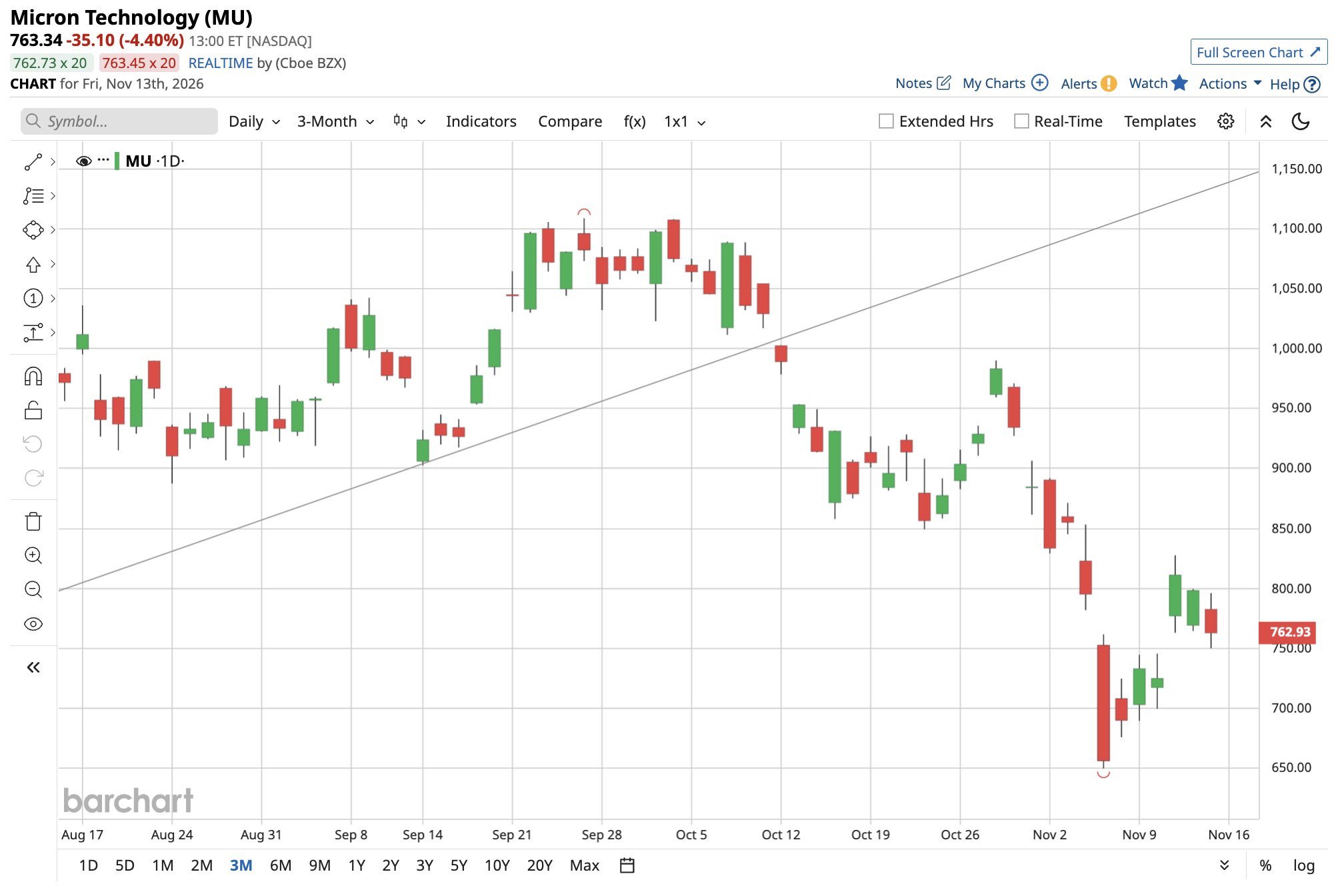
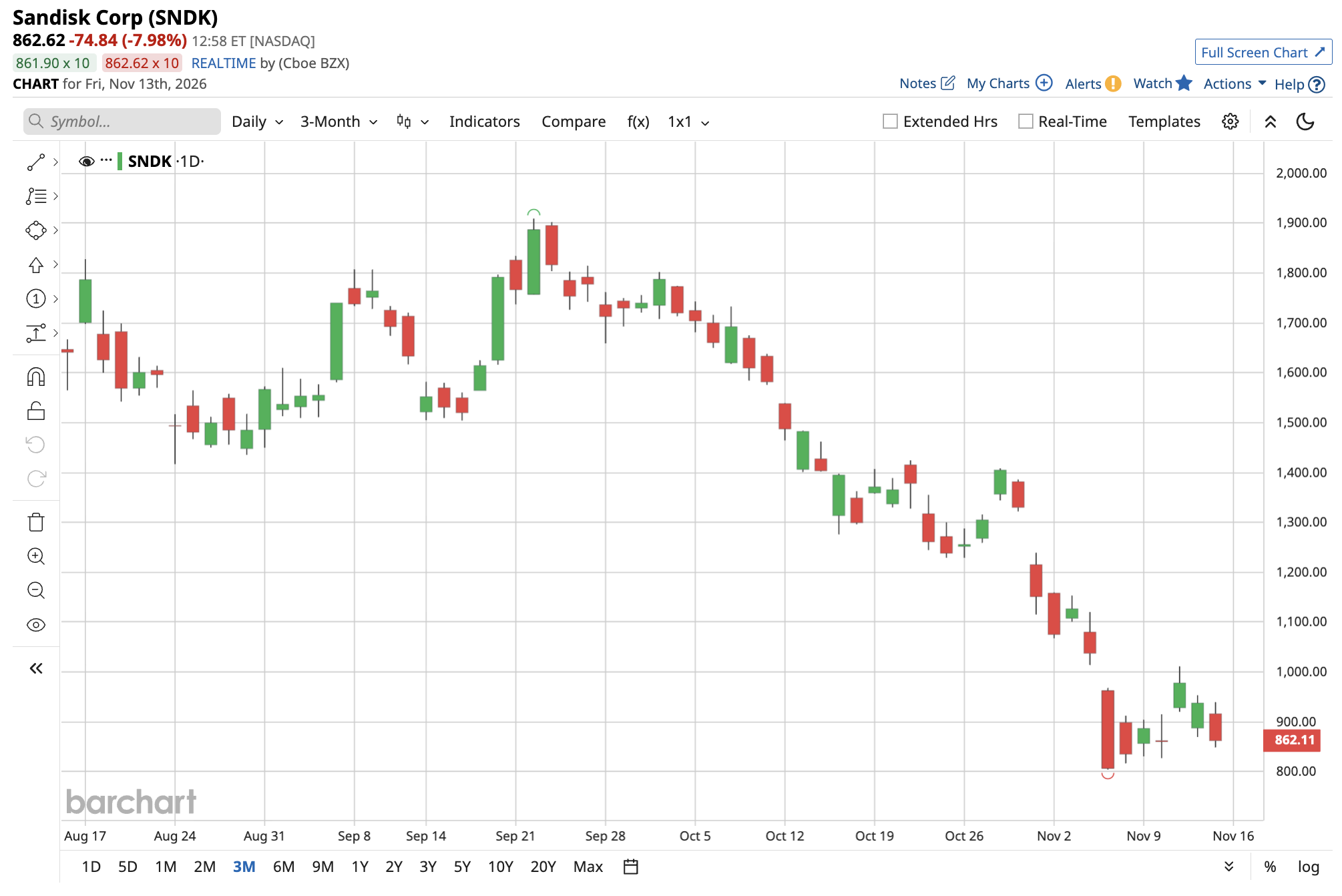
Both MU stock and SNDK stock have run far this year but have crashed sharply in the past month. Year-to-date (YTD), Micron stock is up 152% versus SanDisk stock’s 242% jump. The surge has been primarily due to AI demand creating a memory shortage that sent prices and profits soaring. Both stocks have far outperformed the broader iShares Semiconductor ETF’s (SOXX) 41% gain during the same period. In the past month, though, the post-election AI selloff and fears that the memory boom is peaking have weighed on both stocks. SanDisk also slid after its October earnings report, despite beating estimates.
What Do Analysts Expect for Micron and SanDisk?
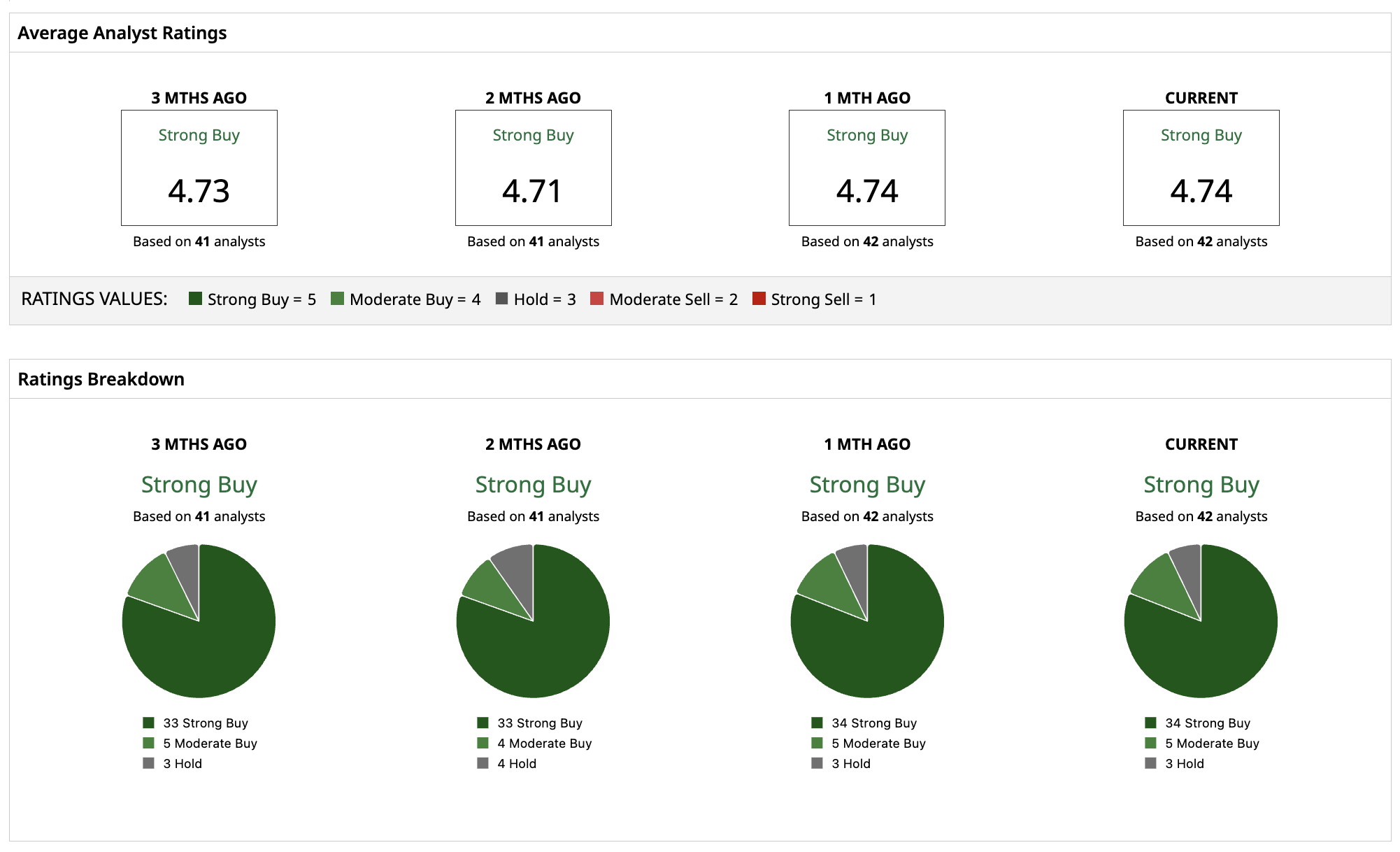
Based on 42 Wall Street analysts with coverage, Micron stock holds a consensus “Strong Buy” rating. The mean price target of $1,555.46 indicates massive 116% potential upside from current levels. Back in October, I wrote about how D.A. Davidson raised its Micron price target from $2,100 to $3,000 after meeting the company’s investor relations team. Analyst Gil Luria said that investors still don’t fully understand what the company is worth. Luria's target remains the highest price target for Micron by some margin.
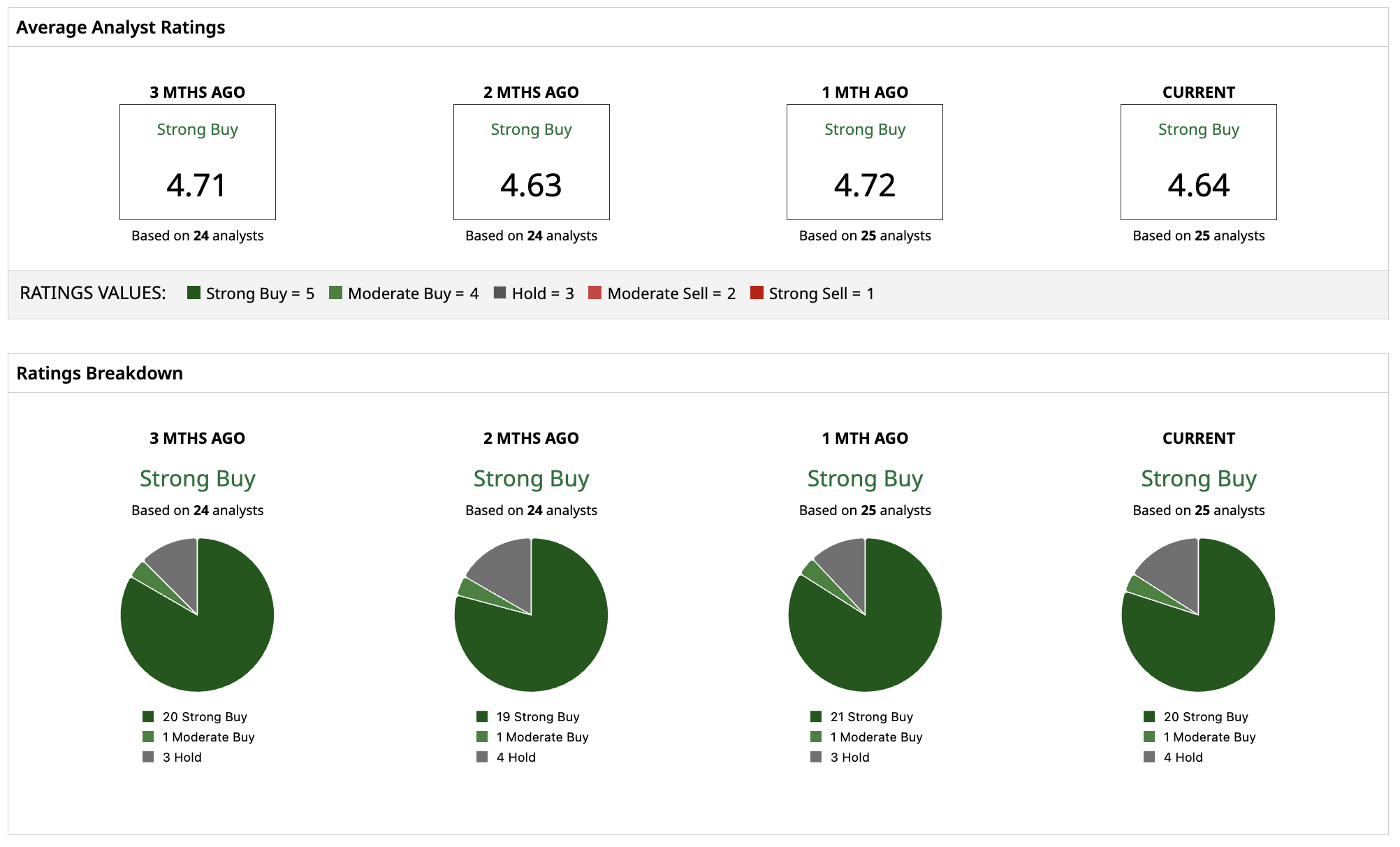
Meanwhile, based on 25 analysts with coverage, SanDisk stock holds a consensus “Strong Buy” rating on Wall Street. The mean price target of $2,039.38 indicates even larger potential upside of 152% from here. Like Micron, SanDisk’s highest price target is $3,000, while even its lowest price target of $1,300 is well above the current share price.
On the date of publication, Jabran Kundi did not directly have a position in any of the securities mentioned in this article. All information and data in this article is solely for informational purposes. For more information please view the Barchart Disclosure Policy here.