
Barclays, Deutsche Bank, etc.: The AI boom supports the US dollar, and the rise is expected to continue until 2027
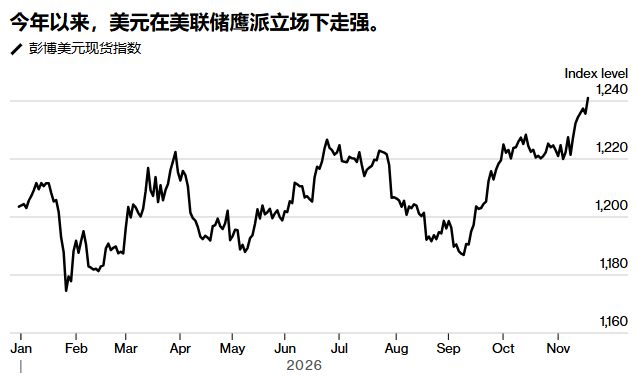
The Zhitong Finance App learned that despite market concerns that a slowdown in AI spending may weaken the dollar, at least three banks expect the dollar's rise to continue until 2027. Since this year, the US dollar index has risen by about 3.1%, strengthening against most major currencies. This is due to the hawkish stance of the Federal Reserve and rising oil prices, which also supported the US dollar. Barclays Bank, Deutsche Bank, etc. are still optimistic about the US dollar. The reason is that the US is innovating faster, productivity growth is increasing, and interest rate equilibrium has increased, thereby making the dollar more attractive to capital.
Driven by the boom in artificial intelligence, the dollar continued to rise as global investors poured into the US stock market. According to Barclays Bank, the benefit of the US dollar is that overseas investors buy shares of US companies that use this technology in exchange; in addition, the US private sector is investing in a four-year AI investment cycle, compounding the strong US economy with interest rates “maintaining a high level for a longer period of time,” creating a favorable environment for the US dollar.
“AI capital spending should continue to be a tailwind of growth in 2027.” A team of Barclays strategists led by Themistoklis Fiotakis wrote in a Tuesday report, “We remain bullish on the dollar.”
One measure of the US dollar has risen about 3.1% so far this year, strengthening in front of most major rival currencies. The hawkish US Federal Reserve and oil prices have also provided support for this currency.
Deutsche Bank strategists, including Tim Baker, George Saravelos, and Mallika Sachdeva, raised their dollar forecasts for next year — just earlier this week, they also warned that increasingly close ties with AI and US stocks (not US Treasury bonds) could make the currency more volatile.
“The prospects for the dollar to remain a high-yielding currency until the AI boom wears off looks pretty good.” Deutsche Bank strategists wrote in a report on Wednesday.
At the same time, Barclays is not convinced that the Democratic Party's control of Congress will derail AI construction in the short term, pointing out that existing projects will continue to advance, and there is little sign that hyperscale cloud vendors will stop.
“The core logic is that if the US innovates at a pace that increases productivity growth, increases profits, and pushes up equilibrium interest rates, capital will find this place very attractive, and this is the biggest driver of the dollar.” Steven Englander, strategist at Standard Chartered Bank, said. He expects this type of activity to continue to attract capital inflows into the US, and the strengthening of the dollar will continue beyond 2027.
According to Barclays, AI spending is also likely to further tighten the Fed's policy outlook. Traders have increased their bets on the December rate hike amid a series of hawkish comments from central bank officials.
Barclays also said that even if the US economy slows down, the US dollar will remain resilient — history shows that during periods of global growth deceleration, the US often outperforms the rest of the world.
“The risk appears to be biased towards continued pressure on production capacity, higher interest rates, and the continued strengthening of the US dollar.” Barclays wrote.