
Don't Race Out To Buy Robert Half Inc. (NYSE:RHI) Just Because It's Going Ex-Dividend
Some investors rely on dividends for growing their wealth, and if you're one of those dividend sleuths, you might be intrigued to know that Robert Half Inc. (NYSE:RHI) is about to go ex-dividend in just four days. Typically, the ex-dividend date is one business day before the record date, which is the date on which a company determines the shareholders eligible to receive a dividend. It is important to be aware of the ex-dividend date because any trade on the stock needs to have been settled on or before the record date. Thus, you can purchase Robert Half's shares before the 25th of November in order to receive the dividend, which the company will pay on the 15th of December.
The company's next dividend payment will be US$0.59 per share. Last year, in total, the company distributed US$2.36 to shareholders. Looking at the last 12 months of distributions, Robert Half has a trailing yield of approximately 6.3% on its current stock price of US$37.45. We love seeing companies pay a dividend, but it's also important to be sure that laying the golden eggs isn't going to kill our golden goose! So we need to check whether the dividend payments are covered, and if earnings are growing.
Dividends are usually paid out of company profits, so if a company pays out more than it earned then its dividend is usually at greater risk of being cut. Robert Half distributed an unsustainably high 193% of its profit as dividends to shareholders last year. Without more sustainable payment behaviour, the dividend looks precarious. Yet cash flow is typically more important than profit for assessing dividend sustainability, so we should always check if the company generated enough cash to afford its dividend. Over the past year it paid out 114% of its free cash flow as dividends, which is uncomfortably high. It's hard to consistently pay out more cash than you generate without either borrowing or using company cash, so we'd wonder how the company justifies this payout level.
Cash is slightly more important than profit from a dividend perspective, but given Robert Half's payments were not well covered by either earnings or cash flow, we are concerned about the sustainability of this dividend.
View our latest analysis for Robert Half
Click here to see the company's payout ratio, plus analyst estimates of its future dividends.
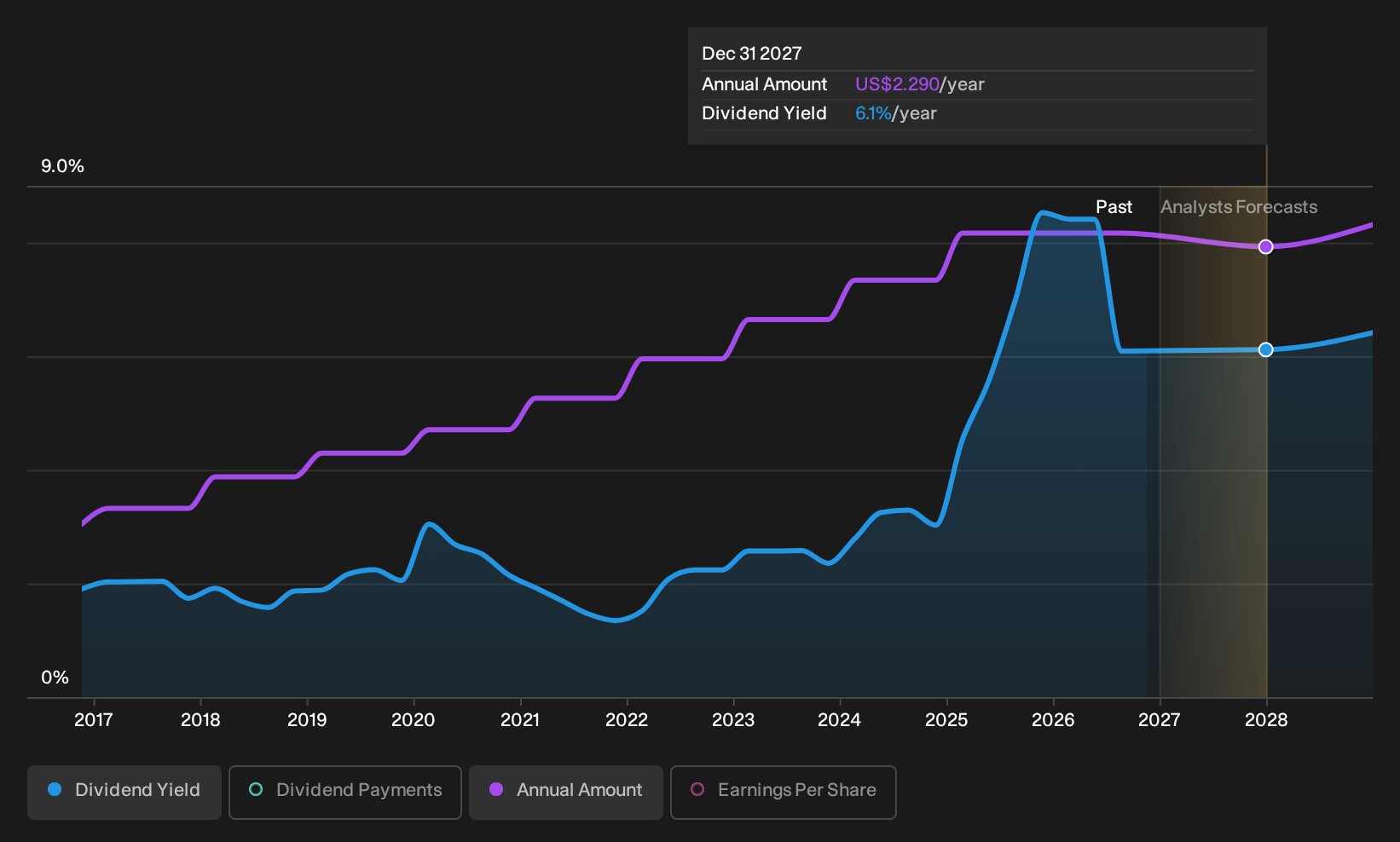
Have Earnings And Dividends Been Growing?
Businesses with shrinking earnings are tricky from a dividend perspective. If earnings fall far enough, the company could be forced to cut its dividend. Readers will understand then, why we're concerned to see Robert Half's earnings per share have dropped 15% a year over the past five years. Ultimately, when earnings per share decline, the size of the pie from which dividends can be paid, shrinks.
The main way most investors will assess a company's dividend prospects is by checking the historical rate of dividend growth. In the last 10 years, Robert Half has lifted its dividend by approximately 10% a year on average. The only way to pay higher dividends when earnings are shrinking is either to pay out a larger percentage of profits, spend cash from the balance sheet, or borrow the money. Robert Half is already paying out a high percentage of its income, so without earnings growth, we're doubtful of whether this dividend will grow much in the future.
Final Takeaway
From a dividend perspective, should investors buy or avoid Robert Half? It's looking like an unattractive opportunity, with its earnings per share declining, while, paying out an uncomfortably high percentage of both its profits (193%) and cash flow as dividends. Unless there are grounds to believe a turnaround is imminent, this is one of the least attractive dividend stocks under this analysis. It's not the most attractive proposition from a dividend perspective, and we'd probably give this one a miss for now.
With that in mind though, if the poor dividend characteristics of Robert Half don't faze you, it's worth being mindful of the risks involved with this business. For example - Robert Half has 1 warning sign we think you should be aware of.
A common investing mistake is buying the first interesting stock you see. Here you can find a full list of high-yield dividend stocks.
Have feedback on this article? Concerned about the content? Get in touch with us directly. Alternatively, email editorial-team (at) simplywallst.com.