
How Dividend Raise Will Impact Amcor (AMCR) Investors
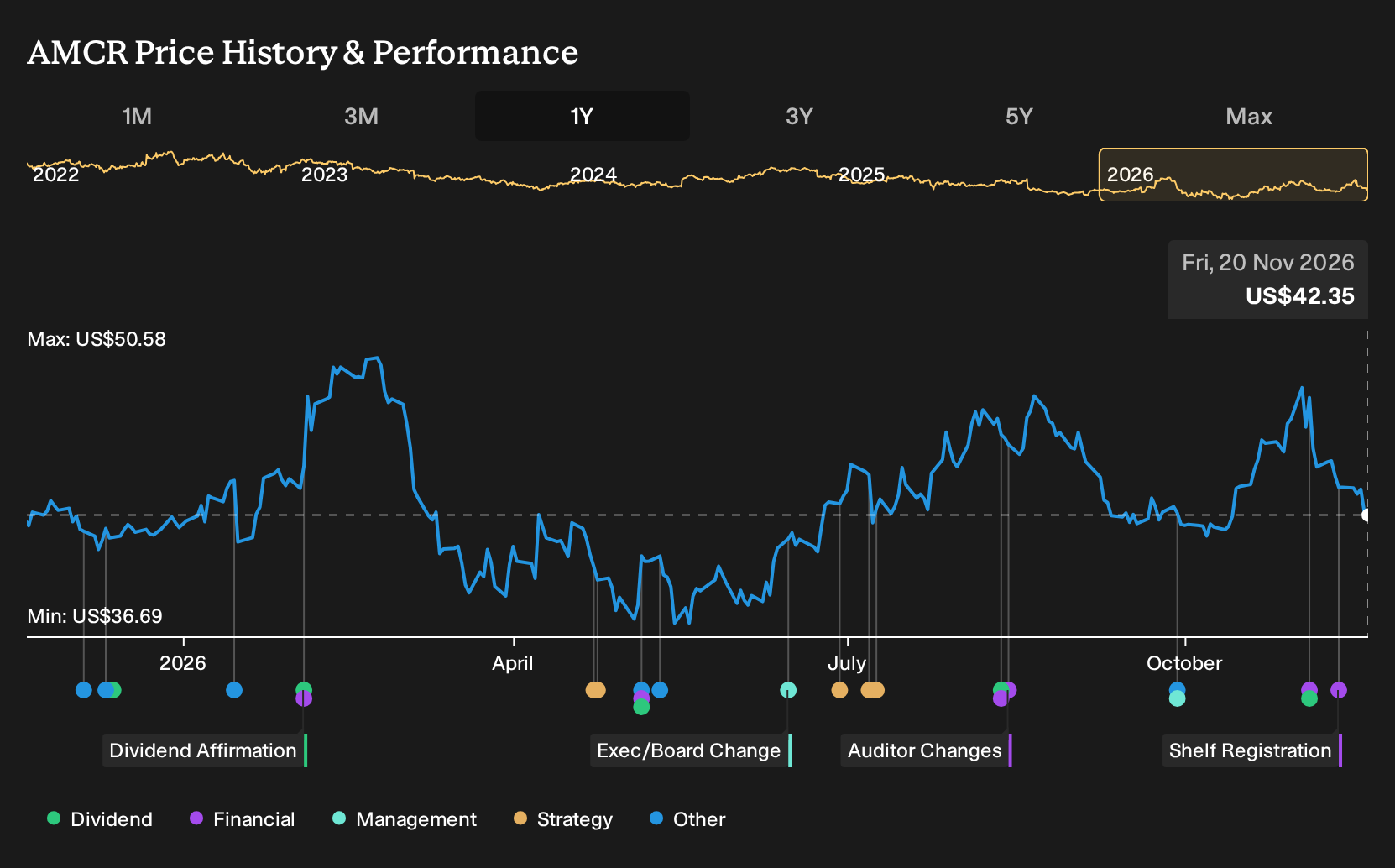
- Amcor raised its quarterly dividend while at the same time lowering its earnings outlook, after a year in which the dividend consumed 156% of free cash flow and the balance sheet took on more debt.
- The combination of a higher payout, elevated leverage around a 3x target by 2027 and plans for double digit adjusted EPS growth places pressure on Amcor to deliver its cost, synergy and cash generation plans.
- We will now look at how Amcor's richer dividend against a stretched payout affects the broader investment narrative for the business.
Compare Amcor's stretched payout and leverage targets with other high-yield businesses by scanning our hand picked 8 dividend fortresses that are also putting income front and center.
Amcor Investment Narrative Recap
To stay on board with Amcor, you have to believe the Berry integration, portfolio reshaping and working capital plans described in the analyst consensus Narrative on Simply Wall St can translate into steadier earnings while debt and the dividend burden are managed. The near term swing factor is execution on cost and revenue synergies alongside any recovery in packaging demand, especially where volumes have been weak.
The biggest operational risk sits in that combination of high leverage, a stretched dividend and still uneven organic volumes. Recent dividend decisions and the lowered outlook increase the importance of hitting cash generation and working capital goals. If those slip, both the balance sheet and income focus could feel tight very quickly.
The new US$537.1m shelf registration for 12.1m ordinary shares tied to an ESOP offering matters for you because it touches dilution and incentives at the same time. More stock on issue can slightly spread future earnings over a larger base, while broader employee ownership can align staff with the success of Amcor’s integration and cost programs.
In the context of current catalysts, that trade off is worth watching. The equity plan links employees directly to progress on Berry synergies, working capital recovery and packaging expansion projects. At the same time, with analysts already flagging debt coverage and dividend sustainability as key pressure points, any cumulative issuance over time adds another moving part to track alongside leverage and free cash flow.
What Amcor’s Forecasts Assume About Growth And Payout Capacity
Amcor's narrative projects US$25.1b revenue and US$2.0b earnings by 2029. This is based on analysts factoring in 1.7% yearly revenue growth and an earnings increase of about US$0.9b from US$1.1b today.
Uncover why Amcor's fair value indicates a 16% potential upside to its current price before the market closes that gap.
Exploring Other Perspectives
One alternative view focuses on leverage risk rather than growth upside. The most cautious analysts were pencilling in roughly flat revenue at about US$24.0b and earnings of US$1.6b by 2029, and already saw Amcor as fairly priced. With the ESOP share offering now filed, those expectations may shift, so compare both narratives for yourself.
Explore 6 other Amcor fair value estimates, including one that suggests as much as 88% downside from the current price!
Decide For Yourself
Don't just follow the ticker. Dig into the data and build a conviction that's truly your own.
- A great starting point for your Amcor research is our analysis highlighting 3 key rewards and 2 important warning signs that could impact your investment decision.
- See our latest analysis for Amcor. The report includes a comprehensive fundamental analysis summarized in a single visual, the Snowflake, making it easy to evaluate Amcor's overall financial health at a glance.
Looking For More Ideas Beyond Amcor?
Once you have formed a view on Amcor, it can help to cross-check that thinking against other listed businesses chasing different combinations of yield, growth and balance sheet strength. The Simply Wall St Screener lets you compare those traits side by side so you can see where Amcor fits within a wider opportunity set.
- If you want income with fewer balance sheet surprises, start with a list of solid balance sheet and fundamentals (24 results) that prioritises financial resilience alongside shareholder returns.
- For investors hunting value, line up companies that pair quality fundamentals with what may be discounted prices by reviewing a 40 high quality undervalued stocks that could complement or contrast with Amcor.
- When you prefer businesses that the market may not be paying close attention to yet, broaden your watchlist with a 18 high quality undiscovered gems that highlight strong financial profiles hiding in plain sight.
Have feedback on this article? Concerned about the content? Get in touch with us directly. Alternatively, email editorial-team@simplywallst.com