
3 UK Consumer Staples Stocks Investors Are Watching As Energy Bills Hit £2,166
UK households facing a January energy cap jump to £2,166 are already trimming non essential spending, which puts dependable everyday brands in the spotlight. Stressed bills and political heat on utilities can push investors toward businesses that sell what people keep buying, even when budgets shrink. This article looks at three UK consumer staples stocks exposed to this energy shock and explores where the pressure could create opportunity.
The stocks covered next are only a starter pack, and the full screen on Simply Wall St surfaced 12 more UK defensive consumer staples companies with equally compelling stories that do not fit into a short article. To identify and analyze your own higher conviction ideas before energy bills bite harder, head straight to the UK Defensive Consumer Staples Stocks screener.
McBride (LSE:MCB)
McBride sits squarely in the UK defensive consumer staples theme, supplying own label cleaning and personal care essentials that shoppers tend to keep buying, and often trade down into, when bills spike. The analyst consensus Narrative on Simply Wall St frames how that position could matter from here.
Persistent consumer shift toward value ranges in essential household categories continues to support higher private label penetration, which positions McBride to win further retailer contracts and increase volumes, with potential benefits for revenue and operating leverage.
The real swing factor is how one less visible cost and pricing pressure shapes where those potential volume gains actually land in future margins.
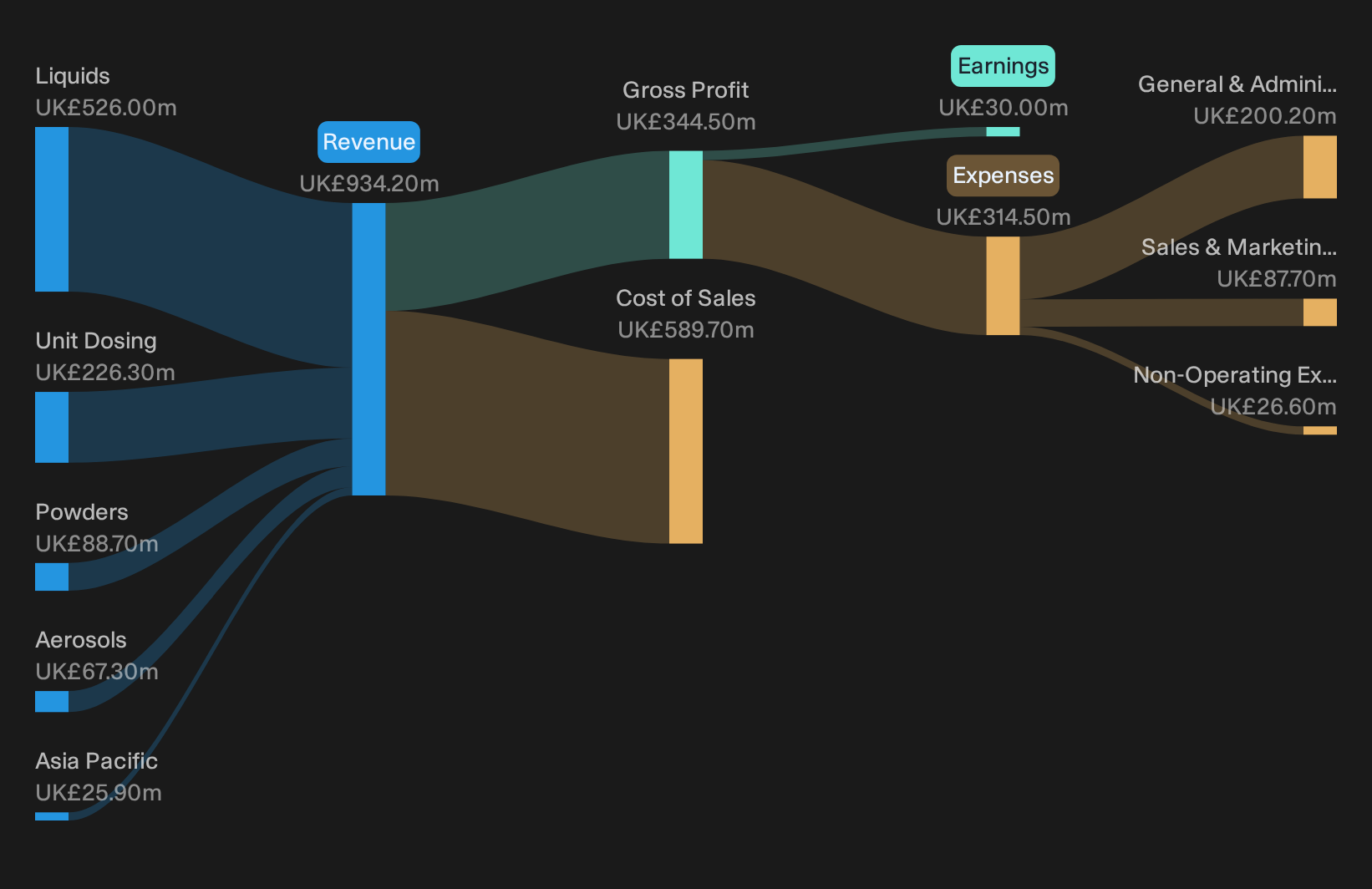
McBride manufactures private label and some branded household and personal care products for retailers worldwide, with Liquids generating £526 million of revenue, Unit Dosing £226 million, Powders £89 million, Aerosols £67 million and Asia Pacific £26 million, and the stock is valued at about £240 million in market cap.
That margin question is the real story. Read the full narrative for McBride to see how pricing power, input costs and retailer contracts could be decoupling for McBride.
J Sainsbury (LSE:SBRY)
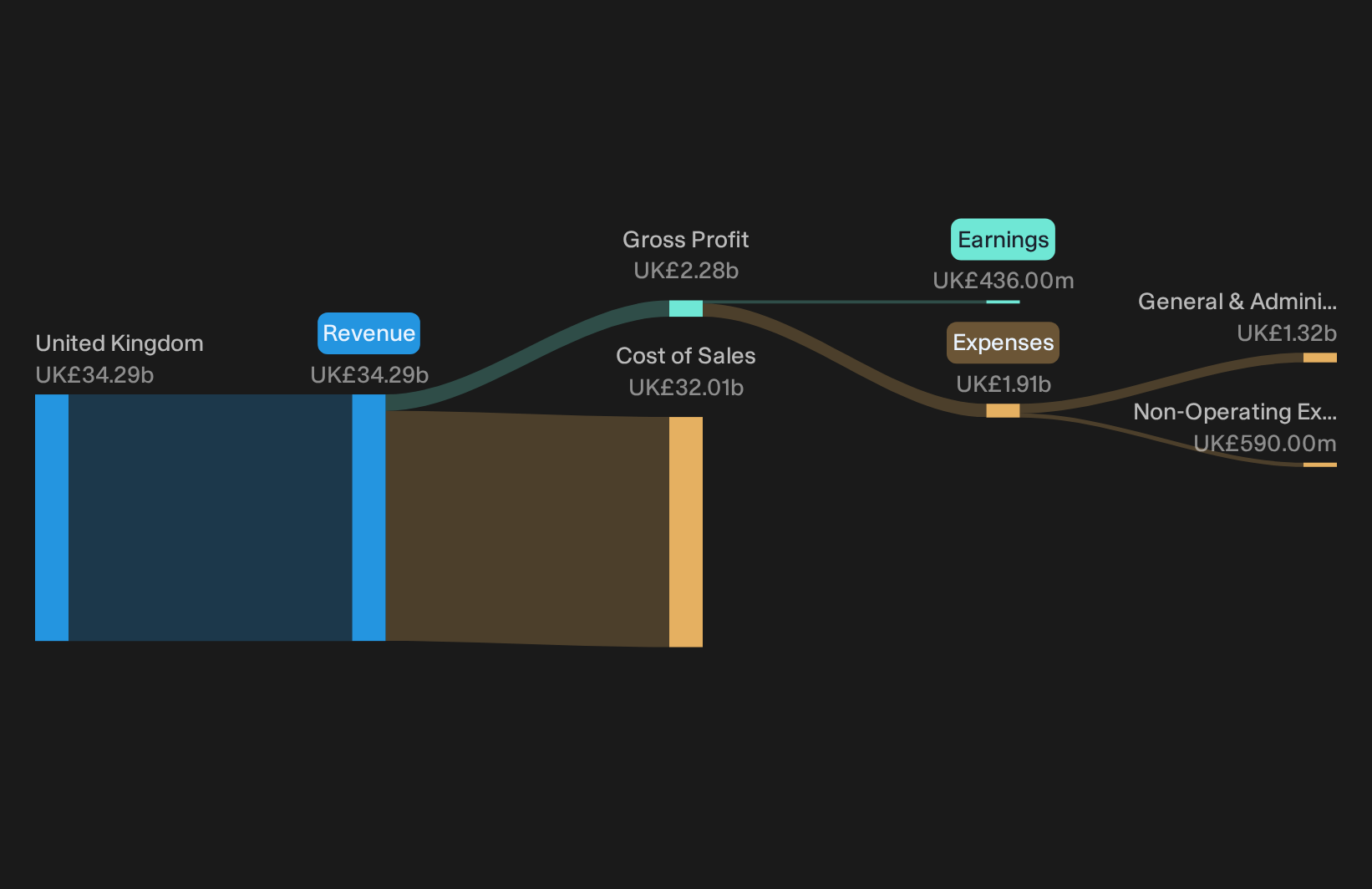
J Sainsbury is a £7.5b UK supermarket group anchored in food, fuel and other everyday essentials, a clear fit for a defensive staples screen when energy bills squeeze wallets. Almost all of its £34.3b revenue comes from UK shoppers across stores, Argos, Habitat and its bank.
The analyst consensus Narrative on Simply Wall St describes how J Sainsbury leans further into that essentials focus as households trade down and reprioritise spending.
Sainsbury's continued push to expand grocery volume share, supported by 3.6% grocery like for like sales growth in the 16 weeks to 20 June 2026 and ongoing space shifts from General Merchandise to food across more than 100 stores over three years, points to further revenue support from higher food trading intensity.
The real swing factor is whether one rising cost line quietly erodes the benefit of that higher food intensity before it reaches net margins.
That quiet cost pressure is exactly what the full narrative for J Sainsbury unpacks, revealing where rising bills, food mix and pricing power could be accelerating or masking J Sainsbury's profit story.
Tesco (LSE:TSCO)
Tesco is a classic UK Defensive Consumer Staples Stocks screener candidate, with most of its business tied to weekly food and household baskets that tend to hold up when energy bills squeeze other spending. It runs supermarkets, convenience formats, online grocery and wholesale through Booker, plus side activities like mobile and insurance.
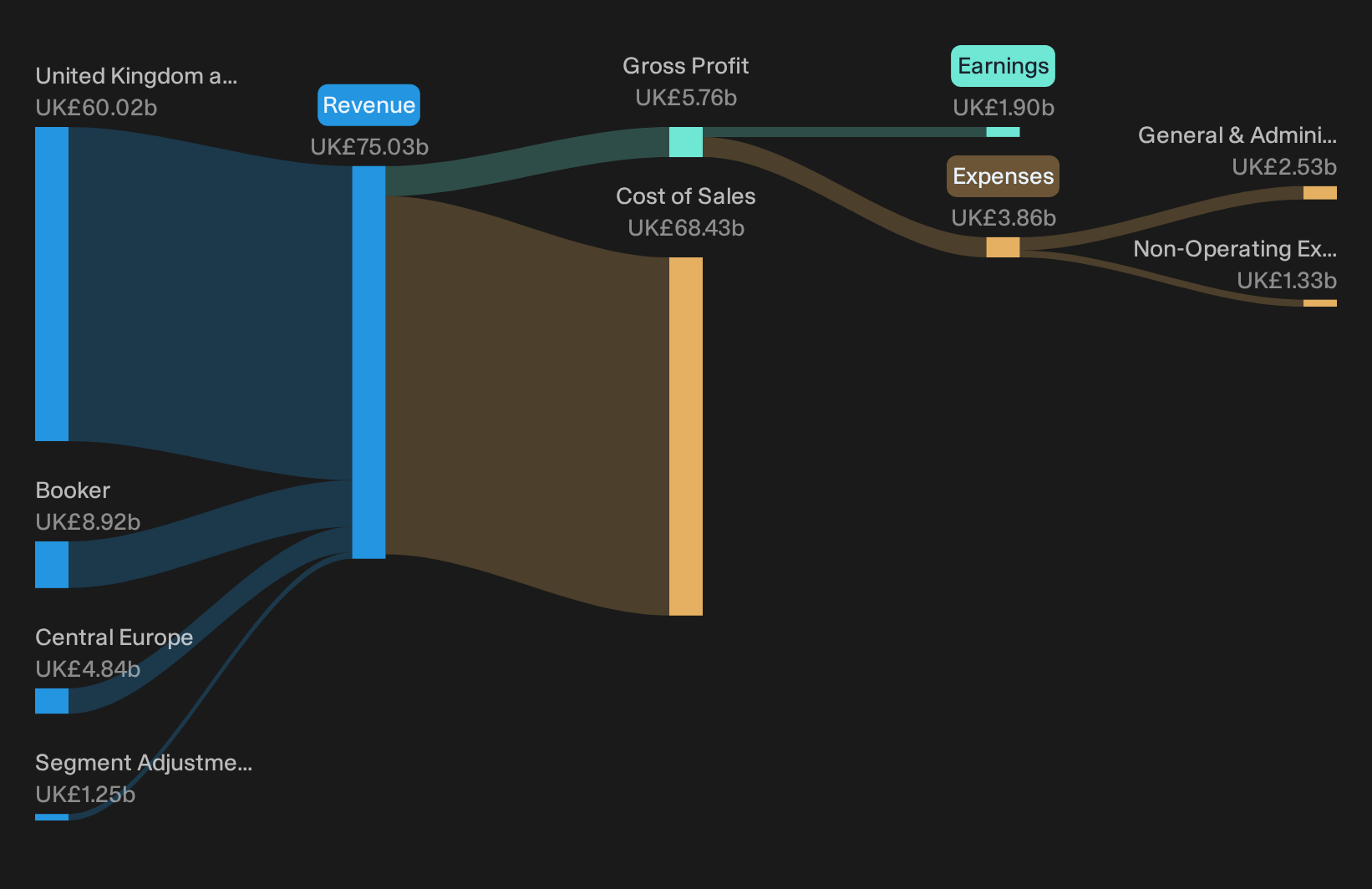
Tesco generates about £60b from the UK and Republic of Ireland, with Booker adding £8.9b and Central Europe contributing £4.8b, and its market value sits around £34.5b.
The analyst consensus Narrative on Simply Wall St frames Tesco as a large scale grocery player whose focus on value, quality and essential retail lines up neatly with the idea of resilience when households are forced to prioritise staple spending.
Sustained efforts in streamlining operations and achieving cost savings under the Save to Invest program, which has delivered more than £2.7b of cumulative savings with a further £500m targeted in 2026/27, are likely to support net margins by offsetting operating cost inflation.
What really matters now is how one less visible pressure on Tesco's everyday basket economics shapes the balance between resilience and profit growth.
That hidden pressure on Tesco's basket economics is exactly what the full narrative for Tesco unpacks, revealing whether cost savings are quietly accelerating or masking future earnings power.
Seeking Fresh Alternatives Before The Crowd
Fresh ideas move first. By the time momentum stories are flying across social feeds, the ideal entry can be gone. Scan these under the radar lists now to review opportunities earlier in their lifecycle.
- Identify resilient trends by filtering for cash generative businesses with balance sheets built to absorb shocks using the list of solid balance sheet and fundamentals (7 results).
- Seek emerging growth themes with targeted exposure to smaller firms connected to artificial intelligence infrastructure through the curated 52 AI infrastructure stocks.
- Monitor potential capacity constraints and long term demand scenarios for critical metals by tracking producers in the hand picked 16 top copper producer stocks.
Have feedback on this article? Concerned about the content? Get in touch with us directly. Alternatively, email editorial-team@simplywallst.com