
Q3 earnings outperformers: Zoetis and the rest of the branded pharmaceuticals stocks

Looking back on branded pharmaceuticals stocks’ Q3 earnings, we examine this quarter’s best and worst performers, including Zoetis NYSE:ZTS and its peers.
Looking ahead, the branded pharmaceutical industry is positioned for tailwinds from advancements in precision medicine, increasing adoption of AI to enhance drug development efficiency, and growing global demand for treatments addressing chronic and rare diseases. However, headwinds include heightened regulatory scrutiny, pricing pressures from governments and insurers, and the looming patent cliffs for key blockbuster drugs. Patent cliffs bring about competition from generics, forcing branded pharmaceutical companies back to the drawing board to find the next big thing.
The 8 branded pharmaceuticals stocks we track reported a favorable Q3. As a group, revenues beat analysts’ consensus estimates by 3.4%.
Amidst this news, share prices of the companies have had a rough stretch. On average, they are down 7.4% since the latest earnings results.
Zoetis NYSE:ZTS
Originally spun off from Pfizer in 2013 as the world's largest pure-play animal health company, Zoetis (NYSE:ZTS) discovers, develops, and sells medicines, vaccines, diagnostic products, and services for pets and livestock animals worldwide.
Zoetis reported revenues of $2.39 billion, down 1.3% year on year. This print exceeded analysts’ expectations by 2.6%. Overall, it was a solid quarter for the company with a beat of analysts’ EPS estimates and a narrow beat of analysts’ full-year EPS guidance estimates.
"Our third-quarter performance was in line with our expectations. Continued pressure in Companion Animal was partially offset by growth in Livestock and Diagnostics, reflecting the breadth of our portfolio," said Kristin Peck, Chief Executive Officer of Zoetis. "We remain focused on defending our position and directing our resources where they can have the greatest impact. And with the scale, expertise, and pipeline to keep setting the pace of innovation in animal health, we are confident in our ability to create long-term value for customers and shareholders."
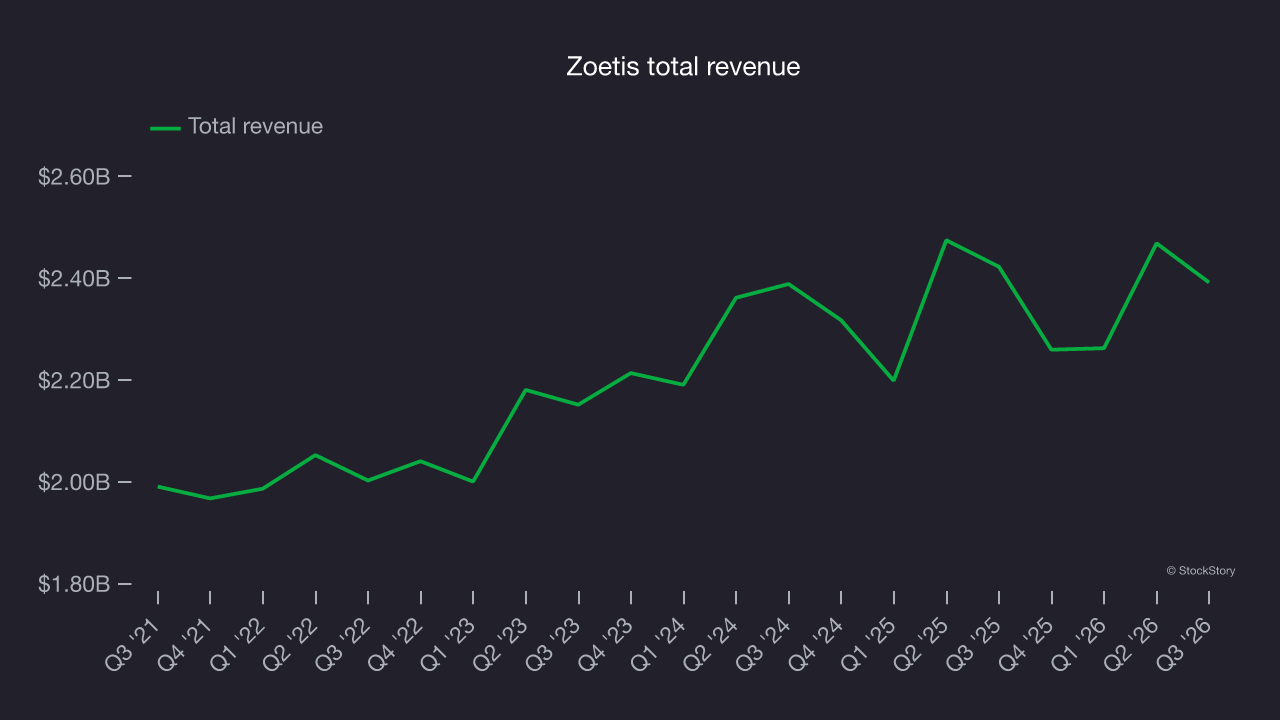
Zoetis delivered the slowest revenue growth and weakest full-year guidance update in the group. Investor expectations, however, were likely higher than Wall Street’s published projections, leaving some wishing for even better results (analysts’ consensus estimates are those published by big banks and advisory firms, not the investors who make buy and sell decisions). The stock is down 11.8% since reporting and currently trades at $78.67.
Is now the time to buy Zoetis? Access our full analysis of the earnings results here, it’s free.
Best Q3: Eli Lilly (NYSE:LLY)
Founded in 1876 by a Civil War veteran and pharmacist frustrated with the poor quality of medicines, Eli Lilly (NYSE:LLY) discovers, develops, and manufactures pharmaceutical products for conditions including diabetes, obesity, cancer, immunological disorders, and neurological diseases.
Eli Lilly reported revenues of $24.4 billion, up 38.6% year on year, outperforming analysts’ expectations by 7.9%. The business had an impressive quarter with full-year revenue guidance exceeding analysts’ expectations and a solid beat of analysts’ full-year EPS guidance estimates.
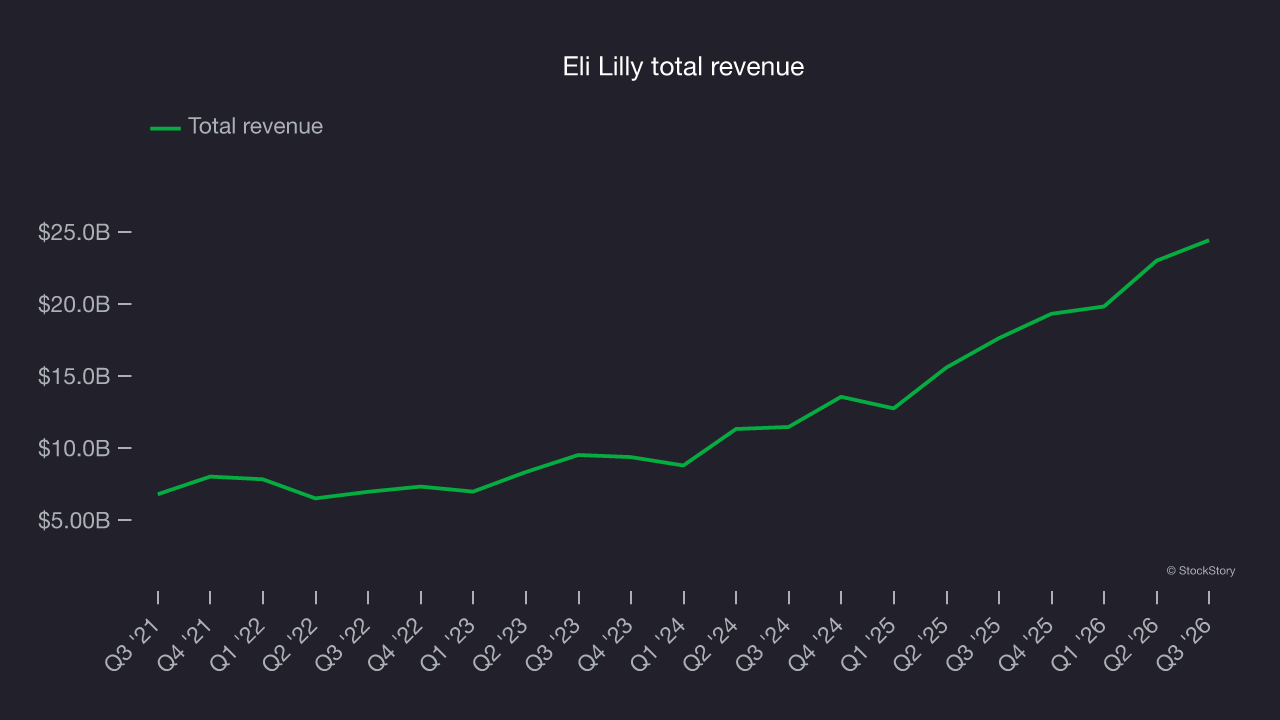
Eli Lilly scored the biggest analyst estimate beat and highest full-year guidance raise among its peers. The market seems content with the results as the stock is up 4.6% since reporting. It currently trades at $1,347.
Is now the time to buy Eli Lilly? Access our full analysis of the earnings results here, it’s free.
Weakest Q3: Phibro Animal Health (NASDAQ:PAHC)
With a portfolio of approximately 800 product lines serving farmers and veterinarians in 90 countries, Phibro Animal Health (NASDAQ:PAHC) develops, manufactures, and markets health products for livestock and companion animals, including antibacterials, vaccines, nutritional supplements, and mineral additives.
Phibro Animal Health reported revenues of $386.8 million, up 6.3% year on year, exceeding analysts’ expectations by 3%. It was a satisfactory quarter as it also posted full-year EBITDA guidance slightly topping analysts’ expectations but full-year revenue guidance meeting analysts’ expectations.
As expected, the stock is down 15.4% since the results and currently trades at $33.35.
Read our full analysis of Phibro Animal Health’s results here.
Pfizer (NYSE:PFE)
With roots dating back to 1849 when two German immigrants opened a fine chemicals business in Brooklyn, Pfizer (NYSE:PFE) is a global biopharmaceutical company that discovers, develops, manufactures, and sells medicines and vaccines for a wide range of diseases and conditions.
Pfizer reported revenues of $16.58 billion, flat year on year. This number topped analysts’ expectations by 4.6%. It was a very strong quarter as it also put up a solid beat of analysts’ organic revenue estimates and a beat of analysts’ EPS estimates.
The stock is down 10.5% since reporting and currently trades at $27.44.
Read our full, actionable report on Pfizer here, it’s free.
Bristol-Myers Squibb (NYSE:BMY)
With roots dating back to 1887 and a transformative merger in 1989 that gave the company its current name, Bristol-Myers Squibb (NYSE:BMY) discovers, develops, and markets prescription medications for serious diseases including cancer, blood disorders, immunological conditions, and cardiovascular diseases.
Bristol-Myers Squibb reported revenues of $13.07 billion, up 6.9% year on year. This result surpassed analysts’ expectations by 2.9%. Taking a step back, it was a satisfactory quarter as it also logged a beat of analysts’ EPS estimates but a slight miss of analysts’ full-year EPS guidance estimates.
The stock is down 2.6% since reporting and currently trades at $59.00.
Read our full, actionable report on Bristol-Myers Squibb here, it’s free.
Market update
Over the past year, investors have been forced to repeatedly answer the same question: What is the market’s biggest risk? The answer has changed several times, and each shift has reshaped market leadership.
Late in 2025 and early 2026, artificial intelligence became the market’s primary uncertainty. Investors questioned whether AI would erode software pricing power and weaken competitive moats as AI made it easier to replicate once-differentiated products.
By the spring, technology took a back seat to geopolitics. The U.S. conflict with Iran briefly became the market’s dominant narrative, raising concerns about oil prices, inflation, and global growth. But as energy markets remained orderly and fears of a prolonged supply disruption faded, investors quickly turned their focus back to fundamentals.
Want to invest in winners with rock-solid fundamentals? Check out our Top 5 Quality Compounder Stocks and add them to your watchlist. These companies are poised for growth regardless of the political or macroeconomic climate.