
Fluence Energy reports sales below analyst estimates in Q3 CY2026 earnings, but stock soars 9.9%

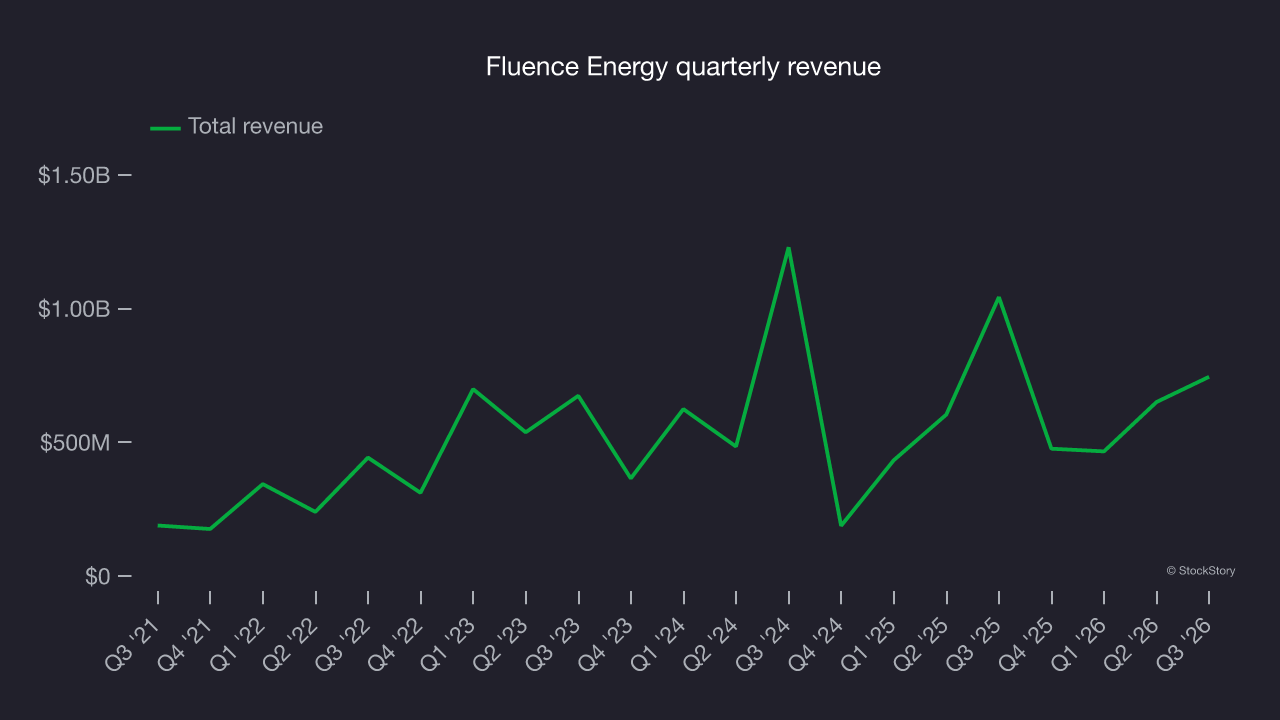
Electricity storage and software provider Fluence (NASDAQ:FLNC) missed Wall Street’s revenue expectations in calendar Q3 2026 [fiscal Q4 2026], with revenue falling 28.6% year on year to $744.1 million. Its GAAP loss of $0.75 per share was 22.8% below analysts’ consensus estimates.
For more on Fluence Energy, read the full research report for free.
Fluence Energy Q3 CY2026 highlights:
- Revenue $744.1 million vs analysts’ consensus estimates of $852.6 million, according to S&P (28.6% year-on-year decline, 12.7% miss)
- EPS (GAAP) -$0.75 vs analysts’ consensus estimates of -$0.61 (22.8% miss)
- Adjusted EBITDA -$112 million (-15.1% margin, 255% year-on-year decline)
- Adjusted EBITDA margin -15.1%, down from 6.9% in the same quarter last year
- Free cash flow -$20.75 million, down from $256 million in the same quarter last year
- Backlog $8.9 billion at quarter end, up 67.9% year on year
- Market capitalization $495.3 million
“Demand for our product is the strongest in Company history based on our record fourth quarter orders of $3.5 billion which exceeds the total for all of fiscal year 2025,” said Axel Meier, Interim Chief Executive Officer. “With a backlog of $8.9 billion in hand as of the end of this fiscal year, we are well-positioned to execute on growing our revenue over the next few years."
Revenue growth
A company’s long-term performance is an indicator of its overall quality. Any business can report a good quarter or two, but many enduring ones grow for years. Fluence Energy’s revenue grew at a strong 27.9% compounded annual growth rate over the last five years. Its growth beat the average industrials company and shows its offerings resonate with customers.
Long-term growth matters the most, but within industrials, a half-decade historical view may miss cycles, industry trends or a company capitalizing on catalysts such as a new contract win or a successful product line. Fluence Energy’s recent performance marks a sharp pivot from its five-year trend as its revenue has shown annualized declines of 7% over the last two years. 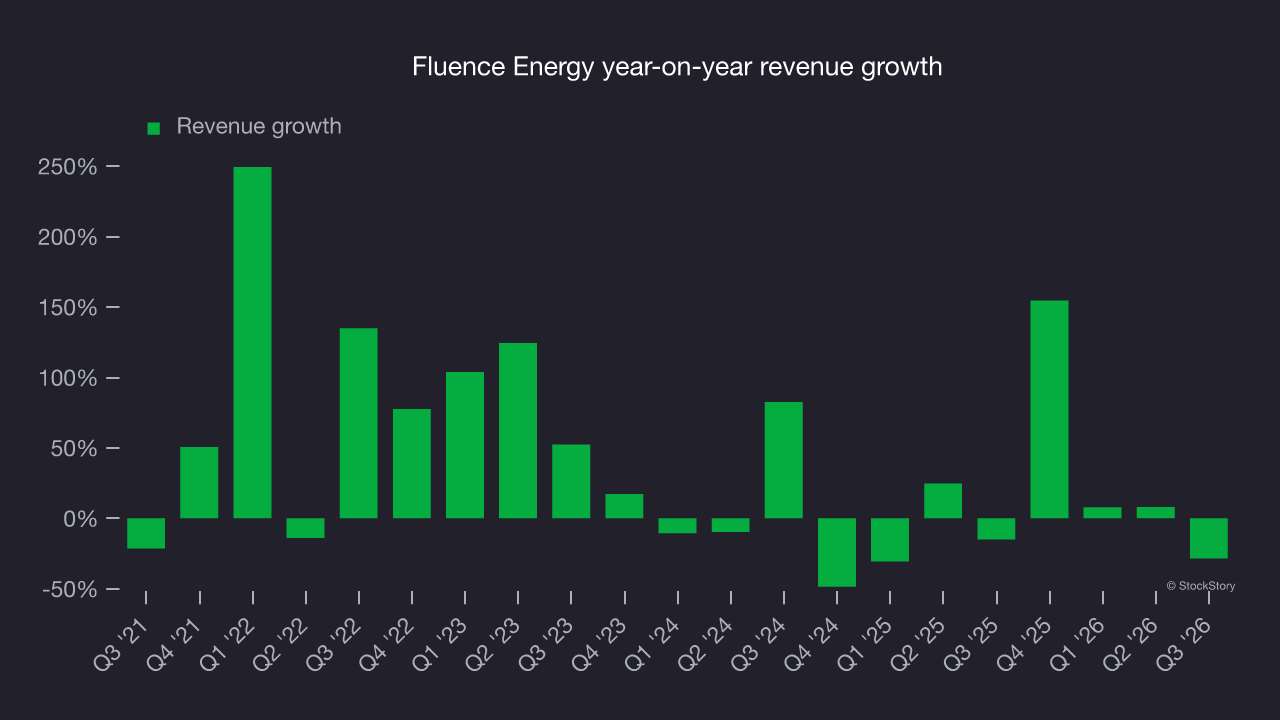
Backlog, or the value of outstanding orders that have not yet been executed or delivered, offers more insight into the company’s revenue dynamics. Fluence Energy’s backlog reached $8.9 billion in the latest quarter and averaged 26.5% year-on-year growth over the last two years. Backlog growth outpaced revenue growth, indicating that the company accumulated more orders than it could fulfill and deferred revenue to the future. This could imply elevated demand for Fluence Energy’s products and services but raises concerns about capacity constraints. 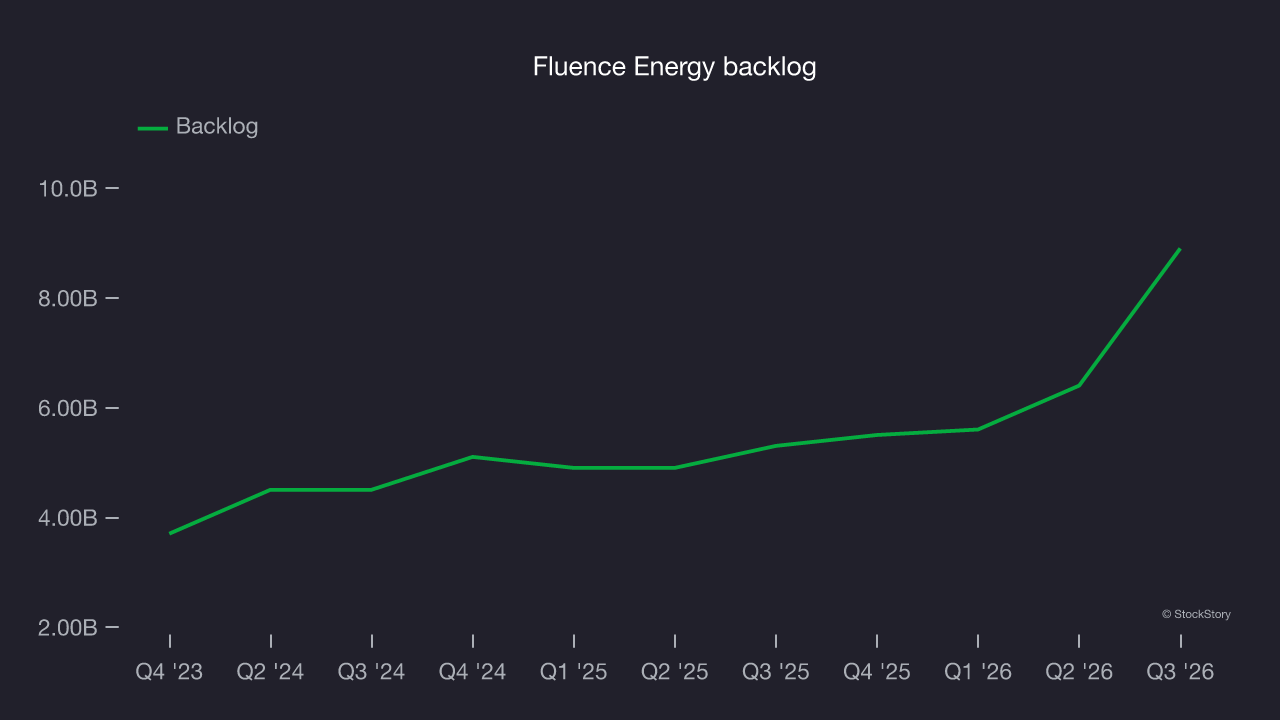
This quarter, Fluence Energy missed Wall Street’s consensus estimates and reported an uninspiring 28.6% year-on-year revenue decline, generating $744.1 million of revenue.
Looking ahead, sell-side analysts expect revenue to grow 32.6% over the next 12 months, according to S&P, an improvement versus the last two years. This strong projection suggests its newer products and services will fuel better revenue performance.
Operating margin
Operating margin is a key measure of profitability. It is net income, or the bottom line, excluding the impact of taxes and interest on debt, which are less connected to business fundamentals.
Over the last five years, Fluence Energy’s operating margin rose by 11.1 percentage points. This improvement shows its costs declined relative to revenue. Its trailing 12-month operating margin was negative 12.5%.
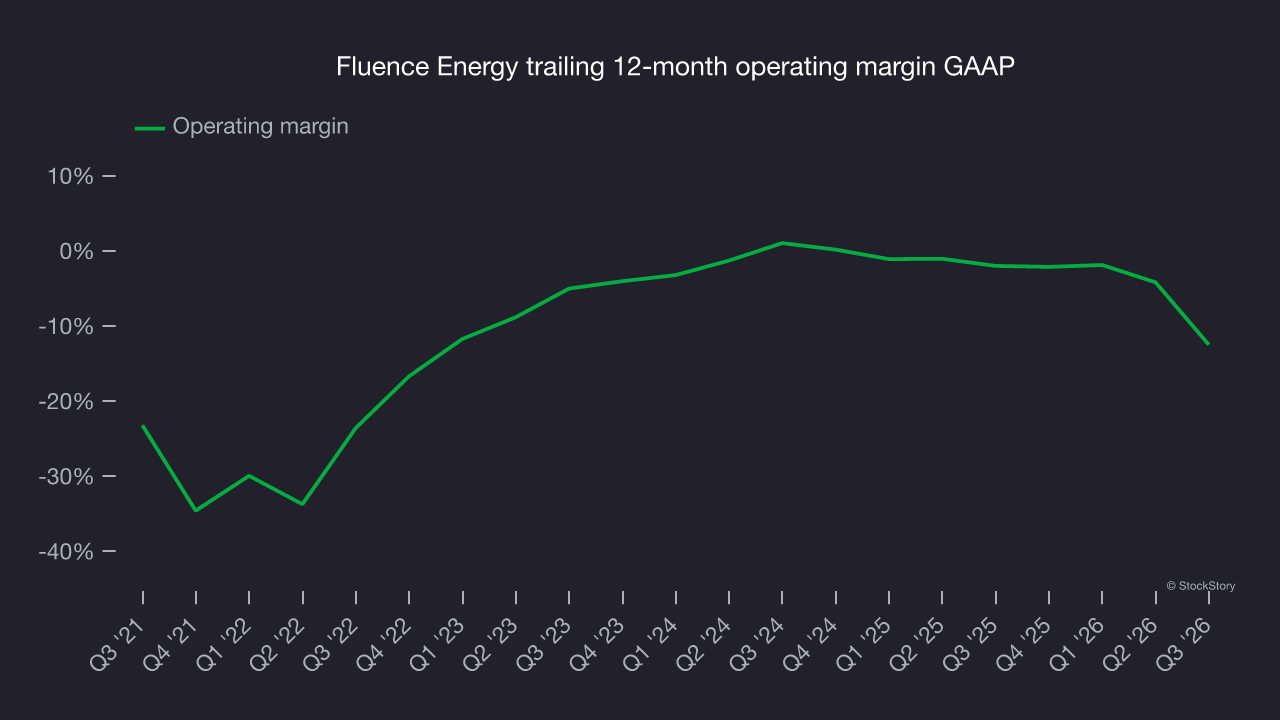
Fluence Energy’s operating margin was negative 17.9% this quarter.
Earnings per share
We track the long-term change in earnings per share, or EPS, for the same reason as long-term revenue growth. Compared to revenue, however, EPS highlights whether a company’s growth is profitable.
Fluence Energy’s losses widened over the last five years as its EPS dropped 2.5% annually. We’ll keep a close eye on the company as diminishing earnings could imply changing secular trends and preferences.
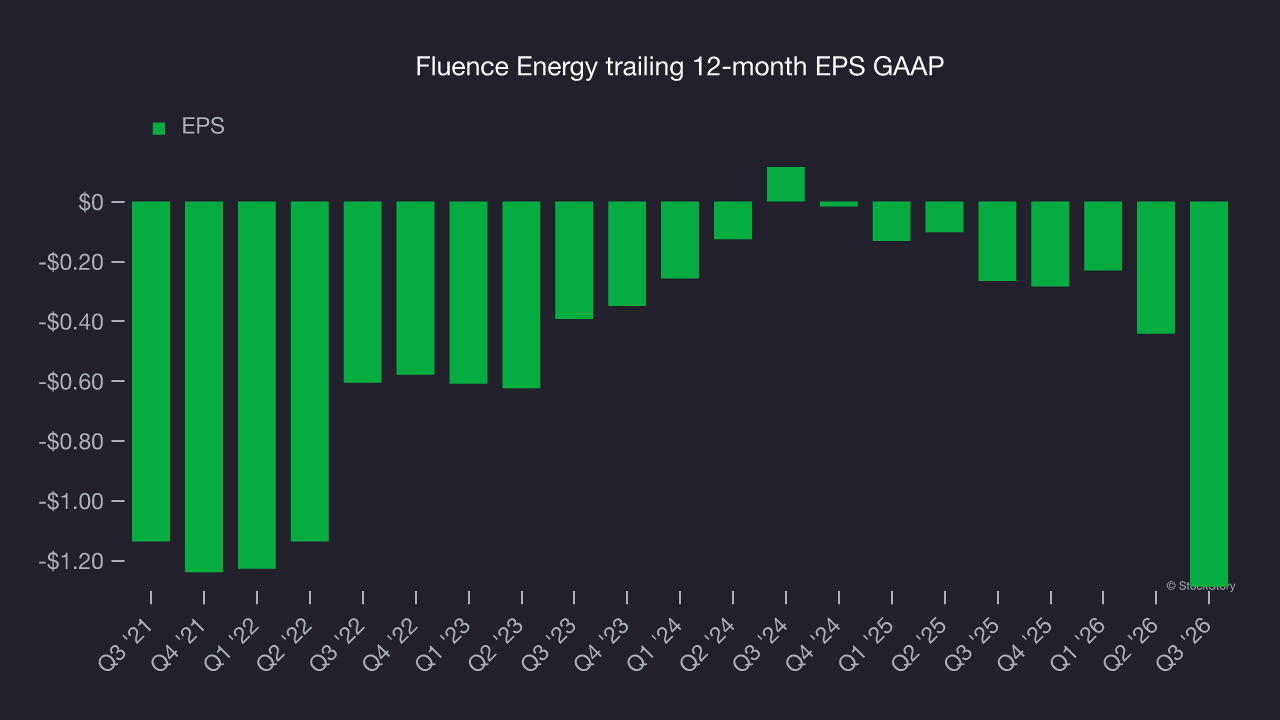
As with revenue, we analyze EPS over a shorter period to see if we are missing a change in the business.
Fluence Energy’s EPS declined by more than its revenue over the last two years, dropping 262%. This indicates the company struggled to adjust to shrinking demand.
Diving into the nuances of Fluence Energy’s earnings can give us a better understanding of its performance. Fluence Energy’s operating margin has declined over the last two years. This was the most relevant factor (aside from the revenue impact) behind its lower earnings; interest expenses and taxes can also affect EPS but don’t tell us as much about a company’s fundamentals.
In Q3, Fluence Energy reported EPS of negative $0.75, down from $0.10 in the same quarter last year. This result missed analysts’ consensus estimates. Over the next 12 months, Wall Street expects Fluence Energy to narrow its losses. Analysts forecast its full-year EPS will improve from negative $1.29 to negative $0.50, according to S&P.
Key takeaways from Fluence Energy’s Q3 results
Fluence Energy delivered a softer quarter with few positives: Revenue missed expectations and EPS fell short of Wall Street’s consensus estimates. Shares nevertheless surged 9.9% to $4.19 immediately after the report.
The latest quarter matters, but longer-term business quality and valuation matter more when deciding whether to invest in Fluence Energy. For more on Fluence Energy, read the full research report here (it’s free).