
Could Standard Chartered Stock Gain From New Airport Work Hubs
- Standard Chartered recently presented at the J.P. Morgan UK Leaders Conference in London and has launched branded Skylife Work Hubs at Hong Kong International Airport to reach business travellers near boarding gates.
- The creation of Skylife Work Hubs gives Standard Chartered a fresh way to tap premium clients during travel, aligning brand spend with its focus on affluent and cross border customers rather than mass market advertising.
- This article examines how Standard Chartered's investment narrative is influenced by sector wide bank momentum and the new Skylife Work Hubs rollout.
Scan how Standard Chartered's premium travel push compares with other financially solid banks targeting affluent clients by reviewing the list of solid balance sheet and fundamentals (7 results) in one place.
Standard Chartered Investment Narrative Recap
To own Standard Chartered, you need to be comfortable with a story built on affluent wealth inflows, fee income and cost discipline, as outlined by the analyst consensus Narrative on Simply Wall St. The main near term catalyst is continued delivery on wealth and Global Markets income, while the key business risk sits in less visible retail and SME trends and a relatively low bad loan allowance.
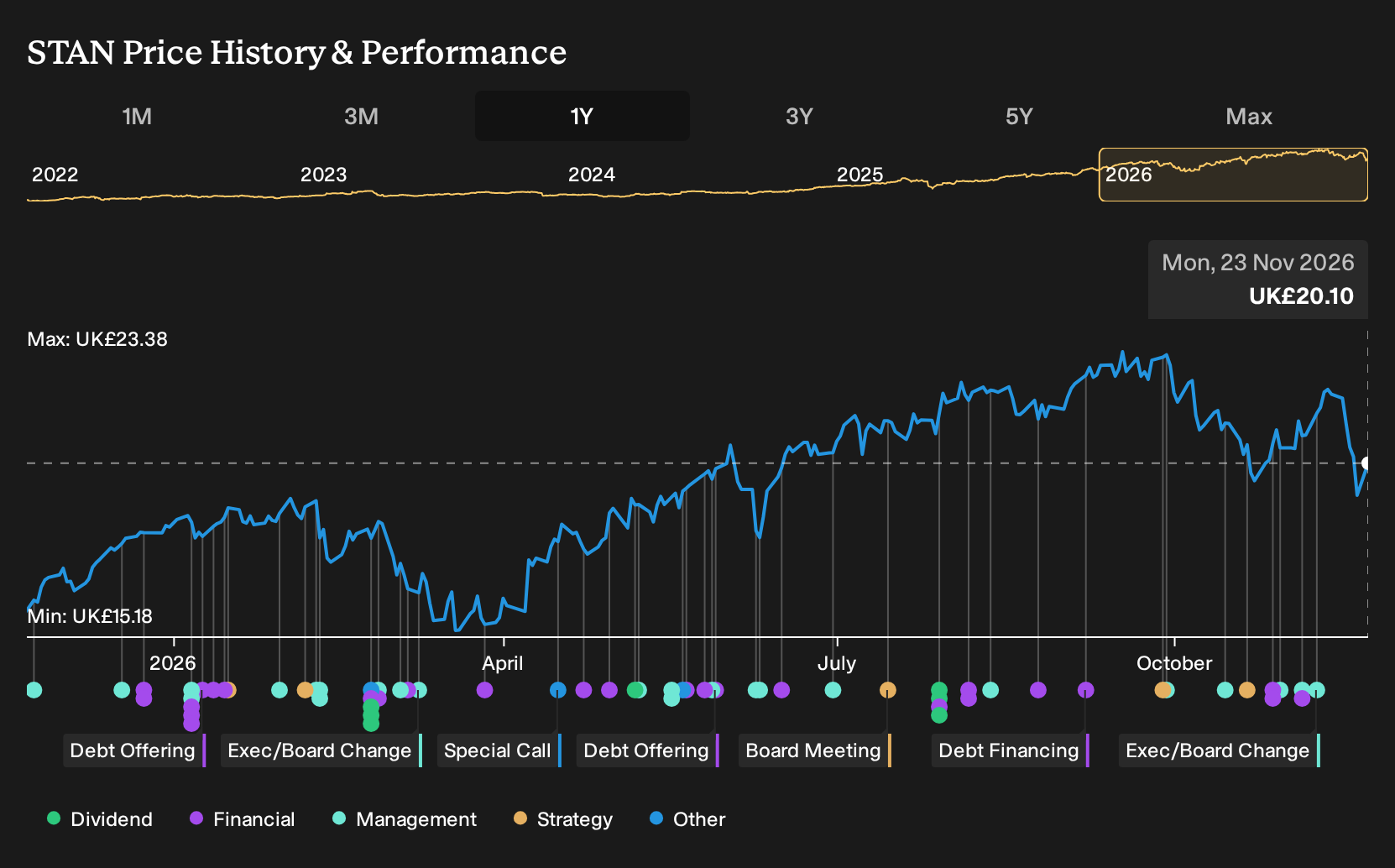
The latest premium travel branding moves and short term share price strength alongside wider bank gains look incremental rather than transformational for that thesis. The bigger swing factors remain execution on the Fit for Growth cost targets, credit quality and whether the market maintains confidence in earnings and P/E assumptions.
The introduction of Skylife Work Hubs at Hong Kong International Airport links directly to the affluent and cross border focus running through the analyst consensus Narrative on Simply Wall St. It supports the idea that Standard Chartered is concentrating resources where fee pools and wealth flows are deepest, rather than spreading marketing spend across lower value segments.
For catalysts, the relevant question is whether this kind of targeted client access helps progress toward the 2025 to 2028 affluent net new money ambitions and keeps Wealth Solutions income above the current quarterly run rate. Execution risk is practical rather than theoretical, including utilisation of the hubs, conversion into deeper relationships and maintaining cost discipline while experimenting with new client touchpoints.
Standard Chartered's narrative projects US$27.0b revenue and US$7.3b earnings by 2029, based on analysts assuming 7.7% yearly revenue growth and an earnings increase of about US$2.0b from current earnings of US$5.3b.
Discover how Standard Chartered's fair value indicates a 24% potential upside to its current price, which could close faster than many investors expect.
Exploring Other Perspectives
Another angle focuses on risk. Some of the highest analysts worry that fee engines like Wealth Solutions and Global Markets could soften if client activity cools, even though they were assuming revenue of about US$28.0b and earnings of US$8.2b by 2029 before this Skylife news. That gap in expectations shows how widely views on Standard Chartered can differ. It makes sense to compare several narratives and decide which aligns with your own read of the story.
Explore 2 other Standard Chartered fair value estimates, including one that suggests a potential upside of up to 72% from the current price.
Decide For Yourself
Don't just follow the ticker. Dig into the data and build a conviction that's truly your own.
- A great starting point for your Standard Chartered research is our analysis highlighting 4 key rewards and 3 important warning signs that could impact your investment decision.
- See our latest analysis for Standard Chartered. The report includes a comprehensive fundamental analysis summarized in a single visual, the Snowflake, making it easy to evaluate Standard Chartered's overall financial health at a glance.
Looking for more investment ideas beyond Standard Chartered?
Once you have formed a view on Standard Chartered, it can help to compare that thesis with other companies that share some of the qualities you care about, whether that is balance sheet strength, income potential or a smoother ride through the cycle.
- If resilience matters most to you, compare Standard Chartered with companies that screen well on stability and risk using the 7 resilient stocks with low risk scores.
- If you are hunting for quality at a reasonable price, broaden your watchlist with the 15 high quality undervalued stocks that clear fundamental checks on cash flows and balance sheets.
- If income is a priority, line up Standard Chartered against other income-focused opportunities by scanning the 7 dividend fortresses that combine higher yields with more durable payout profiles.
Have feedback on this article? Concerned about the content? Get in touch with us directly. Alternatively, email editorial-team@simplywallst.com