
Insiders Re-Evaluate Their AU$1.17m Stock Purchase As Maggie Beer Holdings Falls To AU$22m
The recent 22% drop in Maggie Beer Holdings Limited's (ASX:MBH) stock could come as a blow to insiders who purchased AU$1.17m worth of stock at an average buy price of AU$0.062 over the past 12 months. Insiders invest with the hopes of seeing their money grow in value over time. However, as a result of recent losses, their initial investment is now only worth AU$748.2k, which is not what they expected.
Although we don't think shareholders should simply follow insider transactions, logic dictates you should pay some attention to whether insiders are buying or selling shares.
The Last 12 Months Of Insider Transactions At Maggie Beer Holdings
Over the last year, we can see that the biggest insider purchase was by insider Angelo Kotses for AU$571k worth of shares, at about AU$0.08 per share. That means that an insider was happy to buy shares at above the current price of AU$0.04. While their view may have changed since the purchase was made, this does at least suggest they have had confidence in the company's future. We always take careful note of the price insiders pay when purchasing shares. Generally speaking, it catches our eye when insiders have purchased shares at above current prices, as it suggests they believed the shares were worth buying, even at a higher price.
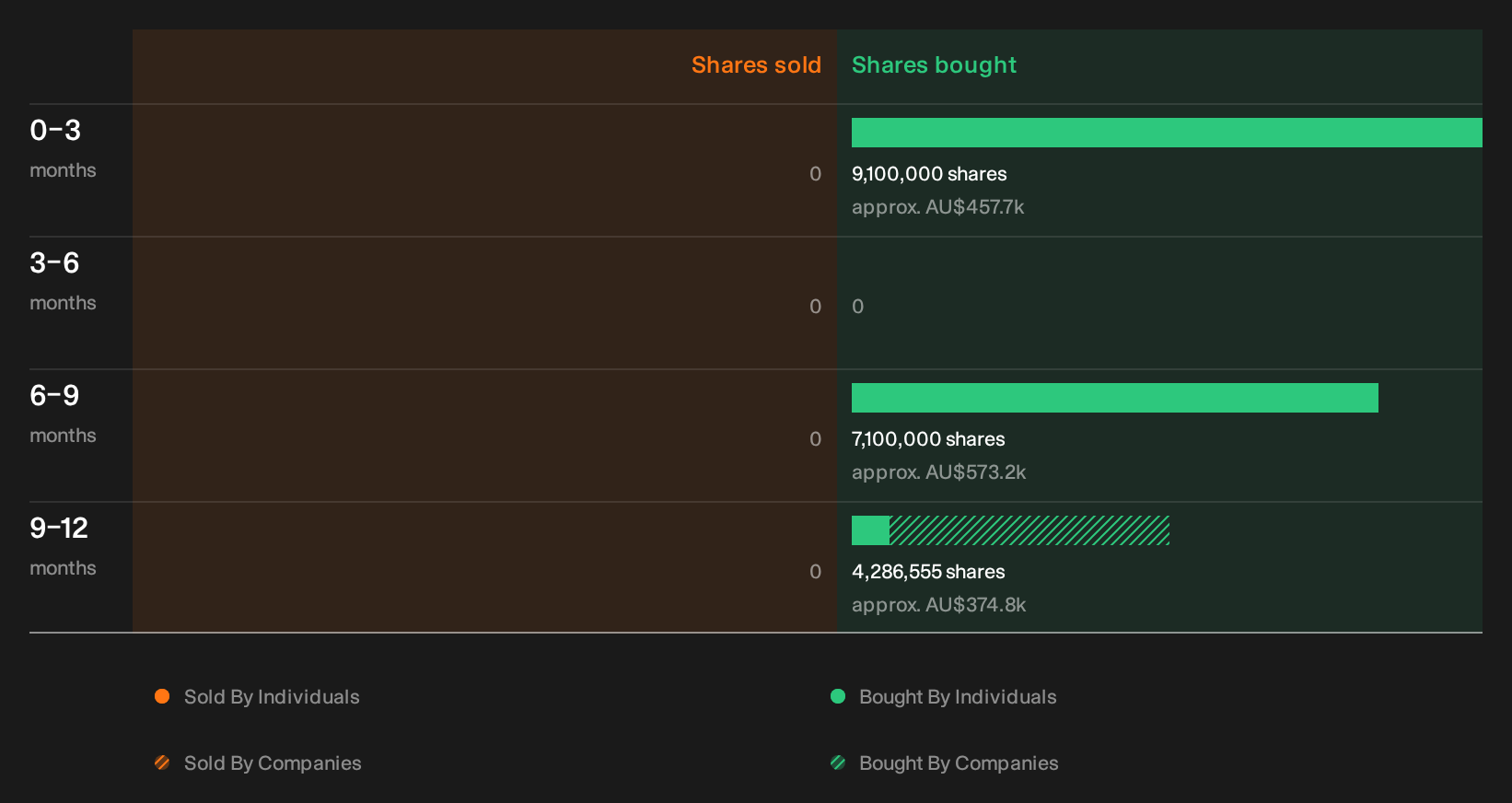
Maggie Beer Holdings insiders may have bought shares in the last year, but they didn't sell any. Their average price was about AU$0.062. This is nice to see since it implies that insiders might see value around current prices. You can see the insider transactions (by companies and individuals) over the last year depicted in the chart below. If you click on the chart, you can see all the individual transactions, including the share price, individual, and the date!
Check out our latest analysis for Maggie Beer Holdings
There are always plenty of stocks that insiders are buying. If investing in lesser known companies is your style, you could take a look at this free list of companies. (Hint: insiders have been buying them).
Insiders At Maggie Beer Holdings Have Bought Stock Recently
Over the last quarter, Maggie Beer Holdings insiders have spent a meaningful amount on shares. Overall, two insiders shelled out AU$558k for shares in the company -- and none sold. This makes one think the business has some good points.
Does Maggie Beer Holdings Boast High Insider Ownership?
I like to look at how many shares insiders own in a company, to help inform my view of how aligned they are with insiders. We usually like to see fairly high levels of insider ownership. It's great to see that Maggie Beer Holdings insiders own 51% of the company, worth about AU$11m. I like to see this level of insider ownership, because it increases the chances that management are thinking about the best interests of shareholders.
What Might The Insider Transactions At Maggie Beer Holdings Tell Us?
It's certainly positive to see the recent insider purchases. And an analysis of the transactions over the last year also gives us confidence. But on the other hand, the company made a loss during the last year, which makes us a little cautious. Along with the high insider ownership, this analysis suggests that insiders are quite bullish about Maggie Beer Holdings. Nice! So while it's helpful to know what insiders are doing in terms of buying or selling, it's also helpful to know the risks that a particular company is facing. For instance, we've identified 3 warning signs for Maggie Beer Holdings (2 shouldn't be ignored) you should be aware of.
But note: Maggie Beer Holdings may not be the best stock to buy. So take a peek at this free list of interesting companies with high ROE and low debt.
For the purposes of this article, insiders are those individuals who report their transactions to the relevant regulatory body. We currently account for open market transactions and private dispositions of direct interests only, but not derivative transactions or indirect interests.
Have feedback on this article? Concerned about the content? Get in touch with us directly. Alternatively, email editorial-team (at) simplywallst.com.