
MIT Holdings Co., Ltd. (TSE:4016) Will Pay A JP¥30.00 Dividend In Two Days
MIT Holdings Co., Ltd. (TSE:4016) stock is about to trade ex-dividend in two days. The ex-dividend date generally occurs two days before the record date, which is the day on which shareholders need to be on the company's books in order to receive a dividend. It is important to be aware of the ex-dividend date because any trade on the stock needs to have been settled on or before the record date. Therefore, if you purchase MIT Holdings' shares on or after the 27th of November, you won't be eligible to receive the dividend, when it is paid on the 27th of February.
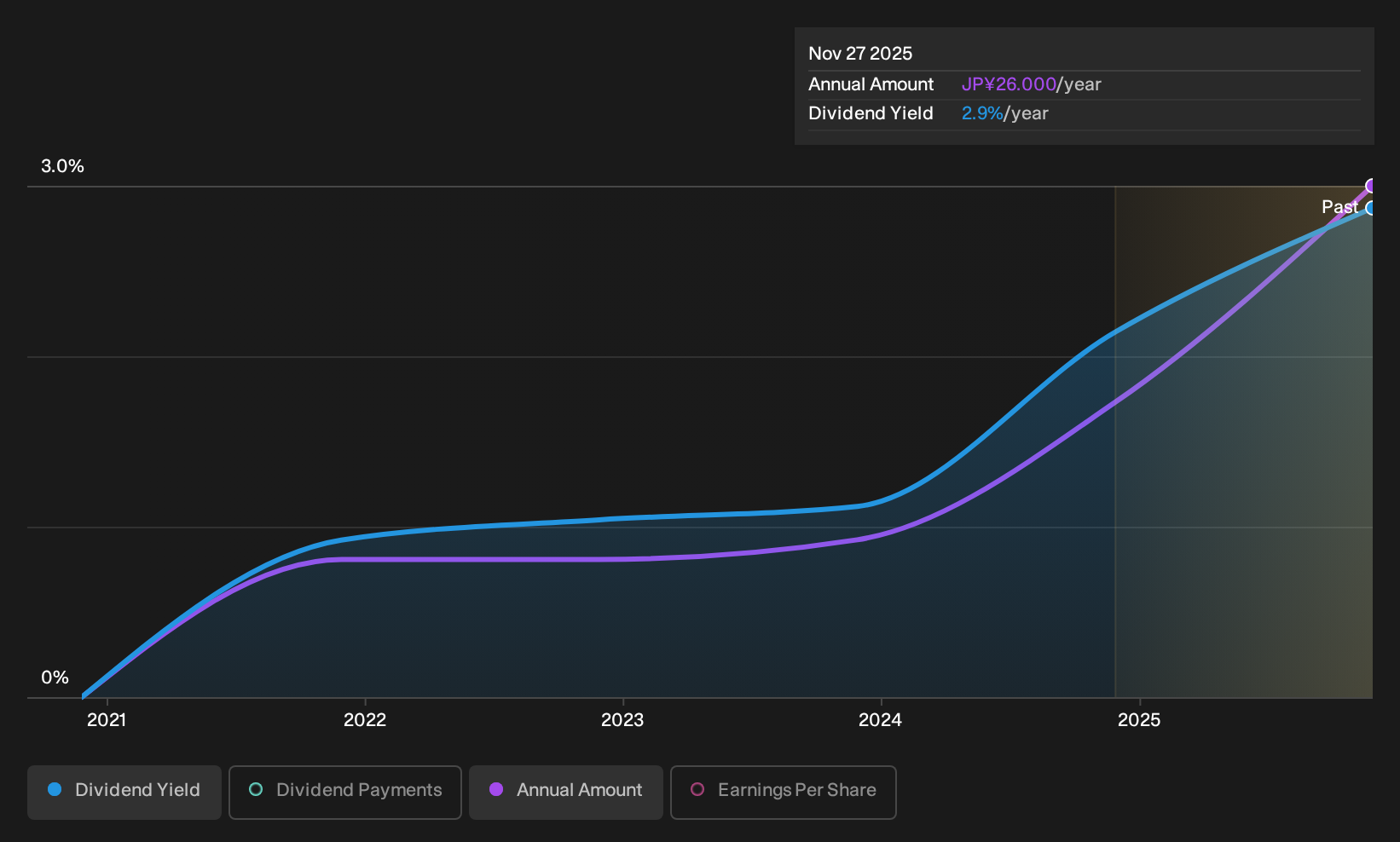
The company's upcoming dividend is JP¥30.00 a share, following on from the last 12 months, when the company distributed a total of JP¥30.00 per share to shareholders. Based on the last year's worth of payments, MIT Holdings has a trailing yield of 2.8% on the current stock price of JP¥1066.00. Dividends are a major contributor to investment returns for long term holders, but only if the dividend continues to be paid. We need to see whether the dividend is covered by earnings and if it's growing.
Dividends are usually paid out of company profits, so if a company pays out more than it earned then its dividend is usually at greater risk of being cut. MIT Holdings paid out 73% of its earnings to investors last year, a normal payout level for most businesses. A useful secondary check can be to evaluate whether MIT Holdings generated enough free cash flow to afford its dividend. Fortunately, it paid out only 29% of its free cash flow in the past year.
It's encouraging to see that the dividend is covered by both profit and cash flow. This generally suggests the dividend is sustainable, as long as earnings don't drop precipitously.
View our latest analysis for MIT Holdings
Click here to see how much of its profit MIT Holdings paid out over the last 12 months.
Have Earnings And Dividends Been Growing?
Companies with falling earnings are riskier for dividend shareholders. If earnings decline and the company is forced to cut its dividend, investors could watch the value of their investment go up in smoke. So we're not too excited that MIT Holdings's earnings are down 4.8% a year over the past five years.
The main way most investors will assess a company's dividend prospects is by checking the historical rate of dividend growth. MIT Holdings has delivered an average of 35% per year annual increase in its dividend, based on the past six years of dividend payments. Growing the dividend payout ratio while earnings are declining can deliver nice returns for a while, but it's always worth checking for when the company can't increase the payout ratio any more - because then the music stops.
The Bottom Line
Should investors buy MIT Holdings for the upcoming dividend? We're not enthused by the declining earnings per share, although at least the company's payout ratio is within a reasonable range, meaning it may not be at imminent risk of a dividend cut. Overall, it's hard to get excited about MIT Holdings from a dividend perspective.
So if you want to do more digging on MIT Holdings, you'll find it worthwhile knowing the risks that this stock faces. For example, we've found 2 warning signs for MIT Holdings that we recommend you consider before investing in the business.
A common investing mistake is buying the first interesting stock you see. Here you can find a full list of high-yield dividend stocks.
Have feedback on this article? Concerned about the content? Get in touch with us directly. Alternatively, email editorial-team (at) simplywallst.com.