
What Walt Disney Buyers Were Betting On
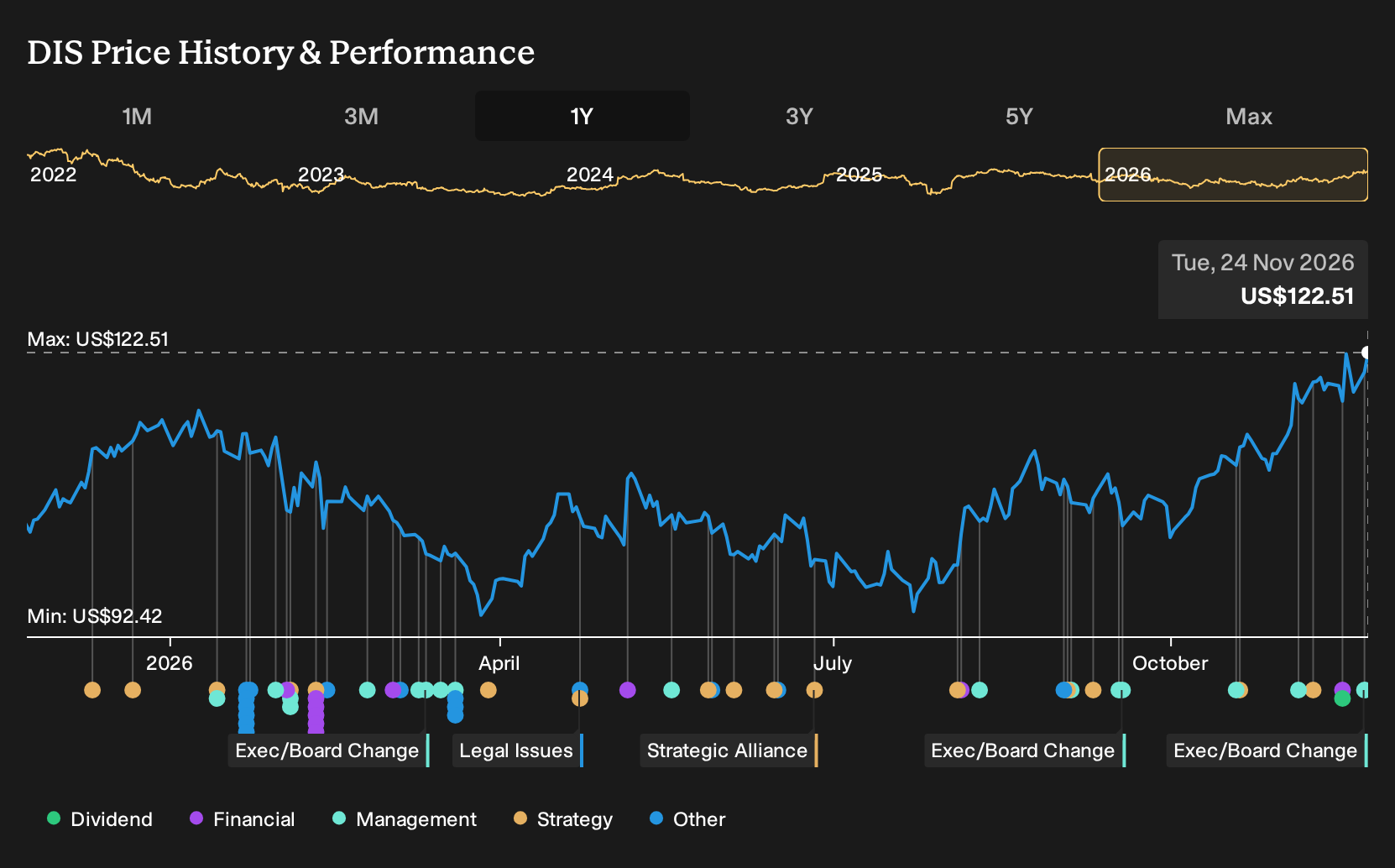
If you had to make a call on Walt Disney back in November 2025, you were staring at loud arguments on both sides about cruises, streaming spend and rising content costs. Investors who held Walt Disney over the past year are up 20.3%, including dividends. The result is clear. The harder question is what early buyers were weighing between global park expansion and margin pressure from streaming and sports rights when nothing felt settled yet.
Narratives are how investors here put a case on the record, with explicit assumptions about revenue, margins and the multiple. Those assumptions imply an estimated Fair Value.
If the move has made Walt Disney harder to judge, start where the gap is still open and scan 37 high quality undervalued stocks.
The Two Stories Investors Had To Choose Between On Disney
Shares in Walt Disney cost US$102 at the start of the period, and investors had to pick between two grounded stories about where the business might head next.
On the optimistic side, one narrative saw global cruises and park projects, plus a unified Disney+, Hulu and ESPN app, supporting a fair value of US$133, with revenue growth assumptions of 4.2% and profit margins at 11.6% over three years.
The opposing case put more weight on competition and rising production costs, with a fair value of US$95.94 and an assumption that profit margins would sit at 7.5% over a five year horizon.
What The Results Changed For The Disney Argument
Disney’s Q4 2026 report, with revenue at US$25.95b and net income at US$2.61b, gave hard backing to the optimistic case that assumed higher profitability. Net margin moved from 5.8% in Q4 2025 to 10.1%, closer to the 11.6% margin in the bullish narrative, even as layoffs and cost cuts kept the cautious story about pressure on talent and content investment alive. Overall, the evidence cut both ways.
The lesson is simple. When a thesis hinges on margins, treat net income and margin percentage as the scoreboard you check each quarter to see whether cost cuts and growth projects are actually coexisting.
What Disney’s Current Price Already Assumes
Today Walt Disney trades at US$123, after a 20.3% gain over the past year, and this Narrative’s Fair Value sits above that level rather than below it. According to alegget, an investor in the Simply Wall St Community who wrote the Narrative, the key question now is what that gap really reflects.
The argument focuses on Disney’s ability to keep turning long lived brands, parks and sports rights into fresh formats and new technology partnerships. A buyer at today’s price still has to judge whether the market underestimates how much those assets can absorb industry shifts without eroding the overall business quality.
"Disney is a company whose history spans more than 100 years, during which time it has overcome numerous structural shifts, macroeconomic events and other issues. Not only has it overcome those issues, but it has usually come out ahead and is still one of the most admired brands in the world, the leading entertainment company, one of the most innovative companies in its industry and a company whose portfolio of intellectual property is unrivalled anywhere else in the world."
One Narrative has put a figure on that disagreement. → See the Narrative with its higher Fair Value, assumptions and all
Which Company Could Surprise You Next?
You may be late to this rally, but that does not have to mean arriving late to every opportunity. Start with companies whose prices leave room for a different view of their future. Here are three trading below our estimates.
- Company 1 - 31% below our estimate - targets AI related cargo and complex compliance work with automated brokerage tools.
- Company 2 - 35% below our estimate - expands AI heavy cloud workloads while linking subscriptions and usage across customers.
- Company 3 - 46% below our estimate - pursues subsea projects using integrated contracts and equipment for accelerated field tiebacks.
That is three of the list. See every one of the 23 solid balance sheet companies →
Have feedback on this article? Concerned about the content? Get in touch with us directly. Alternatively, email editorial-team@simplywallst.com