
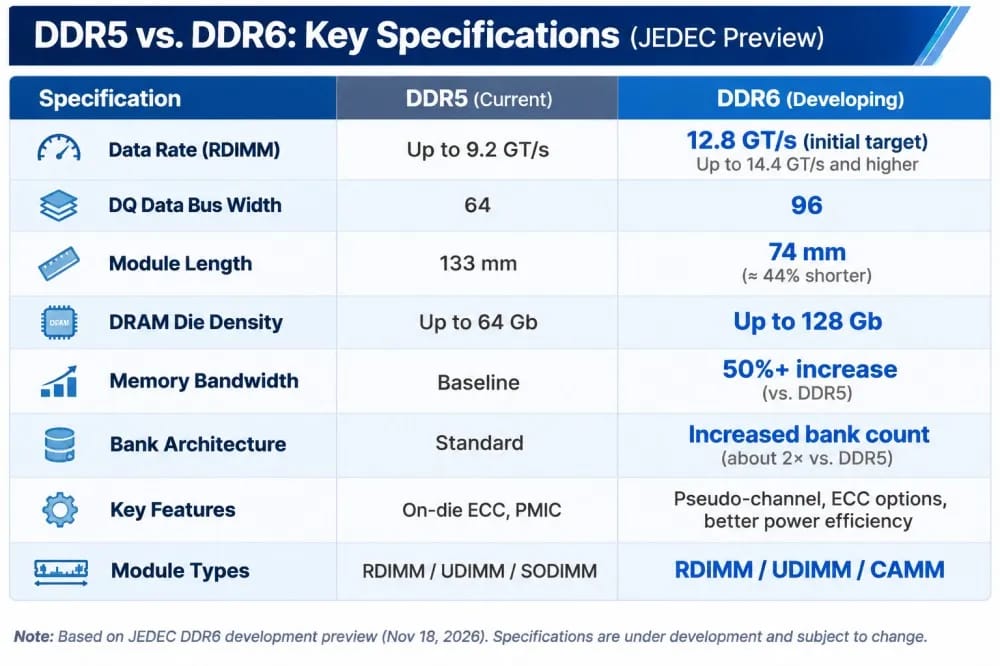
SHENZHEN, CN / ACCESS Newswire / November 25, 2026 / JEDEC previewed its developing DDR6 DRAM standard on November 18, targeting more than 50% higher memory bandwidth than DDR5 at introduction. DDR6 RDIMMs are planned to start at 12.8 GT/s, compared with 9.2 GT/s for DDR5. These higher data rates also increase the importance of controlled-impedance PCB design for next-generation server motherboards.

Eye diagram analysis helps engineers evaluate signal integrity, including eye height, eye width and jitter, as memory interfaces move toward higher transmission speeds.
DDR6 Performance, Availability and Pricing
According to JEDEC's DDR6 announcement, the proposed data bus expands from 64 to 96 DQ, with a roadmap extending to 14.4 GT/s and beyond. DDR6 also targets DRAM die densities of up to 128 Gb, improved die stacking and a 74 mm module length compared with 133 mm for DDR5. Potential form factors include RDIMM, UDIMM and CAMM.
Samsung Electronics, SK hynix and Micron Technology have been identified in industry reports as participants in early DDR6 substrate development. Their supply-chain work includes preliminary substrate designs and prototype validation, rather than commercial memory production.
Availability and pricing remain major questions. Industry estimates point to initial DDR6 commercialization around 2028-2029 or later, although JEDEC has not confirmed a launch date. Existing DDR5 motherboards will also require compatible processors, memory controllers and new motherboard designs.
Micron addressed the economic implications in its June 2026 fiscal Q3 investor presentation. The company identified the DDR5-to-DDR6 transition as a source of higher DRAM bit costs and said price premiums for new products would be negotiated with customers. No official DDR6 retail prices have been announced, but early modules may carry a premium over comparable DDR5 products.
JEDEC also targets improved performance per watt and system-level error correction for data center applications. Actual application performance will depend on memory latency, processor architecture and workload requirements, not bandwidth alone.
DDR6 and PCB Manufacturing
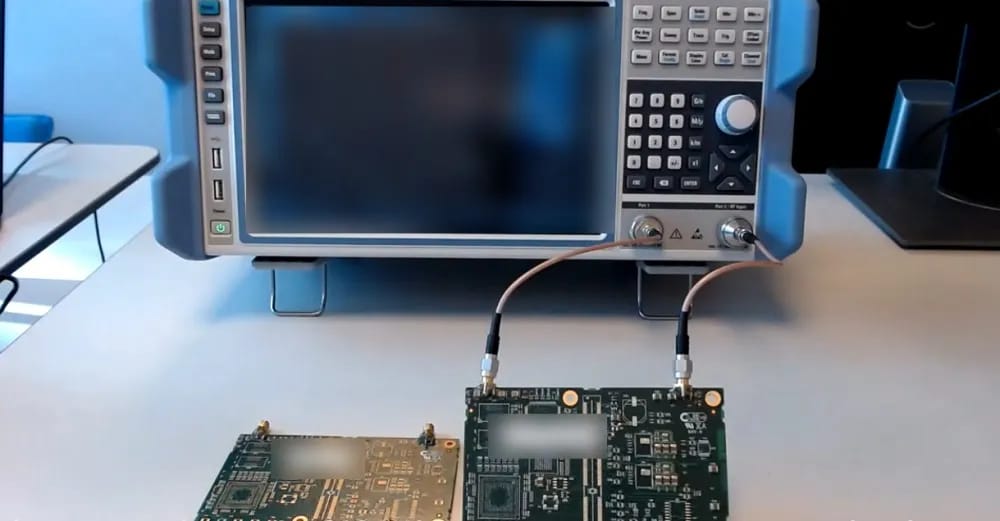
Higher data rates and wider memory interfaces increase demands on PCB routing, signal integrity, stack-up design and dielectric consistency. Manufacturing tolerances and reference-plane structures also influence electrical performance.
PCB impedance test coupons combined with time-domain reflectometry (TDR) help manufacturers verify transmission-line impedance against design requirements.
WellerPCB provides PCB layout and engineering services, controlled-impedance PCB fabrication, multilayer PCB manufacturing and PCB assembly for computing, communications and industrial electronics.
As DDR6 development progresses, its finalized specifications will establish clearer requirements for memory interfaces, motherboard layouts and PCB manufacturing.

About WellerPCB
WellerPCB provides PCB design, manufacturing and assembly services, including multilayer PCB fabrication, HDI and controlled-impedance boards.
For more information, visit https://wellerpcb.com/.
Company Basic Information
Website: https://wellerpcb.com/
LinkedIn: https://www.linkedin.com/company/wellerpcbs
Facebook: https://www.facebook.com/people/Weller-Technology-Co-Ltd/61576654481931/
YouTube: https://www.youtube.com/@WellerPCB
Industry Electrical, and Electronics Manufacturing, Semiconductor
Company Type Privately Held
Company Size 51-200 employees
Founded Year 2016
Manufacturing Experience Since 2003
Headquarters Shenzhen, Guangdong, China
Country China
Media Contact Details
Weller Technology Co., Ltd
kevinedard.dw@gmail.com
wellerpcb.com
###
SOURCE: WellerPCB
View the original press release on ACCESS Newswire