
Unpacking Q3 earnings: Scholastic in the context of other consumer discretionary - media stocks

Let’s dig into the relative performance of Scholastic NASDAQ:SCHL and its peers as we unravel the now-completed Q3 consumer discretionary - media earnings season.
The Consumer Discretionary sector, by definition, is made up of companies selling non-essential goods and services. When economic conditions deteriorate or tastes shift, consumers can easily cut back or eliminate these purchases. For long-term investors with five-year holding periods, this creates a structural challenge: the sector is inherently hit-driven, with low switching costs and fickle customers. As a result, only a handful of companies can reliably grow demand and compound earnings over long periods, which is why our bar is high and High Quality ratings are rare. Media companies create, aggregate, and distribute content—including news, entertainment, and advertising—across television, print, digital, and out-of-home channels. Tailwinds include growing digital advertising budgets, content licensing opportunities, and global audience expansion through streaming and social platforms. Headwinds are substantial: traditional advertising revenue from print and linear TV continues its structural decline as audiences migrate to digital alternatives. Content creation costs are escalating amid intense competition for talent and intellectual property. Media fragmentation makes it difficult to build sustainable audience scale, while AI-generated content threatens to commoditize production and disrupt established business models.
The 6 consumer discretionary - media stocks we track reported a solid Q3. As a group, revenues beat analysts’ consensus estimates by 0.9%.
While some consumer discretionary - media stocks have fared somewhat better than others, they have collectively declined. On average, share prices are down 3.6% since the latest earnings results.
Weakest Q3: Scholastic NASDAQ:SCHL
Creator of the legendary Scholastic Book Fair, Scholastic (NASDAQ:SCHL) is an international company specializing in children's publishing, education, and media services.
Scholastic reported revenues of $216.8 million, down 3.9% year on year. This print fell short of analysts’ expectations by 3.5%. Overall, it was a softer quarter for the company with a significant miss of analysts’ EPS estimates.
"Our fiscal 2027 priorities remain focused on translating the strategic and operating progress achieved last year to drive further performance gains. We remain confident in the growth trajectory we outlined at year-end and are affirming our full-year guidance as we continue to execute against that plan and create long-term value for shareholders."
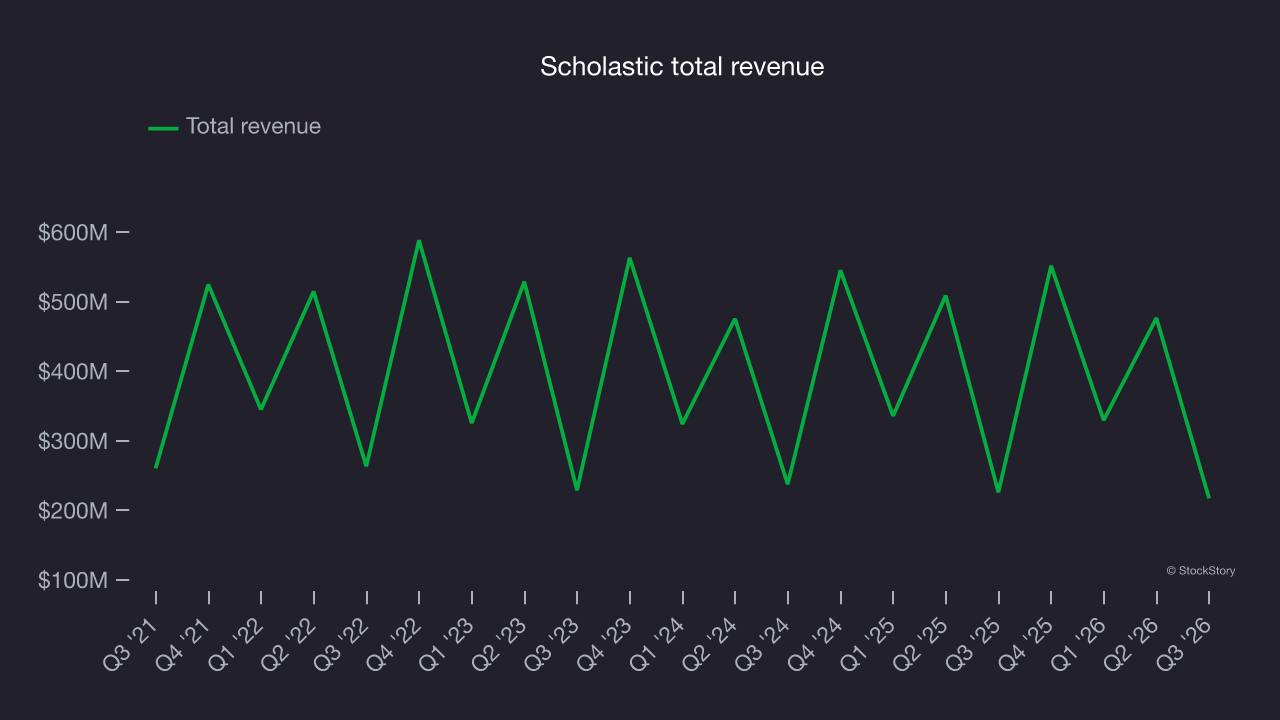
Scholastic delivered the weakest performance against analyst estimates and slowest revenue growth of the whole group. Interestingly, the stock is up 8.8% since reporting and currently trades at $37.90.
Read our full report on Scholastic here, it’s free.
Best Q3: Warner Music Group (NASDAQ:WMG)
Launching the careers of legendary artists like Frank Sinatra, Warner Music Group (NASDAQ:WMG) is a music company managing a diverse portfolio of artists, recordings, and music publishing services worldwide.
Warner Music Group reported revenues of $2.00 billion, up 7.1% year on year, outperforming analysts’ expectations by 4.8%. The business had a very strong quarter with a beat of analysts’ EPS estimates and a decent beat of analysts’ EBITDA estimates.
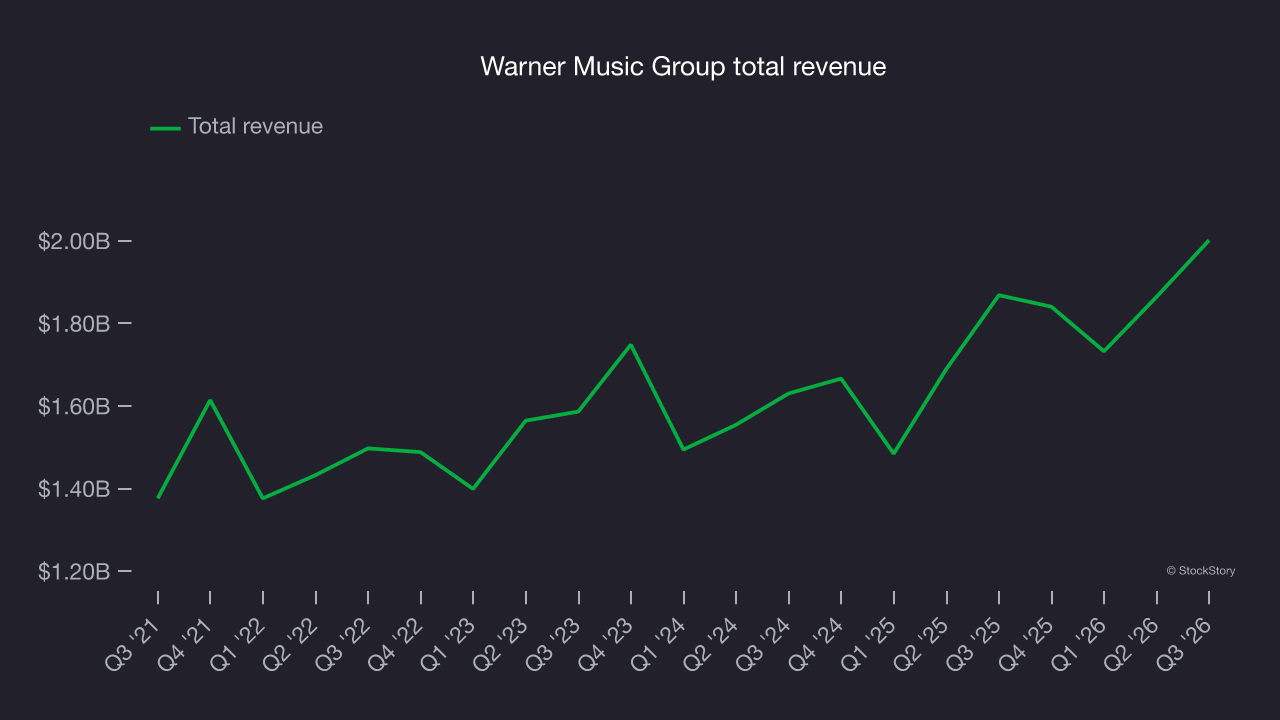
Warner Music Group delivered the biggest analyst estimate beat among its peers. Although it had a fine quarter compared to its peers, the market seems unhappy with the results as the stock is down 1.5% since reporting. It currently trades at $32.46.
Is now the time to buy Warner Music Group? Access our full analysis of the earnings results here, it’s free.
The New York Times (NYSE:NYT)
Founded in 1851, The New York Times (NYSE:NYT) is an American media organization known for its influential newspaper and expansive digital journalism platforms.
The New York Times reported revenues of $768.5 million, up 9.7% year on year, in line with analysts’ expectations. It was a mixed quarter as it posted a beat of analysts’ EPS estimates.
Interestingly, the stock is up 6.7% since the results and currently trades at $71.60.
Read our full analysis of The New York Times’s results here.
fuboTV (NYSE:FUBO)
Originally launched as a soccer streaming platform, fuboTV (NYSE:FUBO) is a video streaming service specializing in live sports, news, and entertainment content.
fuboTV reported revenues of $1.50 billion, up 35.7% year on year. This result was in line with analysts’ expectations. It was a solid quarter as it also recorded a solid beat of analysts’ EBITDA estimates and full-year EBITDA guidance exceeding analysts’ expectations.
fuboTV pulled off the fastest revenue growth in the group. The stock is down 26.9% since reporting and currently trades at $5.40.
Read our full, actionable report on fuboTV here, it’s free.
Disney (NYSE:DIS)
Founded by brothers Walt and Roy, Disney (NYSE:DIS) is a multinational entertainment conglomerate, renowned for its theme parks, movies, television networks, and merchandise.
Disney reported revenues of $25.95 billion, up 15.5% year on year. This number beat analysts’ expectations by 3.3%. Overall, it was a solid quarter as it also logged a beat of analysts’ EPS estimates.
The stock is up 6.1% since reporting and currently trades at $125.92.
Read our full, actionable report on Disney here, it’s free.
Market update
Over the past year, investors have been forced to repeatedly answer the same question: What is the market’s biggest risk? The answer has changed several times, and each shift has reshaped market leadership.
Late in 2025 and early 2026, artificial intelligence became the market’s primary uncertainty. Investors questioned whether AI would erode software pricing power and weaken competitive moats as AI made it easier to replicate once-differentiated products.
By the spring, technology took a back seat to geopolitics. The U.S. conflict with Iran briefly became the market’s dominant narrative, raising concerns about oil prices, inflation, and global growth. But as energy markets remained orderly and fears of a prolonged supply disruption faded, investors quickly turned their focus back to fundamentals.
Want to invest in winners with rock-solid fundamentals? Check out our Hidden Gem Stocks and add them to your watchlist. These companies are poised for growth regardless of the political or macroeconomic climate.