
Consumer discretionary - travel and vacation providers stocks Q3 recap: Benchmarking Sabre

Let’s dig into the relative performance of Sabre NASDAQ:SABR and its peers as we unravel the now-completed Q3 consumer discretionary - travel and vacation providers earnings season.
The Consumer Discretionary sector, by definition, is made up of companies selling non-essential goods and services. When economic conditions deteriorate or tastes shift, consumers can easily cut back or eliminate these purchases. For long-term investors with five-year holding periods, this creates a structural challenge: the sector is inherently hit-driven, with low switching costs and fickle customers. As a result, only a handful of companies can reliably grow demand and compound earnings over long periods, which is why our bar is high and High Quality ratings are rare. Travel and vacation providers operate tour packages, cruise lines, online travel agencies, and vacation rental platforms, connecting consumers with leisure and business travel experiences. Tailwinds include robust post-pandemic travel demand, a consumer preference shift toward experiences over goods, and technology-enabled personalization improving conversion and loyalty. However, headwinds are significant: the industry is acutely sensitive to macroeconomic cycles, geopolitical instability, and fuel price volatility. Low switching costs mean fierce price competition, while capacity additions in segments like cruises can lead to oversupply. Regulatory burdens, weather disruptions, and public health risks further create episodic but potentially severe demand shocks.
The 19 consumer discretionary - travel and vacation providers stocks we track reported a satisfactory Q3. As a group, revenues beat analysts’ consensus estimates by 3.2% while next quarter’s revenue guidance was 1.3% above.
Thankfully, share prices of the companies have been resilient as they are up 9.2% on average since the latest earnings results.
Sabre NASDAQ:SABR
Originally a division of American Airlines, Sabre (NASDAQ:SABR) is a technology provider for the global travel and tourism industry.
Sabre reported revenues of $738.4 million, up 3.2% year on year. This print exceeded analysts’ expectations by 1%. Overall, it was a favorable quarter for the company with a beat of analysts’ EPS estimates and full-year EBITDA guidance topping analysts’ expectations.
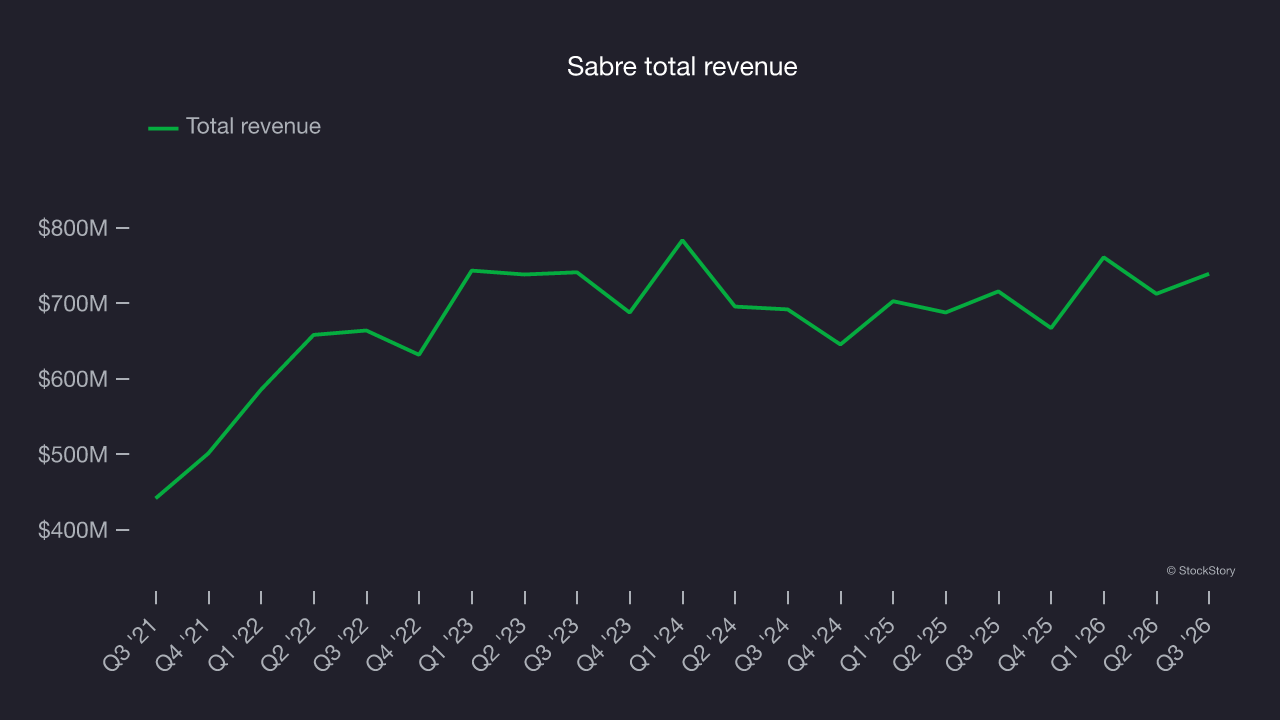
Investor expectations, however, were likely higher than Wall Street’s published projections, leaving some wishing for even better results (analysts’ consensus estimates are those published by big banks and advisory firms, not the investors who make buy and sell decisions). The stock is down 2% since reporting and currently trades at $1.71.
Is now the time to buy Sabre? Access our full analysis of the earnings results here, it’s free.
Best Q3: Hilton Grand Vacations (NYSE:HGV)
Spun off from Hilton Worldwide in 2017, Hilton Grand Vacations (NYSE:HGV) is a global timeshare company that provides travel experiences for its customers through its timeshare resorts and club membership programs.
Hilton Grand Vacations reported revenues of $1.96 billion, up 50.8% year on year, outperforming analysts’ expectations by 39.5%. The business had an exceptional quarter with a beat of analysts’ EPS and EBITDA estimates.
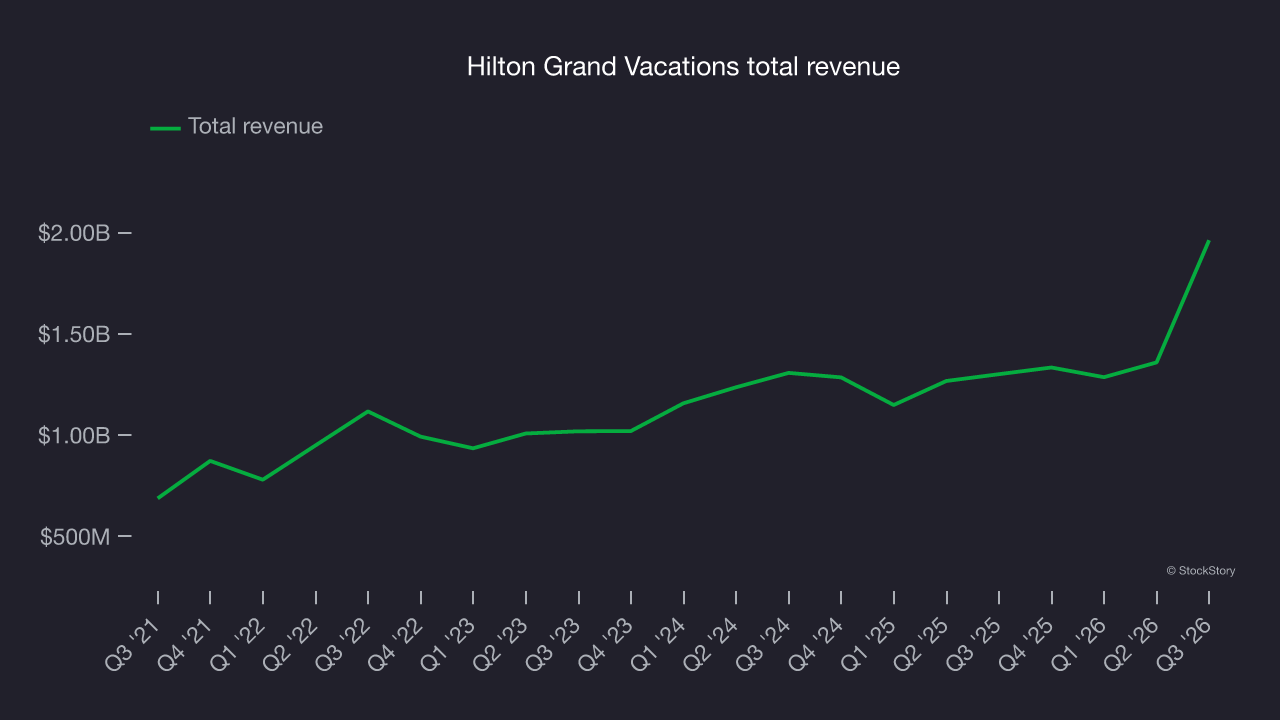
Hilton Grand Vacations delivered the biggest analyst estimate beat in the group. The market seems happy with the results as the stock is up 25.4% since reporting. It currently trades at $44.55.
Is now the time to buy Hilton Grand Vacations? Access our full analysis of the earnings results here, it’s free.
Viking (NYSE:VIK)
From a single river cruise offering to a fleet of 96 vessels across multiple continents, Viking (NYSE:VIK) operates a fleet of small luxury cruise ships offering river, ocean, and expedition voyages focused on cultural enrichment and destination immersion.
Viking reported revenues of $2.18 billion, up 9.2% year on year, falling short of analysts’ expectations by 0.9%. It was a sluggish quarter as it posted a significant miss of analysts’ EPS and EBITDA estimates.
Interestingly, the stock is up 10.3% since the results and currently trades at $99.54.
Read our full analysis of Viking’s results here.
Delta (NYSE:DAL)
One of the ‘Big Four’ airlines in the US, Delta Air Lines (NYSE:DAL) is a major global air carrier that serves both business and leisure travelers through its domestic and international flights.
Delta reported revenues of $20.19 billion, up 21.1% year on year. This print beat analysts’ expectations by 4.2%. Taking a step back, it was a softer quarter as it logged a significant miss of analysts’ EPS estimates and EPS guidance for next quarter missing analysts’ expectations.
The stock is up 1.3% since reporting and currently trades at $83.19.
Read our full, actionable report on Delta here, it’s free.
Travel + Leisure (NYSE:TNL)
Formerly known as Wyndham Destinations, Travel + Leisure (NYSE:TNL) is a global vacation company that provides travelers with vacation ownership, exchange, and travel services.
Travel + Leisure reported revenues of $1.10 billion, up 5.5% year on year. This number surpassed analysts’ expectations by 1%. Aside from that, it was a mixed quarter as it failed to impress in some other areas of the business.
The stock is up 26.2% since reporting and currently trades at $82.79.
Read our full, actionable report on Travel + Leisure here, it’s free.
Market update
Over the past year, investors have been forced to repeatedly answer the same question: What is the market’s biggest risk? The answer has changed several times, and each shift has reshaped market leadership.
Late in 2025 and early 2026, artificial intelligence became the market’s primary uncertainty. Investors questioned whether AI would erode software pricing power and weaken competitive moats as AI made it easier to replicate once-differentiated products.
By the spring, technology took a back seat to geopolitics. The U.S. conflict with Iran briefly became the market’s dominant narrative, raising concerns about oil prices, inflation, and global growth. But as energy markets remained orderly and fears of a prolonged supply disruption faded, investors quickly turned their focus back to fundamentals.
Want to invest in winners with rock-solid fundamentals? Check out our 9 Best Market-Beating Stocks and add them to your watchlist. These companies are poised for growth regardless of the political or macroeconomic climate.