
CoreWeave Stock Soared Over 20% When Jensen Huang Returned to Nvidia. Why Nvidia’s CEO Matters So Much for CRWV.
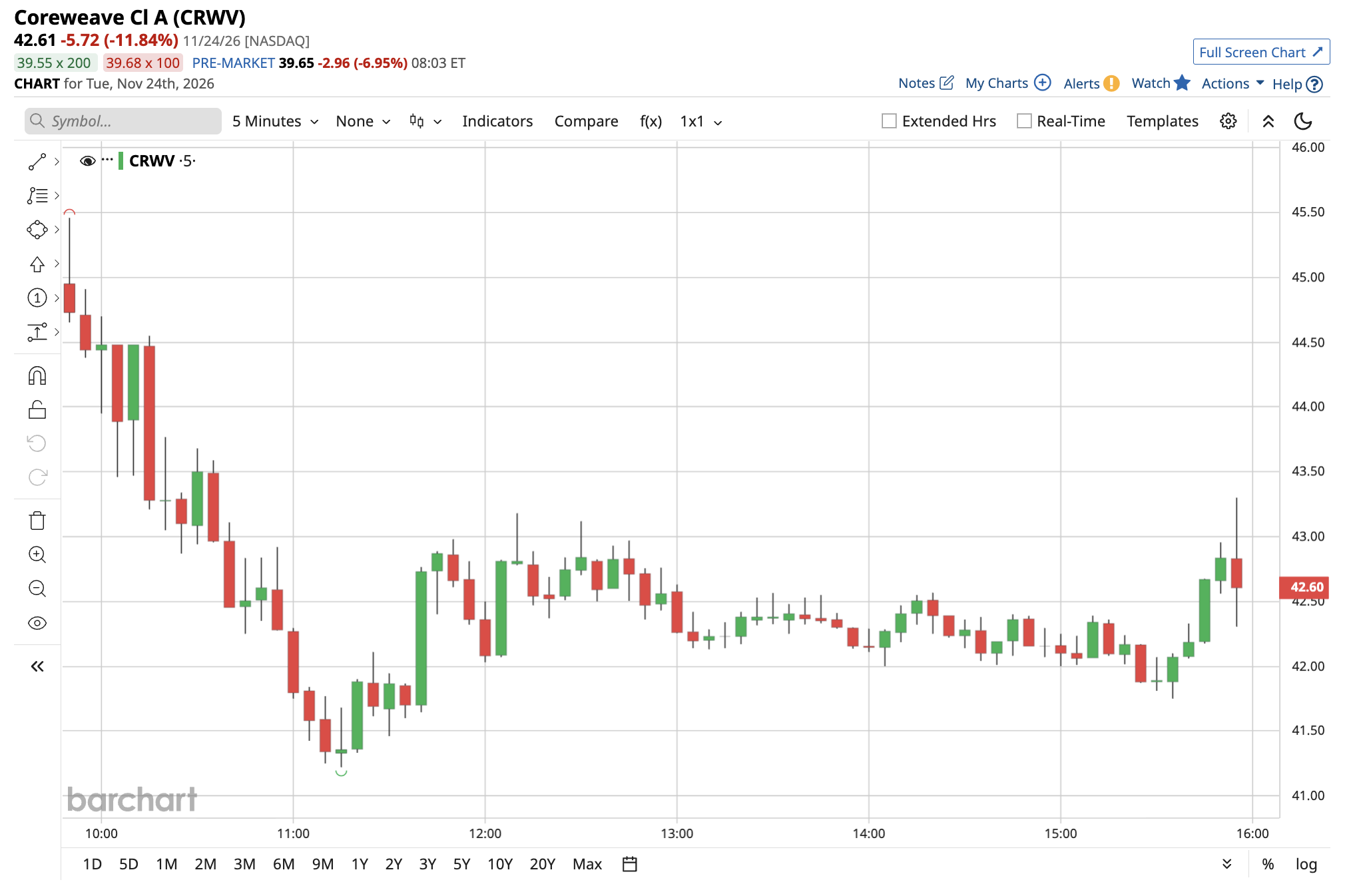
Jensen Huang resigned as Nvidia's (NVDA) CEO on Nov. 12, causing CoreWeave (CRWV) stock to drop nearly 7% in a single day. The drop was partly due to fears that a new Nvidia CEO may rethink the company's close partnership with CoreWeave. But on Nov. 23, CRWV stock surged more than 22% after Nvidia reinstated Huang as CEO.
Few names show how much a CEO of one company matters to another company better than CoreWeave. Let's take a closer look at why.
Why Huang's Return Matters More for CoreWeave Than Most
Nvidia sells CoreWeave its chips and also owns a stake in the company. Under Huang, Nvidia has stepped in financially when needed. In September 2025, Nvidia also signed a deal initially valued at $6.3 billion that requires it to buy any computing capacity CoreWeave can't sell to its own customers through 2032. That works as a safety net for CoreWeave and its lenders.
Huang's exit had raised doubts about Nvidia's role as a financier of AI cloud providers. In his absence, interim CEO Colette Kress said that Nvidia would take "a very strong look" at financing. With Huang back, the company most likely to keep backing CoreWeave is being led by the person who built that relationship.
As I wrote earlier this month, when co-founder Brian Venturo bought $30 million of CoreWeave's bonds, the company's biggest worry has been its debt. CoreWeave carries about $47 billion in debt, not counting leases, so lenders need to trust that it can keep paying it back. Its main answer is a $132.5 billion backlog, which is revenue customers have signed contracts for, though CoreWeave still has to deliver the computing power to collect it. To do that, CoreWeave needs a steady supply of Nvidia chips. That's why having Nvidia's support, especially with Huang back in charge, matters so much to its lenders.
There are risks to keep in mind, too. CoreWeave lost $709 million in the third quarter and plans to spend $37 billion to $39 billion on capital expenditures this year, so it still needs a lot of money to keep growing. Those numbers are what worry skeptics like Michael Burry. On Nov. 19, Burry said he "tried to warn" investors about CoreWeave and Nebius (NBIS) before their crashes. But even Burry has said he'd rather not bet against CoreWeave since it has "more of a meme vibe." A roughly 22% jump in one day shows exactly what he means; CRWV stock has the ability to suddenly shoot higher, which is a big risk for anyone betting against it.
About CoreWeave Stock
CoreWeave rents out AI computing power, running data centers packed with Nvidia chips and leasing that capacity to AI labs and Big Tech companies that need it to train and run their models. The company started in 2017 as a crypto mining business before switching to AI cloud, which is how it built such close ties with Nvidia. CoreWeave is based in Livingston, New Jersey, and is led by co-founder and CEO Michael Intrator.
CRWV stock has had a brutal 2026, down 38% so far this year. In comparison, the broader Invesco QQQ Trust (QQQ) is up 6% during the same period. CoreWeave now sits 68% below its 52-week high of $138.25 and close to its 52-week low of $37.40. The stock has swung sharply in the past few days, jumping 22% on Huang's return and then falling 12% the next day. Worries about heavy debt and AI funding have kept CRWV stock under pressure.
CoreWeave's forward price-to-earnings (P/E) multiple isn't meaningful since the company is not profitable right now. This is why the price-to-sales (P/S) ratio looks like a better guide, although it also doesn't have a five-year average to compare against because CoreWeave only went public in March 2025. On its own, at 3.8 times, the P/S ratio seems decent for a company growing this fast.
Losses are expected to widen in fiscal 2026 before narrowing in fiscal 2027. The bigger issue is the balance sheet. CoreWeave carries about $66 billion in total debt, including leases, against just over $4 billion in cash. Its debt is more than three times its market capitalization of about $20.6 billion. To reach profitability, CoreWeave needs steady support from Nvidia and its lenders, which is why Huang's return matters so much.
What Do Analysts Expect for CoreWeave Stock?
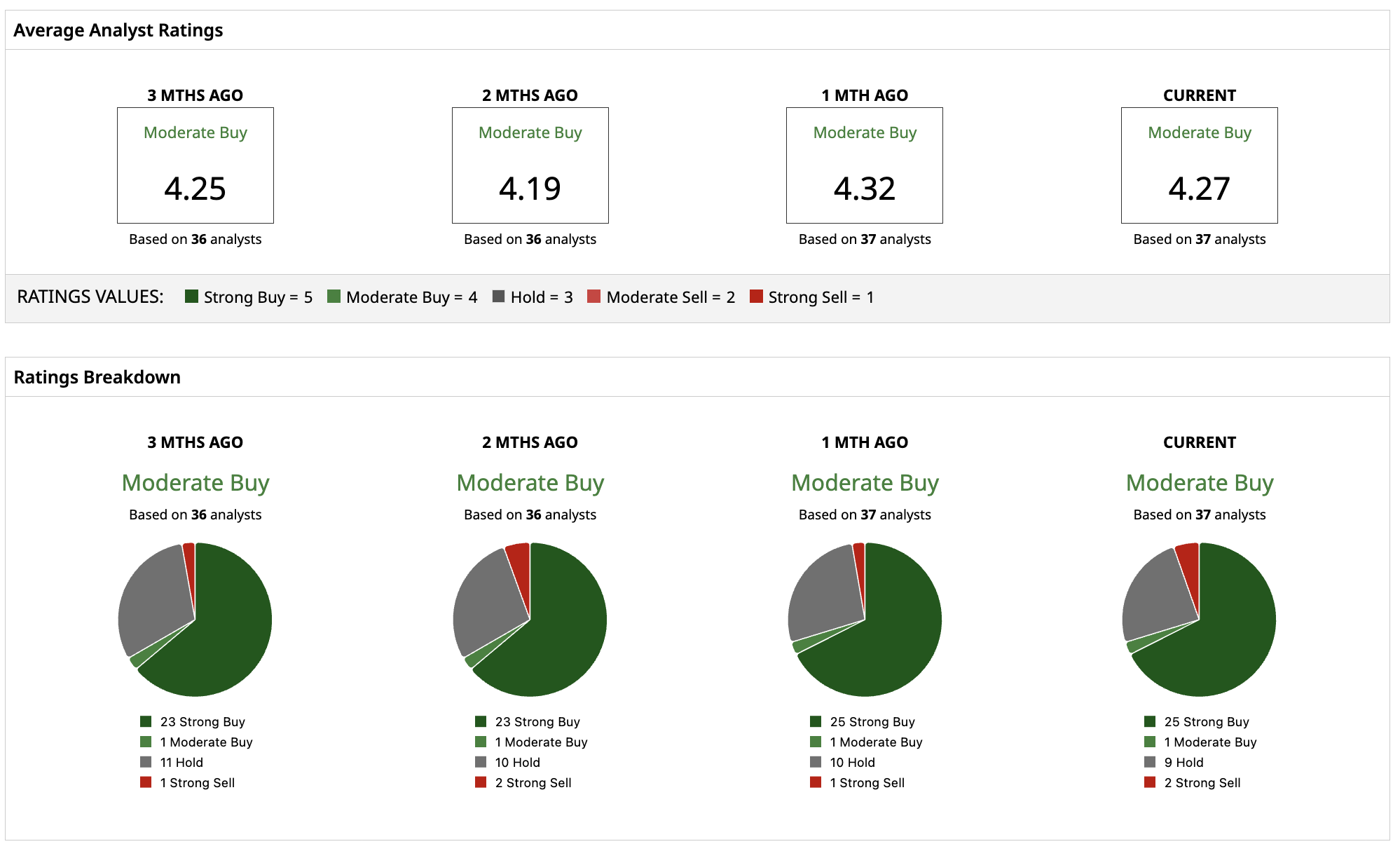
Based on 37 Wall Street analysts with coverage, CoreWeave stock holds a consensus “Moderate Buy” rating. The mean price target of $106.26 indicates potential upside of 141% from current levels.
On the date of publication, Jabran Kundi did not directly have a position in any of the securities mentioned in this article. All information and data in this article is solely for informational purposes. For more information please view the Barchart Disclosure Policy here.