
RIAS (CPH:RIAS B) Will Pay A Smaller Dividend Than Last Year
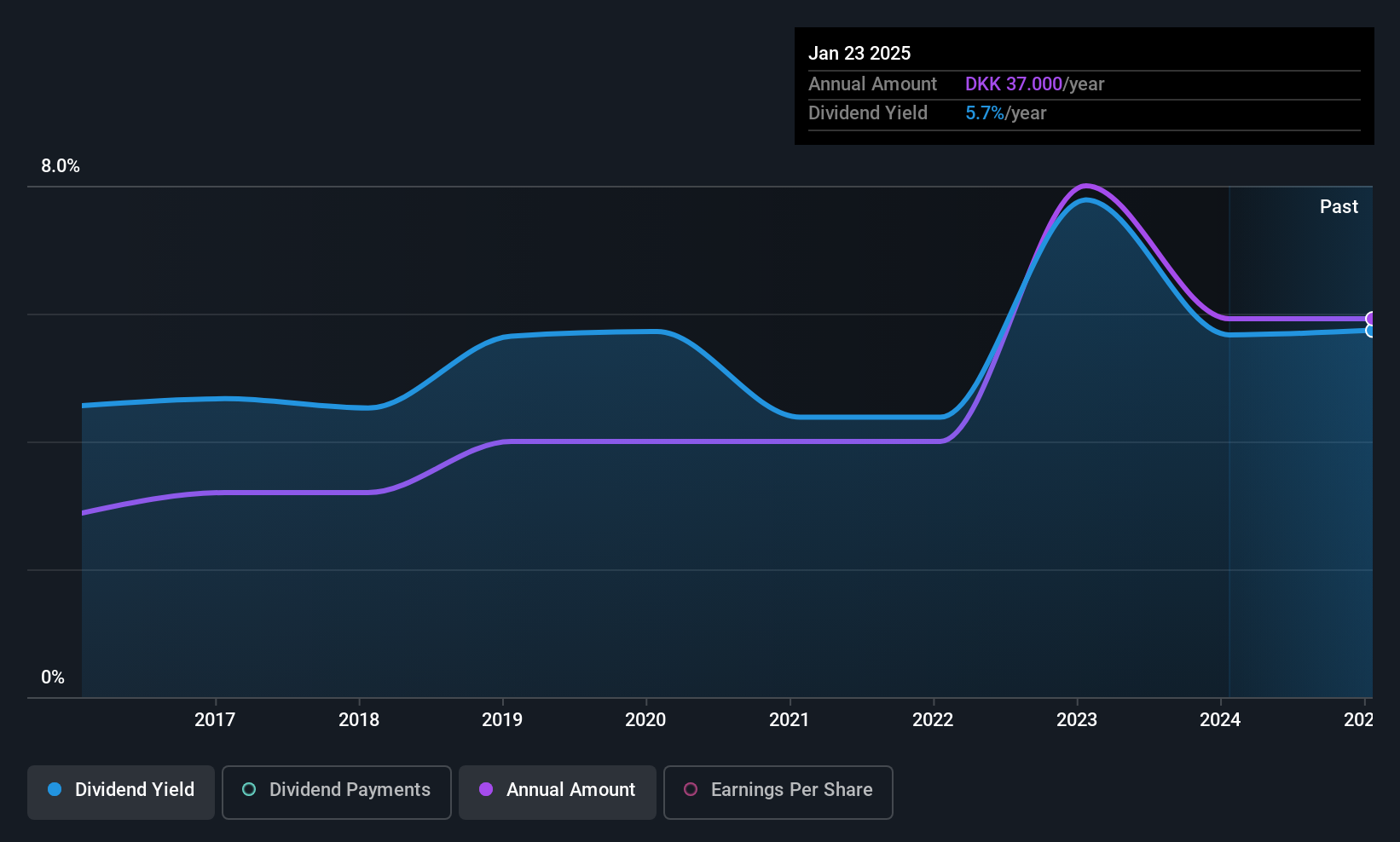
RIAS A/S (CPH:RIAS B) is reducing its dividend from last year's comparable payment to DKK26.00 on the 26th of January. However, the dividend yield of 3.8% is still a decent boost to shareholder returns.
RIAS' Payment Could Potentially Have Solid Earnings Coverage
If the payments aren't sustainable, a high yield for a few years won't matter that much. RIAS was earning enough to cover the previous dividend, but it was paying out quite a large proportion of its free cash flows. By paying out so much of its cash flows, this could indicate that the company has limited opportunities for investment and growth.
If the trend of the last few years continues, EPS will grow by 2.3% over the next 12 months. If the dividend continues on this path, the payout ratio could be 66% by next year, which we think can be pretty sustainable going forward.
Check out our latest analysis for RIAS
Dividend Volatility
The company's dividend history has been marked by instability, with at least one cut in the last 10 years. Since 2016, the dividend has gone from DKK18.00 total annually to DKK26.00. This works out to be a compound annual growth rate (CAGR) of approximately 3.7% a year over that time. The dividend has seen some fluctuations in the past, so even though the dividend was raised this year, we should remember that it has been cut in the past.
The Dividend's Growth Prospects Are Limited
With a relatively unstable dividend, it's even more important to see if earnings per share is growing. Earnings has been rising at 2.3% per annum over the last five years, which admittedly is a bit slow. The company has been growing at a pretty soft 2.3% per annum, and is paying out quite a lot of its earnings to shareholders. This isn't bad in itself, but unless earnings growth pick up we wouldn't expect dividends to grow either.
In Summary
Overall, the dividend looks like it may have been a bit high, which explains why it has now been cut. The low payout ratio is a redeeming feature, but generally we are not too happy with the payments RIAS has been making. Overall, we don't think this company has the makings of a good income stock.
Investors generally tend to favour companies with a consistent, stable dividend policy as opposed to those operating an irregular one. Meanwhile, despite the importance of dividend payments, they are not the only factors our readers should know when assessing a company. To that end, RIAS has 3 warning signs (and 1 which is significant) we think you should know about. If you are a dividend investor, you might also want to look at our curated list of high yield dividend stocks.
Have feedback on this article? Concerned about the content? Get in touch with us directly. Alternatively, email editorial-team (at) simplywallst.com.
This article by Simply Wall St is general in nature. We provide commentary based on historical data and analyst forecasts only using an unbiased methodology and our articles are not intended to be financial advice. It does not constitute a recommendation to buy or sell any stock, and does not take account of your objectives, or your financial situation. We aim to bring you long-term focused analysis driven by fundamental data. Note that our analysis may not factor in the latest price-sensitive company announcements or qualitative material. Simply Wall St has no position in any stocks mentioned.